
The question What Is a Hybrid Collaboration Meeting Room? is becoming increasingly common as organizations adapt to new ways of working in the digital era. Many companies now combine office-based work with remote work. This shift requires meeting spaces that can connect in-room participants with remote attendees at the same time.
Traditional meeting rooms are no longer sufficient for modern business communication. Corporate discussions now often involve teams located in different cities or even different countries. Some participants attend meetings physically in the room, while others join through digital conferencing platforms.
A hybrid collaboration meeting room provides a solution to this challenge. The concept integrates audio-visual technology, conferencing systems, and digital collaboration tools within a single meeting environment.
Modern meeting rooms are no longer just physical spaces for discussion. The technology inside them helps organizations improve communication quality and accelerate decision-making processes.
The Shift in Work Culture Driving Hybrid Collaboration
Over the past few years, the global workplace has undergone significant transformation. Many companies have adopted hybrid work models to provide greater flexibility for employees.
Employees no longer need to be physically present in the office every day. They can work from home, coworking spaces, or even different cities.
This shift has created new challenges in team communication. Companies must ensure that every team member can still collaborate effectively regardless of location.
Meetings are one of the most affected activities. Discussions that were previously conducted face-to-face now involve participants joining from multiple locations.
This situation has led many organizations to explore the answer to What Is a Hybrid Collaboration Meeting Room? and how such environments can support team productivity.
Definition of a Hybrid Collaboration Meeting Room
A hybrid collaboration meeting room is a meeting space designed to connect both in-room participants and remote participants within the same discussion environment.
The technology installed in the room enables real-time communication for everyone involved. Participants can see, hear, and interact with each other seamlessly.
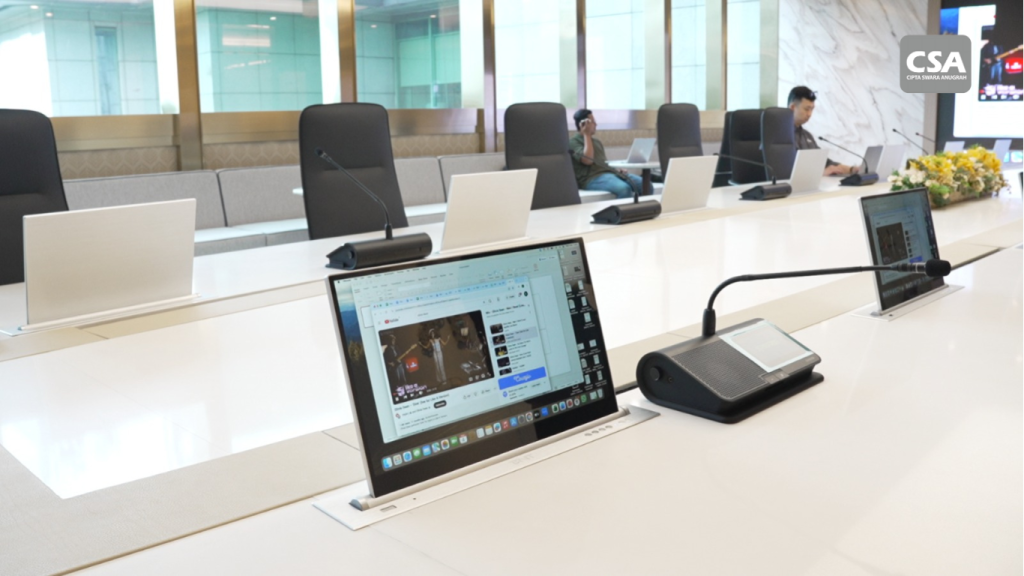
These meeting rooms typically include conference cameras, professional microphones, presentation displays, and collaboration devices.
The primary objective of this concept is to create an equal meeting experience for all participants. Whether they attend physically or virtually, they can contribute to the discussion effectively.
By implementing this approach, organizations can maintain communication efficiency while allowing flexible work arrangements.
Key Components of a Hybrid Collaboration Meeting Room
For hybrid meeting rooms to function effectively, companies must integrate several essential technologies.
Each component plays a specific role in supporting communication during meetings.
High-Resolution Conference Cameras
Conference cameras are a crucial element of modern meeting spaces. These devices capture the visual presence of participants inside the room.
Many modern cameras feature auto-framing technology. The system automatically adjusts the camera view to include all participants.
Some cameras also include AI-based auto-tracking. The camera follows the active speaker during discussions.
This feature allows remote participants to clearly see who is speaking at any given time.
Professional Microphone Systems
Audio quality is one of the most critical factors in hybrid meetings. Poor audio can quickly disrupt communication.
Professional microphone systems often use beamforming technology. This system captures voices accurately from different directions.
Noise reduction features also eliminate background sounds that may interfere with conversations.
With clear audio, discussions become more focused and productive.
High-Quality Speaker Systems
Professional speakers ensure that remote participants’ voices are clearly heard within the meeting room.
High-quality audio playback helps maintain the natural rhythm of conversation.
Participants in the room can respond quickly and maintain smooth communication.
Display or Interactive Screens
Presentation displays play a major role in modern meeting rooms.
High-resolution screens allow participants to view charts, reports, and data clearly.
Some organizations also use interactive displays. These screens enable users to write directly on presentations.
This capability is particularly useful during brainstorming sessions or strategic discussions.
Wireless Presentation Systems
Wireless presentation technology simplifies screen sharing during meetings.
Participants can display presentations directly from laptops or mobile devices.
This system eliminates the need for cables and makes presenter transitions much faster.
The result is a smoother and more efficient meeting flow.
How Hybrid Collaboration Works in Meeting Rooms
Hybrid collaboration works by integrating multiple communication technologies.
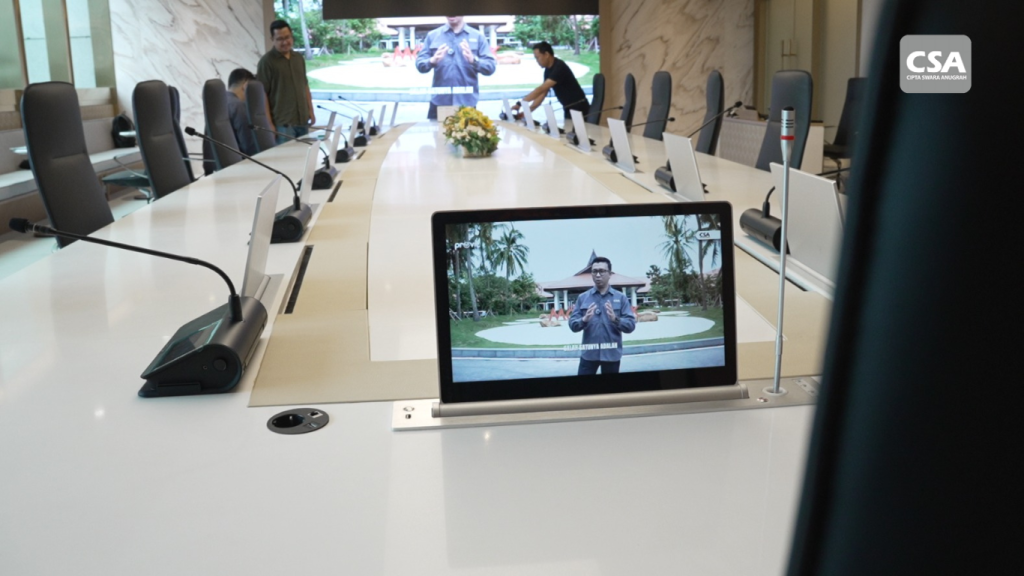
Video conferencing systems connect participants inside the meeting room with remote participants.
Conference cameras capture the visual activity in the room, while microphones capture the speakers’ voices.
The audio and video signals are transmitted through the internet to conferencing platforms.
Remote participants can see and hear the meeting in real time.
They can also interact using their own microphones and cameras.
This approach creates a meeting experience that feels similar to a face-to-face discussion.
Benefits of Hybrid Collaboration Meeting Rooms for Businesses
Many organizations are adopting hybrid meeting rooms because of the advantages they offer.
One major benefit is improved workplace flexibility. Employees can join meetings from different locations.
Team productivity also increases because communication becomes more efficient.
Companies can reduce travel costs significantly. Many meetings that previously required business trips can now be conducted virtually.
Hybrid meetings also allow organizations to collaborate with global talent.
In addition, modern meeting rooms enhance a company’s professional image.
Challenges in Implementing Hybrid Meeting Rooms
Despite the benefits, implementing hybrid meeting room technology also presents challenges.
One common challenge is integrating different devices and technologies.
Many companies use equipment from multiple vendors. Without proper integration, systems can become complicated to operate.
Internet network quality is another important factor. Hybrid meetings require stable and high-speed connections.
Organizations must also ensure data security during video conferences.
The best solution is to work with professional audio-visual integrators who can design systems that match the organization’s needs.
Differences Between Hybrid Meeting Rooms and Traditional Meeting Rooms
Traditional meeting rooms typically rely on a table, projector, and basic presentation equipment.
Communication in such spaces is only effective for participants who are physically present.
Hybrid collaboration meeting rooms provide a very different approach.
These spaces are specifically designed to support communication across multiple locations.
Audio-visual technology ensures that remote participants can fully participate in the discussion.
With this system, meetings are no longer limited by physical distance.
The Future of Hybrid Collaboration Meeting Rooms
Technological innovation will continue to reshape how organizations collaborate.
Artificial intelligence is already being implemented in modern conferencing systems.
AI can help cameras automatically detect and follow active speakers.
Some systems can also generate real-time meeting transcriptions.
Immersive meeting technologies are also emerging. These systems create more realistic experiences for remote participants.
With these innovations, hybrid meeting rooms will continue to evolve in the future.
Organizations that adopt these technologies early will gain a strong competitive advantage.

Conclusion
The question What Is a Hybrid Collaboration Meeting Room? reflects a major shift in how companies work and communicate.
Modern meeting rooms are no longer just physical spaces for discussions. Technology inside them connects teams across different locations.
Conference cameras, professional microphones, high-quality displays, and digital conferencing platforms form the foundation of hybrid collaboration environments.
With these technologies, organizations can create more flexible and productive collaboration spaces.
Hybrid collaboration meeting rooms are not simply a technological trend. They have become a critical requirement for organizations that want to thrive in the digital workplace.
Companies that implement these systems can significantly improve communication quality and accelerate business decision-making.
Frequently Asked Questions (FAQ)
1. What is a hybrid collaboration meeting room?
A hybrid collaboration meeting room is a meeting space that allows both physical and remote participants to communicate simultaneously through conferencing technology.
2. What are the main benefits of hybrid meetings for companies?
Hybrid meetings improve flexibility, enhance communication efficiency, and reduce travel costs.
3. What technologies are used in hybrid meeting rooms?
Key technologies include conference cameras, professional microphones, speaker systems, presentation displays, and conferencing platforms.
4. Are hybrid meeting rooms only suitable for large companies?
No. Small and medium-sized businesses can also benefit from hybrid meeting room technology.
5. Does internet quality affect hybrid meetings?
Yes. Stable and high-speed internet connections are essential for maintaining audio and video quality.
6. What is the difference between hybrid meeting rooms and regular video conferencing?
Hybrid meeting rooms use professional audio-visual systems designed specifically for physical meeting spaces.
7. Why are companies adopting hybrid collaboration meeting rooms?
Because these environments support flexible work arrangements while maintaining effective communication among teams.