
Amid rapid digital transformation, reasons to use a Smart Office Room in 2026 have become increasingly relevant for modern businesses. The workplace is no longer just about desks and chairs. Today, offices must adapt to technology, flexible work models, and the growing need for seamless collaboration. A Smart Office Room emerges as a practical solution to address these evolving demands.
This concept is not merely a trend but a strategic necessity. Companies that adopt this system are better prepared to navigate change, improve productivity, and create a more engaging work experience for employees.
What Is a Smart Office Room and Why Does It Matter?
A Smart Office Room is a workspace that integrates intelligent technology into every aspect of its operations. This includes automated meeting systems, digital collaboration tools, and sensor-based environmental controls.
This technology allows companies to optimize their workspace without wasting time or resources. Everything connects within a single, efficient ecosystem.
In 2026, flexibility and speed are essential. Companies can no longer rely on manual systems. They need workspaces that are responsive, adaptive, and fully integrated.
Reasons to Use a Smart Office Room in 2026
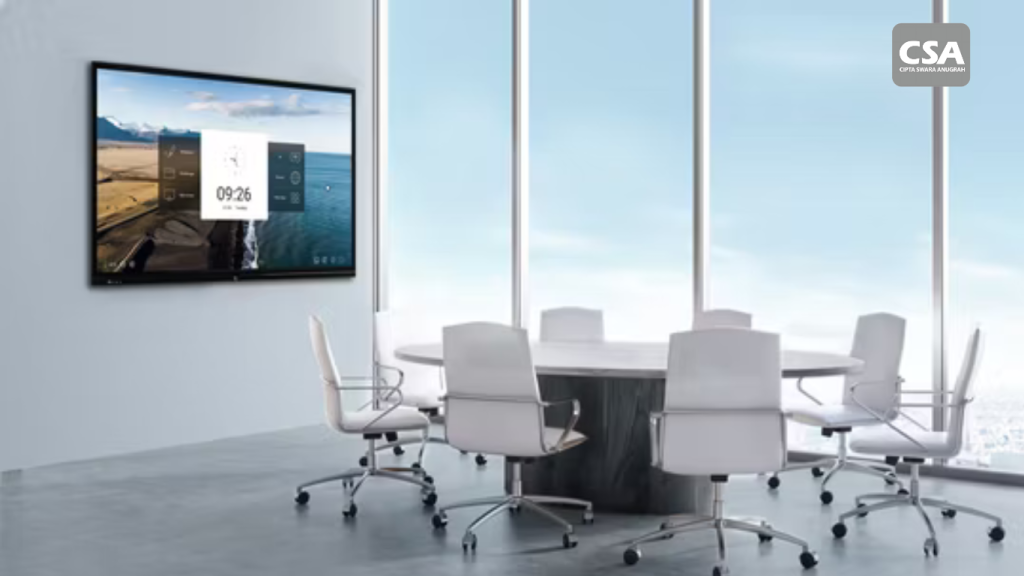
1. Significantly Boosts Team Productivity
One of the biggest advantages of a Smart Office Room is improved productivity. Employees no longer waste time setting up meeting equipment or searching for available rooms.
Automated systems allow meetings to start within seconds. All devices are already connected and ready to use.
This reduces technical disruptions. Teams can focus more on meaningful work without unnecessary distractions.
2. More Effective Collaboration Without Limits
Collaboration is a key element in today’s workplace. A Smart Office Room enables seamless and interactive teamwork.
With technologies such as interactive displays and high-quality video conferencing, teams can collaborate even when they are in different locations.
Presentations become more engaging. Discussions become more structured. Ideas can be communicated clearly.
This is one of the strongest reasons why companies are transitioning to this system.
3. Operational Efficiency and Cost Savings
Many businesses assume that technology requires a large investment. However, a Smart Office Room helps reduce costs in the long run.
Energy usage becomes more efficient with automated systems. Lights and air conditioning operate only when needed.
Additionally, reducing paper usage and conventional tools lowers operational expenses.
This efficiency directly impacts a company’s profitability.
4. Supports Hybrid and Remote Work Systems
Hybrid work has become increasingly popular in recent years. Companies need systems that support both onsite and remote employees.
A Smart Office Room bridges the gap between these work models. Meetings can run smoothly, whether participants are in the office or working remotely.
Employees remain connected. Communication flows without disruption.
This plays a crucial role in maintaining productivity and employee engagement.
5. Delivers a More Professional Meeting Experience
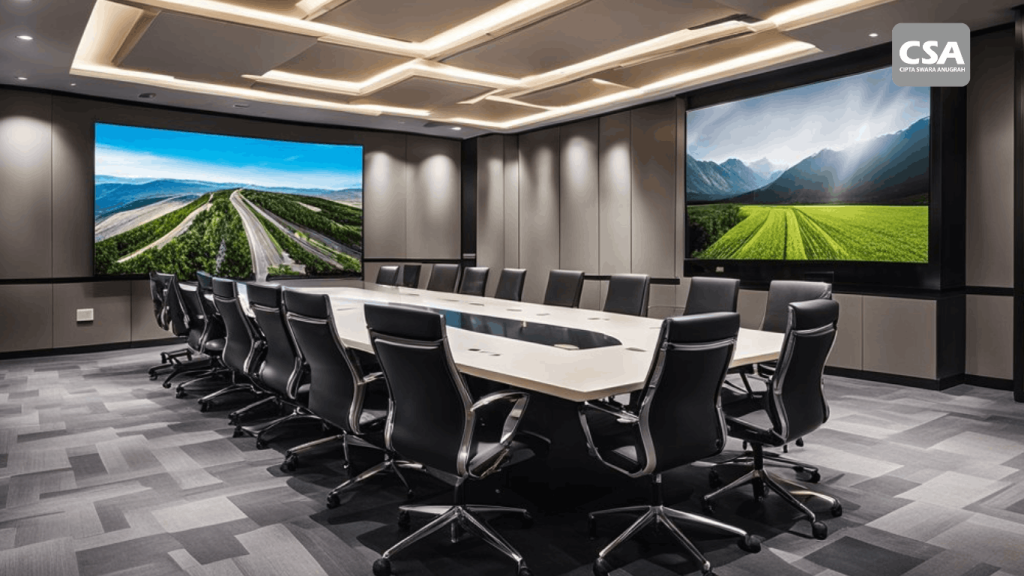
Professional meetings reflect a company’s image. A Smart Office Room creates a modern and structured meeting environment.
Clear audio, sharp visuals, and easy-to-use controls ensure that every meeting runs effectively.
There are no more issues with poor sound or unclear visuals. Everything operates at a high standard.
This is especially important when interacting with clients or business partners.
Read Also: The Benefits of Using Smart Meeting Rooms in Companies
6. Enhances Company Image in the Eyes of Clients
Companies that adopt modern technology appear more professional and innovative. A Smart Office Room shows that a business is future-ready.
Clients are more likely to trust organizations with structured, technology-driven workflows.
This is not just about aesthetics. It is about credibility and trust.
7. Integrated Technology in a Centralized System
A Smart Office Room integrates various technologies into one platform. This includes room booking systems, device controls, and space usage analytics.
Everything is accessible through a single dashboard.
This makes it easier for management to oversee office operations.
The data generated also supports more accurate decision-making.
8. Improved Data and System Security
Security is a critical issue in the digital era. A Smart Office Room comes with advanced security features.
Access to rooms and devices can be controlled through authentication systems. Meeting data is protected with encryption.
This provides an extra layer of protection for sensitive company information.
9. Adaptable to Technological Advancements
Technology continues to evolve. A Smart Office Room is designed to be easily upgraded as needed.
Companies do not need to replace entire systems when new technology emerges. They can simply adjust specific components.
This flexibility adds long-term value.
CSA Indonesia: A Strategic Partner in Building Modern Smart Office Rooms
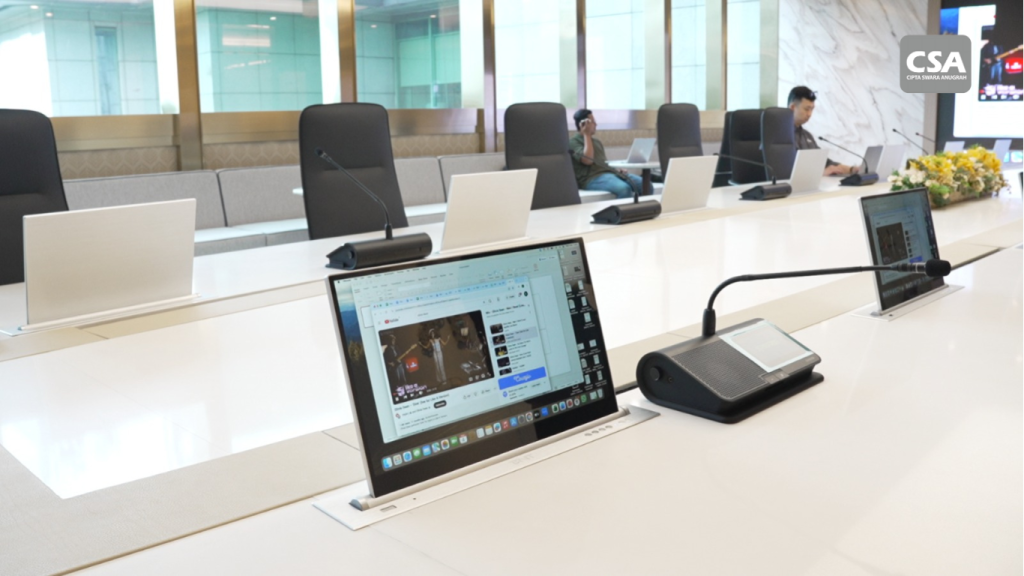
When implementing a Smart Office Room, choosing the right partner is essential. This is where CSA Indonesia plays a vital role for companies aiming to transform their workspace effectively.
CSA Indonesia is known for its expertise in Audio, Visual, Lighting, and Automation solutions for business environments. Their approach goes beyond simple installation. They focus on building an integrated and fully functional workspace ecosystem.
Every project begins with a thorough needs analysis. This ensures that the solution aligns with the company’s operational requirements and business goals. There is no one-size-fits-all approach, as every organization faces unique challenges.
In addition, CSA Indonesia prioritizes high-quality technology. From conference systems to interactive displays and control systems, everything is designed to deliver a seamless and professional user experience.
With an experienced team, CSA Indonesia delivers Smart Office Rooms that are not only advanced but also efficient and easy to use. This helps companies improve productivity without adding operational complexity.
Partnering with the right expert like CSA Indonesia accelerates digital transformation. Companies can avoid costly trial and error, as solutions are implemented with a well-planned strategy.
The Role of Smart Office Rooms in Digital Transformation
Digital transformation is not just about software or applications. It also involves how companies manage their physical workspace.
A Smart Office Room plays a key role in this strategy. It enables faster, more efficient, and more organized workflows.
With the right technology, businesses can enhance their competitiveness in an increasingly demanding market.
Smart Office Solutions from CSA Indonesia
In practice, companies need the right partner to implement these systems. CSA Indonesia offers integrated Smart Office Room solutions.
Their services include audio visual systems, control systems, and automation.
Their approach is highly customized. Each solution is tailored to specific business needs.
With experience across various industries, CSA Indonesia helps companies create modern and optimized workspaces.
Conclusion: A Smart Investment for the Future of Work
Adopting a Smart Office Room is no longer optional. It is a necessity for companies that want to grow and stay relevant.
With its many advantages, this system becomes a strategic investment to improve productivity, efficiency, and corporate image.
In 2026, companies that fail to transform will fall behind. A Smart Office Room is a practical step toward staying competitive in the digital era.
FAQ About Smart Office Rooms
1. What is the difference between a Smart Office Room and a traditional meeting room?
A Smart Office Room uses integrated technology, while traditional rooms rely on manual systems.
2. Is a Smart Office Room suitable for all types of businesses?
Yes, it can be adapted to various industries, from startups to large enterprises.
3. How much does it cost to implement a Smart Office Room?
Costs vary depending on needs and project scale, but it offers long-term efficiency benefits.
4. Is a Smart Office Room difficult to use?
No, the system is designed to be user-friendly for all employees.
5. Does it support hybrid work?
Yes, it enables seamless collaboration between onsite and remote teams.
6. Does implementation require major renovation?
Not always. Many solutions can be integrated into existing spaces.
7. How can a company start implementing a Smart Office Room?
Start with a needs assessment and work with a trusted partner like CSA Indonesia.