
The rapid growth of digital workplaces continues to increase the demand for modern meeting systems. That is why understanding How Smart Meeting Rooms Work at CSA Indonesia has become essential for companies that want to create meeting spaces that are more efficient, interactive, and capable of supporting seamless hybrid collaboration.
A smart meeting room is not simply a meeting space equipped with a large display and modern cameras. The system operates through the integration of audio visual technology, automation systems, intelligent collaboration tools, and modern video conferencing platforms connected within one unified ecosystem.
When all systems work together seamlessly, users can start and manage meetings without complicated technical processes.
As workplaces continue evolving toward 2026, smart meeting rooms are expected to become a standard feature in modern offices because companies increasingly prioritize operational efficiency and better collaboration experiences.
Why Traditional Meeting Rooms Are Becoming Less Effective
Many companies still rely on conventional meeting rooms that use disconnected systems.
This often creates problems such as:
- unclear audio
- poor camera positioning
- slow meeting setup
- messy HDMI cables
- remote participants struggling to follow discussions
- complicated platform switching
These issues may appear minor, but they significantly affect daily productivity.
Meetings are often delayed simply because users need to:
- connect cables
- configure audio
- select display sources
- manually activate cameras
For this reason, many companies are now transitioning to modern smart meeting rooms with fully integrated systems.
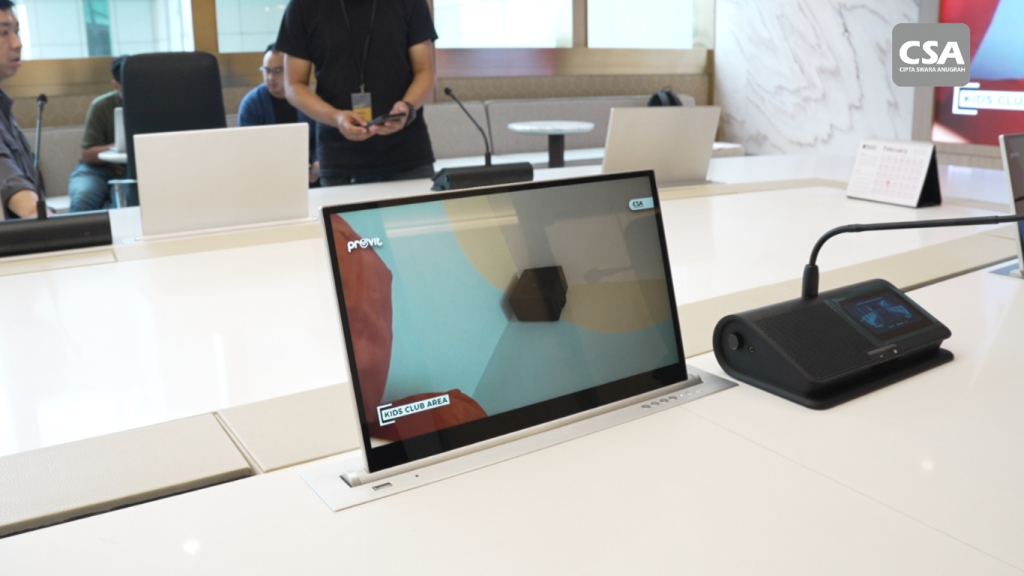
Read Also: Best Smart Meeting Room Vendor CSA Indonesia for Modern and Intelligent Meeting Solutions
Smart Meeting Rooms Operate Through Integrated Systems
The core functionality of a smart meeting room depends on system integration.
Unlike traditional meeting rooms that use separate devices, smart meeting rooms connect all technologies into one synchronized ecosystem.
CSA Indonesia designs systems where:
- displays
- cameras
- microphones
- speakers
- automation systems
- video conferencing platforms
- wireless presentation systems
work together seamlessly.
This approach allows users to run meetings more quickly without complicated technical preparation.
In modern implementations, users only need to press one button to start a meeting.
The system can automatically:
- turn on displays
- activate cameras
- launch audio systems
- open video conferencing platforms
- select meeting presets
without manual adjustments.
This one-touch meeting start concept is becoming a new standard in modern workplaces.
Automation Systems Become the Main Control Center
One of the most important technologies inside smart meeting rooms is the automation control system.
CSA Indonesia uses automation systems to help users control every meeting room device through a single, user-friendly control panel.
Users can manage:
- displays
- audio systems
- cameras
- lighting
- meeting sources
- video conferencing platforms
through one simple interface.
This makes meeting rooms much easier to operate for different company departments.
Even users without technical expertise can run meetings comfortably.
In some enterprise implementations, automation systems can even operate automatically when users enter the room.
Smart sensors help:
- detect user presence
- activate devices automatically
- adjust lighting conditions
- launch meeting room presets
without manual setup.
Interactive Displays Become the Center of Digital Collaboration
Interactive displays serve as one of the core components of modern smart meeting rooms.
CSA Indonesia uses interactive displays to support:
- digital brainstorming
- interactive presentations
- document annotation
- wireless collaboration
- modern hybrid meetings
The workflow is simple.
Users can:
- write directly on the screen
- open presentations
- mark up documents
- share laptop screens
- switch meeting applications
through one central display.
Touchscreen technology creates a more engaging meeting experience compared to traditional projector systems.
In modern digital meeting rooms, interactive displays also improve collaboration because participants can interact with content in real time.
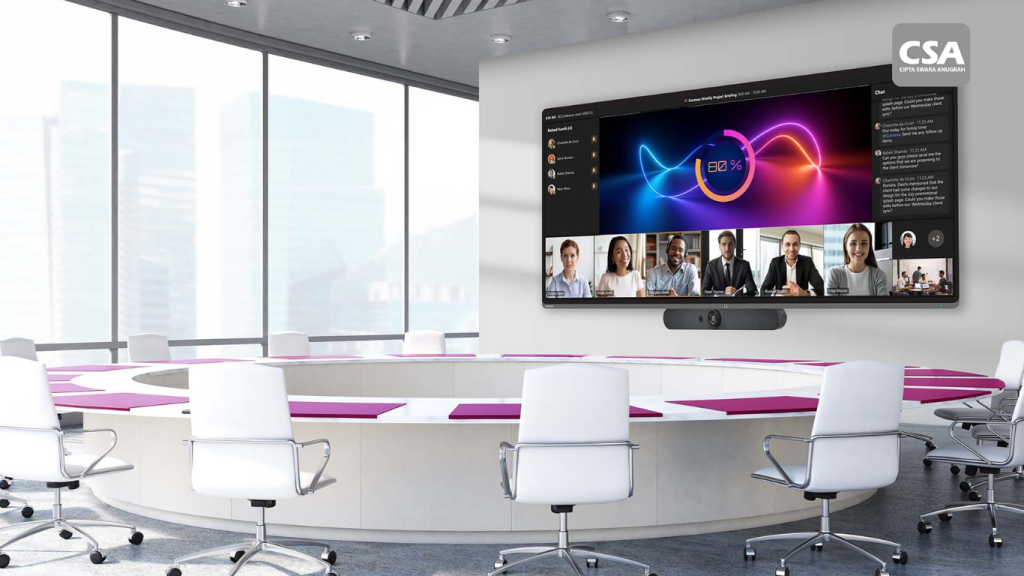
Read Also: Ergonomic Smart Meeting Room Design Tips to Improve Workplace Comfort and Productivity
PTZ Cameras Make Hybrid Meetings More Professional
Hybrid meetings require excellent visual quality to create natural communication for remote participants.
For this reason, CSA Indonesia uses PTZ cameras with intelligent tracking technology.
PTZ cameras can:
- move automatically
- zoom automatically
- follow speakers
- adjust framing dynamically
in real time.
In real-world implementations, PTZ cameras are typically installed near the main display to create more natural eye contact during video conferences.
When someone speaks, the camera automatically focuses on the active speaker without manual operation.
AI tracking camera technology like this is becoming a standard feature in modern intelligent meeting systems.
Ceiling Microphones Create More Natural Communication
One of the most important technologies inside smart meeting rooms is the intelligent ceiling microphone.
CSA Indonesia uses ceiling microphones with beamforming technology to capture voices more accurately.
Participants do not need to:
- hold microphones
- speak loudly
- manually pass microphones
The system automatically captures voices from different directions within the room.
The technology also includes:
- echo cancellation
- noise suppression
- voice isolation
- intelligent voice pickup
to ensure clear hybrid communication.
Without modern audio systems like this, online meetings often experience:
- echo problems
- excessive noise
- unclear communication
- poor remote participation
This is why modern audio visual meeting rooms depend heavily on advanced microphone systems.
DSP Audio Keeps Communication Clear and Stable
In professional smart meeting rooms, audio quality depends on more than microphones and speakers.
CSA Indonesia also uses Digital Signal Processors or DSP audio systems as the central audio management platform.
DSP technology helps:
- eliminate echo
- reduce noise
- balance sound levels
- optimize audio distribution
- maintain communication stability
Without DSP audio systems, hybrid meetings often suffer from:
- audio feedback
- delayed sound
- unstable volume
- poor communication quality
This makes DSP one of the foundational technologies in modern enterprise collaboration systems.
Wireless Presentation Systems Improve Workflow Efficiency
Modern meeting rooms must support fast and flexible workflows.
CSA Indonesia uses wireless presentation systems so users can present instantly without manual HDMI cables.
Laptops, smartphones, and tablets can connect directly to the main display wirelessly.
In real implementations, this technology helps:
- speed up meeting setup
- reduce cable clutter
- improve presentation flexibility
- accelerate presenter switching
Meetings can start within seconds without technical interruptions.
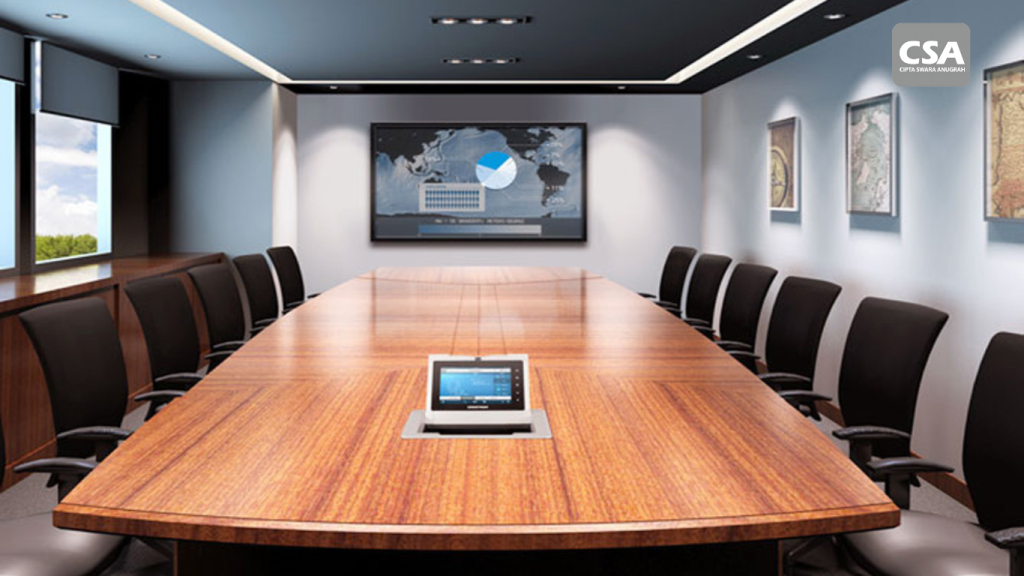
Read Also: Technologies Used in CSA Indonesia Smart Meeting Room
Smart Meeting Rooms Support Multiple Video Conference Platforms
Modern companies rely on various video conferencing platforms for hybrid collaboration.
Because of this, CSA Indonesia smart meeting rooms are designed to support:
- Microsoft Teams
- Zoom
- Google Meet
Users can switch between meeting platforms quickly without complicated setup processes.
This creates a more flexible and efficient meeting workflow.
AV-over-IP Makes Meeting Systems More Future-Ready
Modern smart meeting rooms increasingly use AV-over-IP technology.
This technology allows audio visual distribution through IP networks instead of traditional cabling systems.
Advantages of AV-over-IP include:
- more flexible integration
- more efficient signal distribution
- scalability for different room sizes
- simplified system management
This approach helps companies build intelligent workplaces that are more future-ready for 2026 and beyond.
Centralized Systems Keep Every Technology Synchronized
One of the biggest problems in traditional meeting rooms is disconnected technology.
CSA Indonesia uses centralized systems to ensure every device operates together within one integrated meeting ecosystem.
Systems such as the Q-SYS Platform help integrate:
- audio
- cameras
- displays
- automation systems
- wireless presentation systems
- video conferencing platforms
into one stable and user-friendly environment.
This creates a far more seamless meeting experience.
CSA Experience Center Helps Companies See Real Implementations
Many companies understand smart meeting room concepts theoretically, but have never experienced how the systems operate in real business environments.
For this reason, CSA Indonesia provides an Experience Center in Jakarta where businesses can explore smart meeting room technology directly.
Visitors can experience:
- hybrid meeting quality
- intelligent camera tracking
- wireless collaboration
- automation workflows
- modern audio visual systems
through real meeting simulations.
This helps companies understand the difference between conventional meeting rooms and modern smart meeting environments.
Smart Meeting Rooms Improve Business Productivity
When every system operates optimally, smart meeting rooms significantly improve business productivity.
Meetings become:
- faster
- more stable
- more interactive
- less disruptive
- more professional
Companies no longer waste valuable time troubleshooting devices before meetings begin.
This creates a far more efficient workflow across the organization.
Conclusion
How Smart Meeting Rooms Work at CSA Indonesia focuses on integrating modern audio visual technologies to create meeting experiences that are seamless, interactive, and highly efficient.
From interactive displays and PTZ cameras to intelligent ceiling microphones, DSP audio systems, wireless presentation technology, and automation systems, every solution is designed to support modern hybrid collaboration without technical barriers.
In the era of digital workplaces and intelligent collaboration toward 2026, smart meeting rooms are no longer optional upgrades. They have become an essential part of modern business communication transformation.
FAQ About Smart Meeting Rooms
1. What is a smart meeting room?
A smart meeting room is a modern meeting space that uses integrated technology to improve communication and collaboration.
2. How does a smart meeting room work?
A smart meeting room works through the integration of audio visual systems, automation technology, and video conferencing platforms within one ecosystem.
3. What is the function of a PTZ camera in a smart meeting room?
PTZ cameras automatically follow active speakers during hybrid meetings.
4. Why are ceiling microphones important?
Ceiling microphones capture voices naturally without handheld microphones.
5. What is the role of DSP audio?
DSP audio systems reduce echo and improve meeting sound quality.
6. What are the benefits of wireless presentation systems?
Wireless presentation systems allow users to present without manual cables.
7. Why are automation systems important?
Automation systems help control all meeting room devices through a single interface.
8. Why are smart meeting rooms important in 2026?
Because companies require more efficient meeting systems that support modern hybrid collaboration.