
Hotel Audio Visual Integration plays an important role in creating a connected and efficient hospitality environment. From public areas and meeting facilities to individual guest rooms, modern hotels require technology that supports communication, entertainment, presentations, and daily operations. At Jakarta Marriott Hotel Gelora, CSA Indonesia delivered a comprehensive audio visual installation that connects these different environments through an integrated technology infrastructure.
The installation covers public areas, meeting spaces, and every guest room. It brings together networked audio, video distribution, interactive displays, digital signage, public-area televisions, and in-room entertainment systems. Each component serves a different purpose while contributing to a consistent technology environment throughout the property.
At the core of the installation is Q-SYS, which forms the foundation of the hotel’s networked audio system. An AV over IP infrastructure supports audio and video distribution throughout public areas, while centralized control and remote access help simplify system management and technical support.
The installation also features a distinctive highlight: Indonesia’s first rollable LED videotron installation. Together with interactive flat panel displays and Samsung Hospitality TVs, this technology demonstrates how integrated AV solutions can support multiple functions within a modern hotel.
A Connected Audio Visual Environment Across the Hotel
A modern hotel operates through several interconnected environments. Public areas welcome and inform guests, meeting spaces support business activities, and guest rooms provide private entertainment and comfort.
Although these spaces have different requirements, their technology should be planned with the overall property in mind. Separate equipment installations without proper integration can create operational challenges, particularly when staff need to manage multiple systems independently.
At Jakarta Marriott Hotel Gelora, CSA Indonesia brought together audio, displays, and entertainment technologies across these areas. The objective was to establish a practical and connected AV environment that supports both guest experiences and hotel operations.
This approach reflects a broader principle in professional AV planning: technology should be selected and integrated according to how each space is used.
For a deeper understanding of this approach, see CSA Indonesia’s article on Why Should Audio Visual Systems Be Designed as One Integrated System?.
The article explains why equipment selection, system architecture, connectivity, and control need to be considered together rather than treated as independent installations.
Read Also: Audio Visual Integration for Resorts: CSA Indonesia’s Project at Noema Gili Trawangan
Q-SYS and AV over IP as the Foundation of Hotel AV Integration
One of the central elements of the Jakarta Marriott Hotel Gelora installation is its networked audio infrastructure.
Q-SYS forms the backbone of the hotel’s networked audio system, supported by AV over IP infrastructure for audio and video distribution throughout public areas.
This combination establishes a technology foundation that connects different components through a coordinated system architecture.
Networked Audio System Powered by Q-SYS
Q-SYS serves as the foundation of the hotel’s networked audio system. Rather than treating audio equipment as isolated devices, a networked approach allows compatible components to operate within a coordinated infrastructure.
This is particularly relevant in hotels, where audio may serve multiple public spaces and operational requirements. Different areas may need different audio content, configurations, and levels of control.
A networked system provides a structured foundation for managing these requirements. It also creates opportunities for centralized operation, depending on the system configuration and supported functions.
CSA Indonesia has previously explored Q-SYS technology in its article, Real Experience of a Q-SYS Smart Meeting Room at CSA Experience Center Jakarta.
The article provides further insight into how Q-SYS can support integrated audio, video, and control applications in professional environments.
Audio and Video Distribution Through AV over IP
The installation also incorporates AV over IP infrastructure to distribute audio and video throughout public areas.
AV over IP refers to the transmission and distribution of audio and video signals through network infrastructure. This approach can support flexible signal distribution across multiple locations, depending on network design, bandwidth, equipment compatibility, and system requirements.
For hotels with several public areas and display locations, network-based distribution can provide a structured way to connect content sources and receiving devices.
However, successful implementation requires more than connecting AV equipment to a network. Network capacity, signal routing, compatibility, access management, and coordination with the hotel’s IT infrastructure all need to be considered.
At Jakarta Marriott Hotel Gelora, AV over IP forms part of the infrastructure supporting audio and video distribution across public areas.
For more information, read What Is Audio Visual Integration? Understanding How It Works, Its Benefits, and Applications for Modern Businesses.
Centralized Control and Remote System Monitoring
Managing technology across a hotel can become complicated when each device requires separate operation.
Audio systems, displays, and supporting AV equipment may be located in different areas of the property. Without a coordinated control approach, hotel teams and technical personnel may need to access individual devices to check their status or adjust settings.
At Jakarta Marriott Hotel Gelora, centralized control simplifies daily system operation. The installation also provides remote access, allowing the CSA team to check system status, adjust settings, and provide technical support from off-site locations.
This capability is particularly valuable for technical support and system management. Instead of requiring every adjustment or status check to be performed physically at the equipment location, supported functions can be accessed remotely.
Remote access also provides an additional way for technical teams to respond to operational requirements. It helps connect system monitoring and support activities with the hotel’s ongoing operations.
The actual functions available depend on the installed system configuration, device compatibility, and access permissions.
Centralized control and remote access are important considerations in larger AV installations because they help establish a more structured operating environment.
Interactive Flat Panel and Rollable LED Videotron for Meetings and Presentations
Meeting spaces require visual technology that can support different types of business activities. Presentations, discussions, corporate meetings, and special events may each require different display arrangements.
At Jakarta Marriott Hotel Gelora, CSA Indonesia installed interactive flat panel displays alongside a distinctive visual installation: Indonesia’s first rollable LED videotron installation.
These technologies provide different display capabilities while supporting the hotel’s meeting and presentation requirements.
Interactive Flat Panel Displays for Meeting Spaces
Interactive flat panel displays support visual communication in professional meeting environments.
Compared with conventional presentation displays, interactive panels can provide touch-based interaction, depending on the model and available features. This makes them suitable for activities that involve presenting information, collaborating on content, and interacting directly with on-screen material.
In hotel meeting facilities, interactive displays can support corporate presentations, discussions, and other business activities.
The selection and configuration of these displays should reflect the intended room usage, viewing distance, connectivity requirements, and compatibility with presentation devices.
CSA Indonesia also discusses this technology in Benefits of a Meeting Room Interactive Display: Why Modern Businesses Need It in 2026.
Read Also: How Much Does Audio Visual Installation Cost for a Meeting Room? Key Factors to Consider
Indonesia’s First Rollable LED Videotron Installation
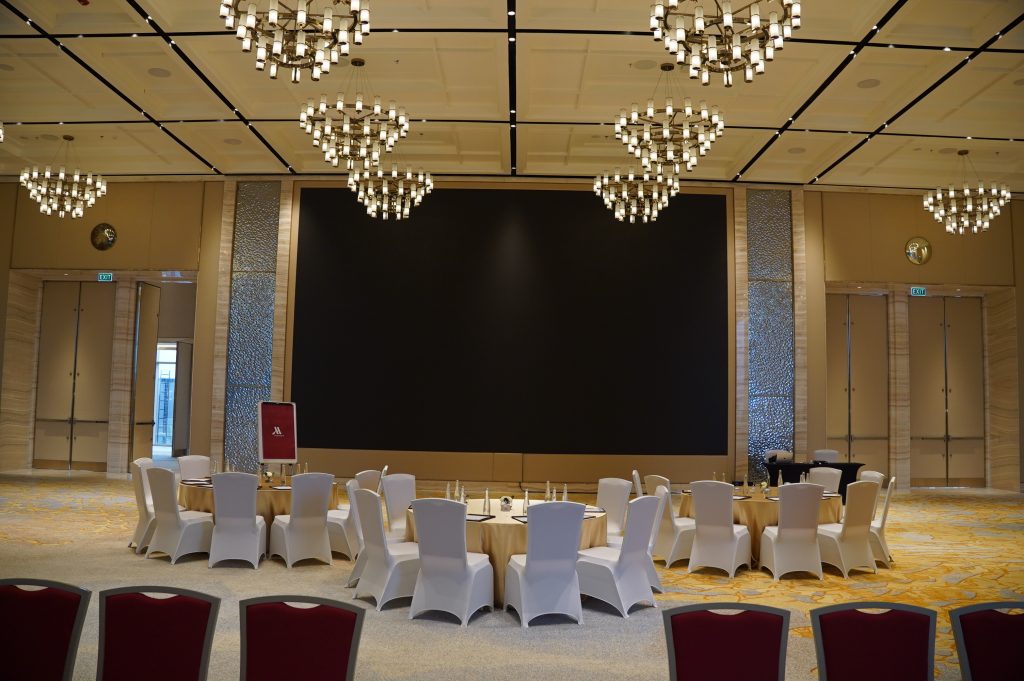
One of the most distinctive elements of the Jakarta Marriott Hotel Gelora installation is the rollable LED videotron, described as Indonesia’s first installation of its kind.
Unlike a conventional fixed LED display, this installation features a screen that rolls upward when it is not in use.
This mechanism allows the hotel to change the setting of the space for different occasions. When visual display functionality is needed, the screen can be brought into position. When it is not required, it can be rolled upward to create a different room arrangement.
This provides an interesting approach to visual technology in flexible hotel environments.
Meeting and event spaces often need to accommodate different activities throughout the day. A configuration suitable for a presentation may not always be necessary for another type of gathering.
A rollable LED videotron introduces another way to adapt the visual setup according to the intended use of the space.
The installation is particularly notable because it combines a large-format visual display with a retractable mechanism, making it a distinctive part of the hotel’s AV environment.
Public Area TVs and Digital Signage for Hotel Communication
Visual displays also play an important role beyond meeting and presentation spaces.
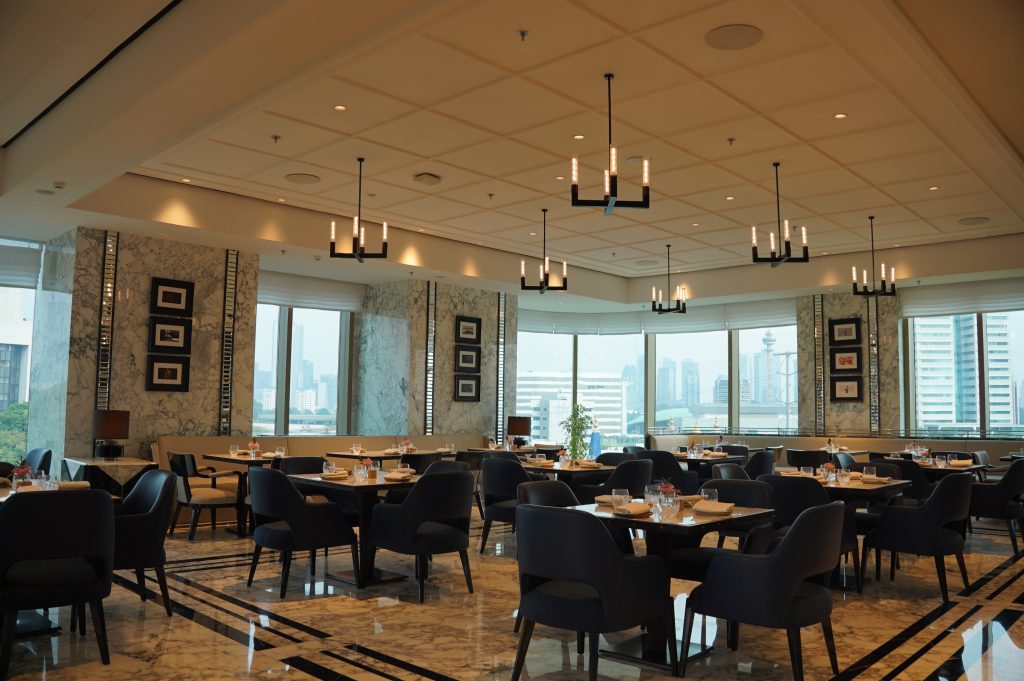
At Jakarta Marriott Hotel Gelora, public-area TVs and digital signage support hotel information, promotional content, and guest communications.
These displays help provide visual information across selected public areas. Depending on the content and location, they can communicate hotel facilities, promotional messages, announcements, and other relevant information.
Digital signage is especially useful in hospitality environments because information requirements can change over time. Hotels may need to update promotional content, communicate activities, or display information relevant to guests.
An integrated display infrastructure can help organize how content reaches different screens. The design needs to consider display locations, signal distribution, connectivity, and the way content is managed.
CSA Indonesia explores these considerations in Hotel Digital Signage: Integrated Visual Solutions for the Hospitality Industry.
The article explains how digital displays can support hotel communication across lobbies, restaurants, ballrooms, conference facilities, and other public areas.
Samsung Hospitality TVs and Soundbars in Every Guest Room
Guest room entertainment is another important part of the Jakarta Marriott Hotel Gelora installation.
CSA Indonesia installed Samsung Hospitality TVs and soundbars in every guest room, bringing together visual entertainment and audio within the guest room environment.
Hospitality televisions are designed for hotel applications. Unlike conventional consumer televisions, hospitality models are developed with features and operating considerations intended for commercial accommodation environments, depending on the selected model.
In a hotel room, the television serves as an important entertainment interface for guests. Picture quality, ease of operation, and compatibility with the property’s requirements all contribute to the overall experience.
The addition of soundbars complements the visual system by providing fuller sound for in-room entertainment.
Together, Samsung Hospitality TVs and soundbars create a more complete entertainment setup for guests during their stay.
The installation also demonstrates the importance of considering guest rooms as part of the hotel’s broader AV infrastructure. Technology integration should not stop at public areas and meeting facilities; it should also address the private spaces where guests spend time.
Why Integrated AV Systems Matter in Modern Hotels
A hotel requires technology that serves different operational and guest-facing functions. Audio supports public spaces, displays communicate information, meeting room systems enable presentations, and guest room entertainment contributes to the stay experience.
When these systems are planned separately, managing and maintaining them can become more challenging.
An integrated approach considers how equipment, connectivity, distribution, and control work together. This helps establish a more consistent infrastructure across the property.
The Jakarta Marriott Hotel Gelora installation demonstrates several important aspects of this approach:
1. Connected infrastructure
Q-SYS and AV over IP support the hotel’s networked audio and public-area audio visual distribution requirements.
2. Centralized operation
Centralized control simplifies daily operation, while remote access gives the CSA team additional capabilities for system checks, configuration adjustments, and technical support.
3. Flexible visual environments
Interactive flat panel displays and the rollable LED videotron support meeting and presentation requirements while allowing the space to adapt to different occasions.
4. Consistent guest communication
Public-area TVs and digital signage provide visual channels for hotel information, promotions, and guest communications.
5. In-room entertainment
Samsung Hospitality TVs and soundbars bring visual and audio entertainment into every guest room.
These elements show how professional AV integration can support multiple functions within a single hospitality environment.
For a broader perspective on the integration process, see Audio Visual System Integrator: From Planning to Implementation of Integrated AV Systems for Modern Businesses.
CSA Indonesia’s Approach to Hospitality Audio Visual Integration
Hospitality properties have different requirements depending on their facilities, layout, guest profile, and operational activities.
A hotel with extensive public spaces and meeting facilities may require a different AV architecture from a property focused primarily on accommodation and leisure.
This is why system integration should begin with an understanding of how each area is used. Audio, displays, network infrastructure, control, and entertainment systems need to be considered within the context of the property’s operations.
At Jakarta Marriott Hotel Gelora, CSA Indonesia brought these elements together through a comprehensive installation covering public areas, meeting spaces, and every guest room.
The work demonstrates an integrated approach that connects networked audio, AV over IP distribution, centralized control, meeting room displays, digital signage, and in-room entertainment.
It also highlights the importance of technical support beyond the installation stage. Remote access allows the CSA team to check system status, adjust supported settings, and provide technical assistance from off-site locations.
For hotels planning similar technology environments, the role of an experienced integrator is not limited to supplying and installing equipment. It also involves coordinating the systems so they operate as a connected solution.
Conclusion
The audio visual installation at Jakarta Marriott Hotel Gelora demonstrates how multiple technologies can be brought together to support a modern hospitality environment.
CSA Indonesia delivered an integrated solution covering public areas, meeting spaces, and every guest room. Q-SYS provides the foundation for the networked audio system, while AV over IP supports audio and video distribution throughout public areas.
Centralized control simplifies daily operation, and remote access allows the CSA team to monitor system status, adjust settings, and provide technical support remotely.
The installation also features interactive flat panel displays, Indonesia’s first rollable LED videotron installation, public-area TVs, digital signage, and Samsung Hospitality TVs with soundbars in every guest room.
Together, these technologies create a connected AV environment designed to support hotel operations and guest experiences across different spaces.
As hospitality facilities continue to adopt more advanced technology, the value of integration lies in how effectively each system works together. A well-planned AV environment should not only deliver the required functions but also remain practical for hotel teams to operate and maintain.
Frequently Asked Questions
1. What is hotel audio visual integration?
Hotel audio visual integration is the process of connecting audio, video, display, control, and related technologies into a coordinated system. It supports different hotel environments, including public areas, meeting spaces, and guest rooms.
2. What AV technologies were installed at Jakarta Marriott Hotel Gelora?
The installation includes a Q-SYS networked audio system, AV over IP infrastructure, centralized control, remote system access, interactive flat panel displays, a rollable LED videotron, public-area TVs, digital signage, Samsung Hospitality TVs, and soundbars in every guest room.
3. What is the role of Q-SYS in a hotel AV system?
In this installation, Q-SYS forms the backbone of the hotel’s networked audio system. It provides the foundation for managing the audio infrastructure within the property’s integrated technology environment.
4. What is AV over IP and why is it used in hotels?
AV over IP is a technology approach that distributes audio and video signals through network infrastructure. It can support flexible signal distribution across multiple areas, depending on network capacity, system design, and equipment compatibility.
5. What makes a rollable LED videotron different from a conventional LED display?
A rollable LED videotron features a mechanism that allows the screen to roll upward when it is not in use. This provides flexibility for spaces that need to accommodate different room arrangements and activities.
6. What is the purpose of centralized control and remote access in hotel AV systems?
Centralized control simplifies daily system operation by providing a coordinated way to manage supported functions. Remote access allows authorized technical teams to check system status, adjust settings, and provide support from off-site locations.
7. Why do hotels use Hospitality TVs instead of regular televisions?
Hospitality TVs are designed for accommodation environments and may include features and management capabilities suited to hotel operations. The appropriate model depends on the property’s requirements and the intended guest room experience.
8. Why is AV integration important for modern hospitality properties?
AV integration connects different technologies into a coordinated environment. It can help hotels support guest communication, entertainment, presentations, and daily operations while making systems more practical to manage and maintain.