
Audio Visual System Integrator: From Planning to Implementation of Integrated AV Systems has become an essential solution for modern businesses navigating rapid digital transformation. Today, audio visual technology is no longer just a supporting element for meeting rooms or presentations. Instead, it plays a critical role in enhancing communication, collaboration, productivity, and decision-making across organizations.
Many companies invest in technologies such as video conferencing systems, LED displays, digital signage, interactive displays, and room automation solutions. However, these investments do not always deliver maximum value when each system operates independently. Organizations need integrated solutions that allow all technologies to work together seamlessly, creating a more efficient and user-friendly environment.
This is where the role of an Audio Visual System Integrator becomes indispensable. A professional integrator helps organizations design, implement, and manage AV systems that support current business needs while remaining scalable for future technological advancements.
What Is an Audio Visual System Integrator?
An Audio Visual System Integrator is a company or team of professionals responsible for combining multiple audio visual technologies into a unified, interconnected, and easy-to-manage system.
Technologies commonly integrated include:
- Professional sound systems
- Video conferencing systems
- Interactive flat panels
- LED displays
- Digital signage
- Control systems
- Room automation
- Lighting control systems
- AV over IP solutions
- Unified communication platforms
The primary goal of integration is not merely to ensure that equipment functions correctly but to create a seamless user experience that improves efficiency and supports organizational productivity.
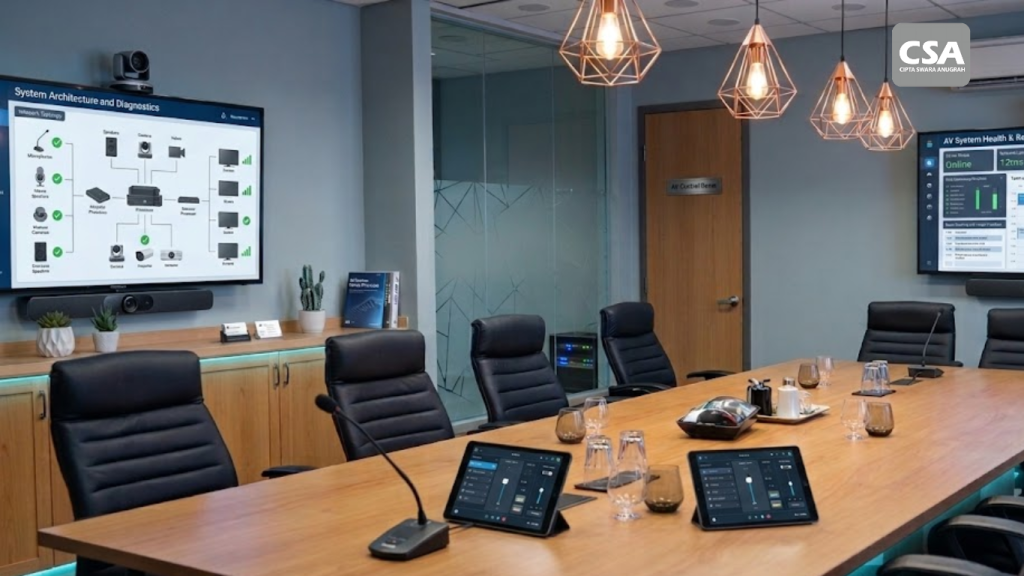
Why Do Many Audio Visual Projects Fail Without a System Integrator?
Many organizations mistakenly believe that purchasing high-quality equipment is enough to ensure project success.
In reality, numerous AV projects encounter challenges due to poor planning and a lack of system integration.
Common issues include:
- Incompatibility between devices from different manufacturers
- Audio and video synchronization problems
- Complex systems that are difficult for users to operate
- Increased maintenance costs
- Time-consuming troubleshooting
- Inconsistent meeting experiences
- Operational disruptions caused by system downtime
When technologies operate independently, organizations often spend more time and money managing their systems. Involving an integrator from the beginning significantly increases the chances of project success.
Audio Visual System Integrator vs. AV Equipment Vendor
Many businesses assume that an AV equipment vendor and an Audio Visual System Integrator serve the same purpose. However, their roles are fundamentally different.
AV Equipment Vendor
A vendor typically focuses on:
- Selling products
- Providing technical specifications
- Supplying equipment
- Offering pricing and promotions
Audio Visual System Integrator
An integrator focuses on:
- Business needs analysis
- System design
- Technology integration
- Equipment installation
- Commissioning
- User training
- Long-term technical support
Simply put, vendors sell products, while integrators deliver complete solutions that provide long-term value.
Planning Phase of an Integrated AV System Implementation
Planning serves as the foundation of every successful AV project.
Mistakes during this stage can significantly impact system performance in the future.
User Requirements Analysis
Every organization has unique requirements.
Therefore, an integrator must understand:
- Room functionality
- Number of users
- Operational activities
- Existing infrastructure
- Long-term objectives
This analysis ensures that the selected technologies align with actual business needs.
Site Survey and Infrastructure Assessment
The next step involves conducting a comprehensive site survey.
The integration team evaluates:
- Room dimensions
- Equipment placement locations
- Cable pathways
- Network infrastructure
- Electrical systems
The information collected becomes the basis for system design.
System Design
A well-designed system ensures optimal performance and reliability.
Design documentation typically includes:
- System diagrams
- Equipment layouts
- Audio distribution plans
- Video distribution plans
- Network integration strategies
- Control system architecture
A thorough design process minimizes risks and reduces costly modifications during implementation.
Integrated AV System Implementation
Once planning is complete, implementation can begin.
This phase involves technical tasks that require expertise and experience.
Equipment Installation
Installation includes:
- Speakers
- Microphones
- LED displays
- Projectors
- Interactive displays
- Video conferencing cameras
- Control panels
All equipment must be installed according to approved specifications and industry standards.
System Configuration and Integration
After installation, all devices must be configured to communicate effectively with one another.
Examples include:
- Cameras automatically activating when meetings begin
- Displays switching to the correct input source
- Audio systems integrating with conferencing platforms
- Centralized control systems managing multiple technologies through a single interface
This integration simplifies daily operations and enhances user experience.
Testing and Commissioning
Before deployment, the integrator performs comprehensive testing.
The objective is to ensure:
- High-quality audio performance
- Optimal visual presentation
- Stable network connectivity
- Reliable control system operation
- Proper functionality of all integrated features
The Impact of Integrated AV Systems on Business Productivity
Technology investments should deliver measurable business benefits.
Integrated AV systems improve productivity in several ways.
More Efficient Meetings
Employees no longer waste valuable time resolving technical issues before meetings begin.
Faster Collaboration
Teams across multiple locations can communicate effectively with superior audio and video quality.
Improved Decision-Making
Clear communication and content sharing accelerate discussions and decision-making processes.
Reduced Dependence on IT Support
Well-designed systems are easier for employees to operate independently.

The Evolution of Audio Visual System Integrators in the Smart Technology Era
The role of system integrators has evolved far beyond installing AV equipment.
Digital transformation is driving organizations to adopt smarter and more connected technologies.
Emerging solutions include:
- Smart Meeting Rooms
- Room Automation
- Smart Building Integration
- Unified Communications
- AV over IP
- Cloud Collaboration
- Intelligent Control Systems
These technologies help organizations create more productive, efficient, and future-ready workplaces.
Audio Visual System Integration Trends in 2026
The year 2026 is expected to accelerate the adoption of intelligent collaboration technologies across industries.
Key trends include:
AI-Powered Meeting Rooms
Artificial intelligence enhances meeting experiences through features such as automatic speaker tracking, voice recognition, and meeting analytics.
Smart Workplaces
Organizations increasingly integrate AV systems with occupancy sensors, room scheduling platforms, and building management systems.
AV over IP
IP-based AV distribution continues to gain popularity due to its flexibility, scalability, and simplified infrastructure requirements.
Centralized Control Systems
Organizations are moving toward centralized platforms that allow administrators to monitor and control multiple technologies from a single dashboard.
Why Do Smart Meeting Rooms Require an Audio Visual System Integrator?
Smart Meeting Rooms are among the most valuable technology investments for modern organizations.
However, a Smart Meeting Room involves much more than installing a large display and a conferencing camera.
A complete Smart Meeting Room typically integrates:
- Interactive displays
- Wireless presentation systems
- Video conferencing platforms
- Ceiling microphones
- Room scheduling systems
- Automation controls
- Occupancy sensors
Companies such as CSA Indonesia help organizations integrate these technologies into a unified platform that is intuitive and easy to use.
With the right integration strategy, Smart Meeting Rooms deliver more productive, engaging, and efficient meeting experiences.
AV System Implementation Across Various Industries
Different industries require different AV solutions.
As a result, system designs must align with specific operational requirements.
Corporate Offices
Solutions for:
- Meeting rooms
- Boardrooms
- Collaboration spaces
- Auditoriums
Hospitality
Solutions for:
- Ballrooms
- Convention halls
- Meeting rooms
- Digital signage systems
Education
Solutions for:
- Smart classrooms
- Lecture halls
- Distance learning environments
Government
Solutions for:
- Command centers
- Conference rooms
- Public information centers
Houses of Worship
Solutions for:
- Professional sound systems
- Live streaming
- Display systems
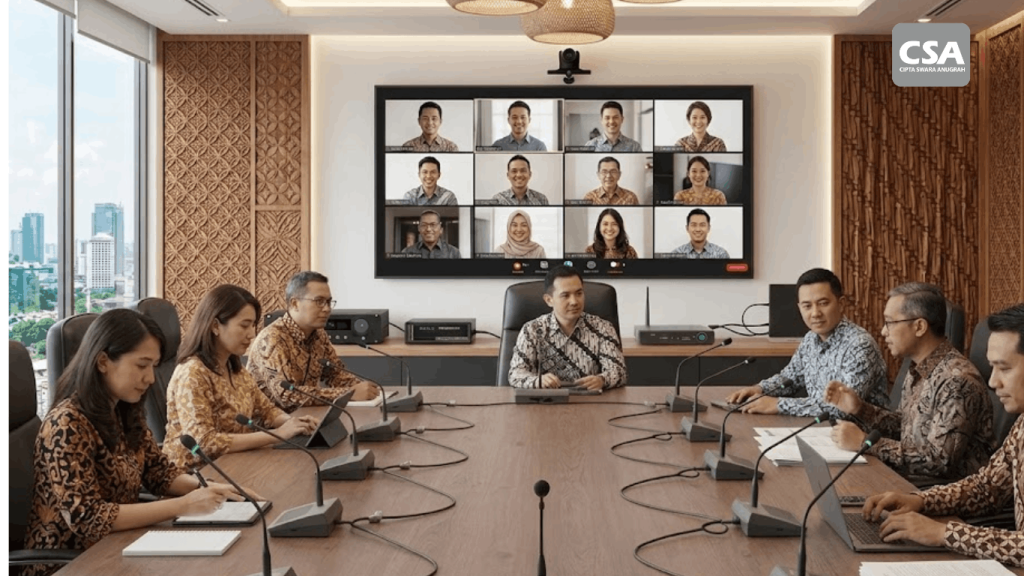
The Role of CSA Indonesia in Integrated AV System Implementation
As a company specializing in Audio, Visual, Lighting, and Automation solutions, CSA Indonesia helps organizations build technology ecosystems that support both operational efficiency and digital transformation.
CSA Indonesia provides more than equipment. The company delivers end-to-end solutions from consultation to implementation.
Services include:
- Project consultation
- Site surveys
- System design
- Technology integration
- Installation
- Commissioning
- User training
- Ongoing technical support
Through this comprehensive approach, CSA Indonesia helps businesses reduce project risks, maximize technology investments, and ensure optimal system performance.
Conclusion
An Audio Visual System Integrator plays a crucial role in ensuring the success of modern AV technology deployments. Beyond installing equipment, integrators design comprehensive solutions that enhance communication, collaboration, and productivity while supporting long-term business objectives.
As demand continues to grow for Smart Meeting Rooms, Room Automation, Unified Communications, and Smart Workplace technologies, organizations need a trusted partner capable of integrating diverse technologies into a seamless ecosystem. With expertise in Audio, Visual, Lighting, and Automation, CSA Indonesia helps businesses implement future-ready AV solutions that support digital transformation and sustainable growth.
If your organization is planning a Smart Meeting Room, Hybrid Collaboration Space, Command Center, Auditorium, or any integrated audio visual project, partnering with an experienced Audio Visual System Integrator can help ensure that your technology investment delivers maximum value and long-term success.
Frequently Asked Questions (FAQ)
What is an Audio Visual System Integrator?
An Audio Visual System Integrator is a company that designs, integrates, and implements multiple AV technologies into a single connected system.
Why does a company need an Audio Visual System Integrator?
An integrator ensures that all technologies work seamlessly together, remain easy to use, and align with business objectives.
What is the difference between an Audio Visual System Integrator and an AV vendor?
An AV vendor sells equipment, while an integrator provides a complete solution that includes design, implementation, integration, and support.
What are the benefits of an integrated AV system?
Benefits include improved productivity, more efficient meetings, better collaboration, and simplified technology management.
What is a Smart Meeting Room?
A Smart Meeting Room integrates technologies such as video conferencing, interactive displays, automation controls, and scheduling systems to create a seamless collaboration experience.
What is AV over IP?
AV over IP is a technology that distributes audio and video signals through IP networks, providing greater flexibility and scalability.
Can AV systems be integrated with room automation?
Yes. Modern AV systems can be integrated with room automation technologies to enhance efficiency and user convenience.
Which industries benefit from integrated AV systems?
Corporate, hospitality, education, government, houses of worship, sports facilities, and many other commercial sectors benefit from integrated AV solutions.
Why is AV integration important for Smart Workplaces?
Smart Workplaces depend on connected technologies that improve collaboration, communication, and operational efficiency.
How does CSA Indonesia support AV system implementation?
CSA Indonesia provides consultation, system design, integration, installation, commissioning, user training, and ongoing support for Audio, Visual, Lighting, and Automation projects.