
Professional lighting installation is an essential consideration for hotel operators, ballroom owners, auditorium managers, and commercial venue developers. A lighting system does more than illuminate a space. It also shapes the atmosphere, supports daily operations, enhances architectural features, and influences the overall experience of guests and visitors.
Every venue has different lighting requirements. Hotels need comfortable lighting for guests and practical illumination for daily activities. Ballrooms require flexible configurations for different types of events. Meanwhile, beach clubs and entertainment venues need dynamic lighting that can create the right atmosphere for performances and nighttime activities.
Choosing lighting fixtures based solely on appearance or price is rarely enough. Project owners must also consider room functions, building characteristics, equipment specifications, installation requirements, and control methods. Poor planning can result in uneven illumination, difficult operation, or a system that does not support the venue’s actual needs.
CSA Indonesia provides integrated audio, visual, lighting, and control system solutions for commercial facilities. By taking a project-based approach, CSA helps align technology with each venue’s requirements, from initial planning through system implementation.
Why Do Commercial Lighting Projects Require Proper Planning?
Lighting serves different purposes throughout a commercial building. A hotel lobby needs to create a welcoming first impression. Restaurants require an atmosphere that supports comfortable dining. Ballrooms must accommodate different lighting arrangements as their functions change.
These differences make planning an essential part of the installation process. The project team needs to understand the activities taking place, the interior design, and the operational requirements of the venue.
Several considerations should be addressed before installation begins:
-
Room function: Determine the lighting requirements based on the primary activities in each area.
-
Architectural design: Match lighting direction and characteristics with the building’s design.
-
Visual comfort: Minimize glare, distracting shadows, and uneven illumination.
-
Operational flexibility: Provide lighting configurations that support different activities.
-
System integration: Ensure lighting equipment can work with supporting technologies when required.
-
Maintenance requirements: Consider equipment inspection and replacement access.
A well-planned design helps project owners identify the right equipment and installation scope. It also reduces the risk of unexpected modifications during implementation.
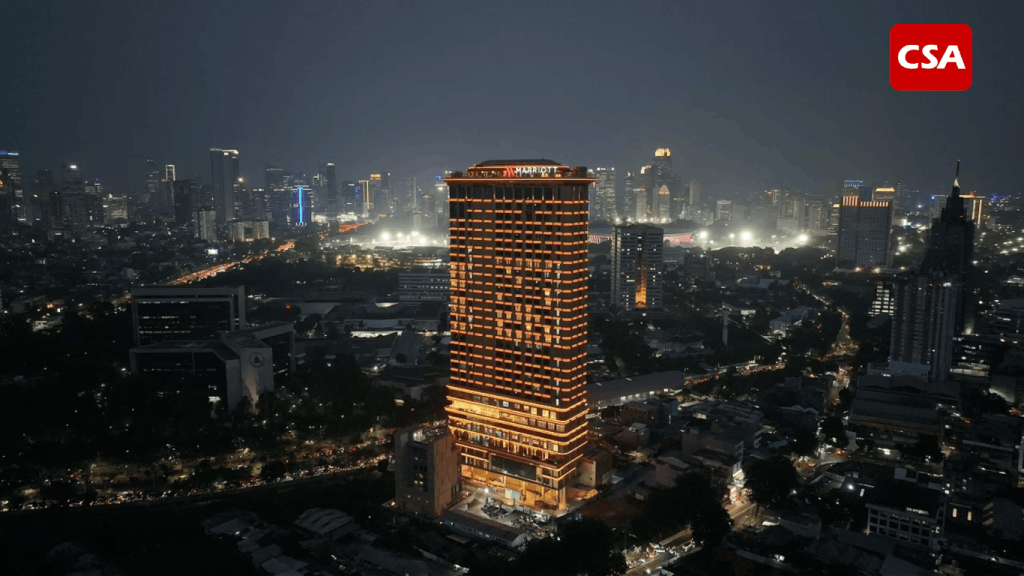
Read Also: http://Hotel Audio Visual Integration Advanced Technology Solutions at Jakarta Marriott Hotel Gelora
Lighting Solutions for Hotels, Ballrooms, and Commercial Venues
Each type of commercial facility has its own technical requirements. Lighting design should reflect the characteristics of the location rather than rely on one configuration for every project.
1. Hotel Lighting Installation
Hotels contain multiple areas with different functions. Lobbies, restaurants, corridors, ballrooms, swimming pool areas, and entertainment facilities all require different lighting approaches.
In a hotel lobby, lighting can highlight interior features and create a welcoming atmosphere for guests. Designers may combine general lighting with accent lighting to emphasize architectural details.
Restaurants require lighting that supports a comfortable dining experience. Corridors and operational areas, meanwhile, need sufficient illumination for everyday activities.
Outdoor areas require additional consideration. Exposure to water, humidity, dust, and environmental conditions can affect equipment selection. Project teams must therefore match fixture specifications with the installation environment.
Hotels with entertainment facilities may also need more dynamic lighting systems. These configurations can support daytime activities as well as nighttime performances.
2. Ballroom Lighting Installation
Ballrooms frequently host different types of events, including seminars, conferences, weddings, and product launches. Each event may require a different lighting arrangement.
During a conference, lighting should support the visibility of speakers and attendees. A wedding reception may require a more decorative atmosphere. Entertainment events can demand dynamic stage lighting.
A flexible system allows operators to adjust the atmosphere without manually controlling every fixture individually. Venue managers can also prepare lighting scenes for frequently hosted events.
Ballroom planning should consider stage positions, audience areas, ceiling height, fixture locations, and movement paths. Coordination with audiovisual systems is also important when the room uses presentation screens or LED displays.
3. Auditorium Lighting Installation
Auditoriums need lighting that supports presentations, seminars, performances, and institutional events. The stage is a particularly important area because lighting must help the audience see speakers and performers clearly.
The project team should consider beam direction, light distribution, and potential shadows. Fixture placement must also account for presentation screens and camera requirements when the venue supports recording or broadcasting.
CSA has previously discussed auditorium lighting requirements in its article, Lighting Systems for Auditoriums: Integrated Solutions for Professional Venues.
4. Beach Club and Entertainment Venue Lighting
Beach clubs, lounges, and entertainment venues often require more dynamic lighting arrangements. Their systems must support the venue’s atmosphere as well as the activities of guests and performers.
For outdoor areas, equipment selection must account for environmental conditions. Exposure to water, humidity, wind, and coastal air can create challenges for electronic equipment.
Venue operators should also consider how lighting works alongside audio and visual systems. These elements can operate together to create a more consistent entertainment experience.
Types of Lighting Equipment for Commercial Projects
Equipment selection depends on the function of the space and the intended result. Not every project requires the same fixtures or configuration.
General Lighting
General lighting provides the primary illumination for everyday activities. It helps people see their surroundings and use the space comfortably.
In hotels, general lighting may be installed in lobbies, corridors, and operational areas. Ballrooms require adjustable configurations that accommodate different event requirements.
Accent Lighting
Accent lighting highlights specific elements within a space. Examples include architectural details, decorative features, artwork, or interior elements that deserve visual attention.
Fixture placement should consider light direction and intensity. Proper positioning can enhance the character of a room without compromising visitor comfort.
Architectural Lighting
Architectural lighting combines illumination with building design. It can highlight façades, structural elements, interior details, and other architectural features.
In commercial buildings, this approach helps establish a distinctive visual identity. Designers need to match the fixtures with the building materials, architectural forms, and installation environment.
Stage Lighting and Moving Head Fixtures
Stage lighting supports performances, presentations, and other activities on stage. The system may include fixtures that can change color, intensity, and beam direction.
Moving head fixtures can create dynamic light movements. They are suitable for entertainment venues and event spaces that require different lighting effects.
However, equipment selection should reflect the venue’s actual requirements. The project team needs to consider room dimensions, ceiling height, stage position, and the types of events the venue regularly hosts.
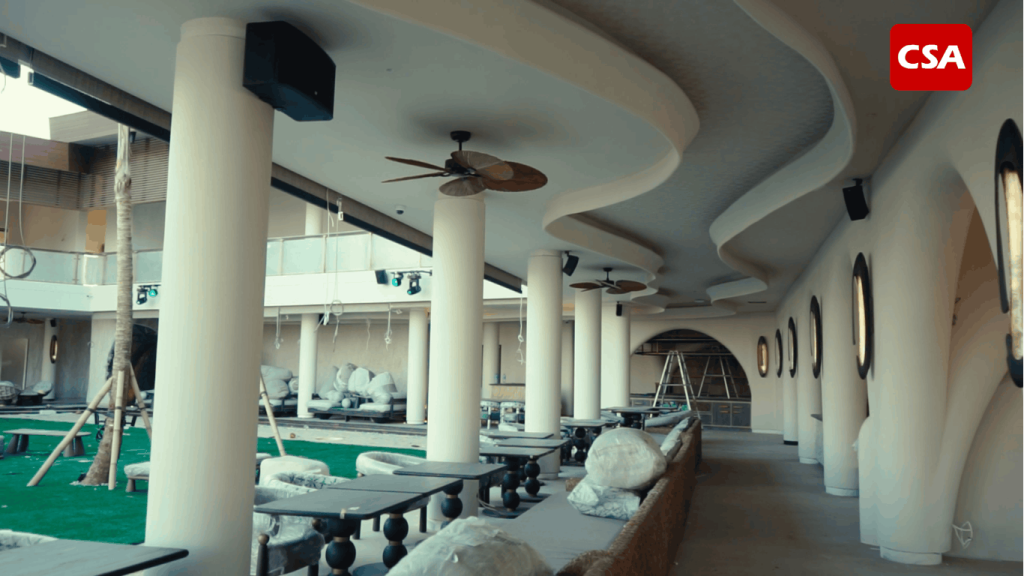
Read Also: Audio Visual Integration for Resorts: CSA Indonesia’s Project at Noema Gili Trawangan
Key Stages of a Professional Lighting Installation Project
A lighting project involves several connected stages. The process does not end with purchasing and mounting fixtures. Each stage must follow the technical requirements and physical conditions of the building.
1. Site Survey and Requirement Assessment
The process begins with understanding the project’s objectives. The team needs to identify the function of each room, the activities taking place, and the operator’s requirements.
A site survey helps identify the building’s physical conditions. Information such as ceiling height, mounting structures, installation access, and available cable routes becomes part of the technical assessment.
For renovation projects, the team should also inspect existing equipment. This helps determine whether the current system can remain in use or requires modification.
2. Lighting Design and Fixture Placement
After understanding the requirements, the team develops the lighting design. This includes fixture types, installation points, positions, beam directions, and control requirements.
Fixture placement should account for areas that need general illumination and accent lighting. The team must also avoid positions that may create distracting glare or shadows.
Coordination with interior designers, architects, and other contractors is essential. This allows the installation to follow the building layout without disrupting other project activities.
3. Equipment Selection and Control System Planning
Equipment selection should follow the project’s technical and environmental requirements. The team may consider light characteristics, power consumption, mounting methods, and operational needs.
The control system should also be planned from the beginning. A hotel may need simple controls for daily lighting. An event venue may require more advanced configurations to manage multiple lighting groups.
For automation requirements, venue operators can also explore CSA’s article on Smart Lighting Automation: Definition, Benefits, Components, and Applications.
4. Installation and System Integration
The installation team carries out the work according to the approved design. Activities may include fixture mounting, cable routing, power distribution, and control system configuration.
When a project combines several technologies, coordination between systems becomes important. Lighting can work alongside audiovisual equipment and room control systems, depending on the project’s requirements.
This integration requires clear technical planning. The team must ensure that the equipment communicates and operates according to the intended functions.
5. System Testing and Handover
After installation, the team needs to test every device and function. Testing may cover fixture operation, control response, intensity adjustments, and different usage scenarios.
For ballrooms, testing should include several operational conditions. Examples include lighting for presentations, formal events, and performances.
The team should also provide instructions to operators and staff. They need to understand how to use the system and what basic steps to take when an issue occurs.
Why Is Lighting Integration with Audiovisual Systems Important?
In commercial venues, lighting is often part of a broader experience. Ballrooms, auditoriums, and beach clubs may require audio, visual, and lighting systems to operate together.
Consider a product launch event. The display presents visual content, the audio system delivers sound, and the lighting directs the audience’s attention toward the stage. These elements need to work in coordination.
Integration can also help operators manage multiple devices through a control system designed for the venue’s requirements. Specific settings can be prepared for different event scenarios.
This approach is closely related to the integrated audio, visual, and lighting concept discussed in CSA’s article, AVL Integrator Services in Indonesia: Integrated Audio, Visual, and Lighting Solutions.
For projects that require coordinated control of multiple technologies, venue operators can also read Automation System Integrator for Corporate and Hospitality: Integrating Lighting, Audio Visual, and Control Systems.
However, the level of integration does not need to be identical for every project. The design should reflect the building’s scale, operational requirements, and available budget.
Conclusion
Professional lighting installation plays an important role in creating functional, comfortable, and visually engaging commercial spaces. Hotels, ballrooms, auditoriums, and entertainment venues each require lighting systems that reflect their operational needs and architectural characteristics.
From equipment selection and fixture placement to control configuration and system integration, every stage contributes to the final result. Working with an experienced installation partner helps project owners align technical requirements with the intended use of their facilities.
CSA Indonesia provides integrated audio, visual, lighting, and control solutions for commercial and hospitality projects. With experience in venues such as Sonada Beach Club Bintan and Noema Resort & Beach Club Gili Trawangan, CSA understands the importance of adapting technology to different environments and operational requirements.
For businesses planning a new venue, renovating an existing property, or upgrading their lighting infrastructure, CSA Indonesia can help identify solutions that fit the project’s needs.
FAQ
What is professional lighting installation?
Professional lighting installation involves planning, equipment selection, fixture placement, system configuration, and testing based on a building’s function and technical requirements.
Do hotels and ballrooms require different lighting systems?
Yes. Hotels generally require lighting that supports guest comfort and daily operations. Ballrooms need more flexible configurations to accommodate different events and activities.
What equipment is used in commercial lighting installation?
Depending on the project, equipment may include general lighting, accent lighting, architectural lighting, stage lighting, moving head fixtures, and lighting control devices.
How much does commercial lighting installation cost?
Costs depend on the installation area, equipment specifications, number of fixtures, site conditions, control requirements, and project complexity. A site survey helps establish an appropriate quotation.
Why should businesses work with an experienced lighting contractor?
An experienced contractor can assess site conditions, plan fixture placement, recommend suitable equipment, coordinate installation, and test the system before handover.
Can lighting systems be integrated with audiovisual systems?
Yes. Lighting can be integrated with audio, visual, and room control systems according to project requirements. This allows operators to manage multiple technologies in a more coordinated way.