
Modern meeting rooms require clear, stable, and reliable audio. For this reason, the demand for a sound system conference room with CSA Indonesia continues to grow, especially among companies that prioritize effective communication. A high-quality audio system is not just supporting equipment—it is an essential element that influences productivity, decision-making, and the overall professional image of an organization. This article explains in detail how to choose, install, and optimize a conference room sound system based on the professional standards consistently implemented by CSA Indonesia across various corporate projects.
The Importance of Sound Systems in Today’s Collaborative Environment
Shifts in work culture push organizations to invest in advanced communication technology. Online and offline meetings occur daily, making crystal-clear audio a necessity. Poor sound quality leads to misunderstandings, slow discussions, and delayed decisions.
On the other hand, a sound system conference room with CSA Indonesia offers audio solutions tailored to the character of each room. Every installation is carried out based on room dimensions, participant capacity, acoustic design, and integration with presentation tools—ensuring a consistent and professional result.
Common Challenges Found in Corporate Meeting Rooms
Many meeting rooms struggle with audio issues often overlooked but significantly impactful. Echo is one of the most common problems, usually caused by hard surfaces within the room. Other challenges include uneven microphone pickup, poorly positioned participants, feedback noise, low-quality speakers, and outdated systems that fail to integrate with modern conferencing platforms.
CSA Indonesia resolves these issues through detailed acoustic assessments before installation, ensuring that every recommendation aligns precisely with the client’s needs.
Determining Audio Requirements Based on Room Function
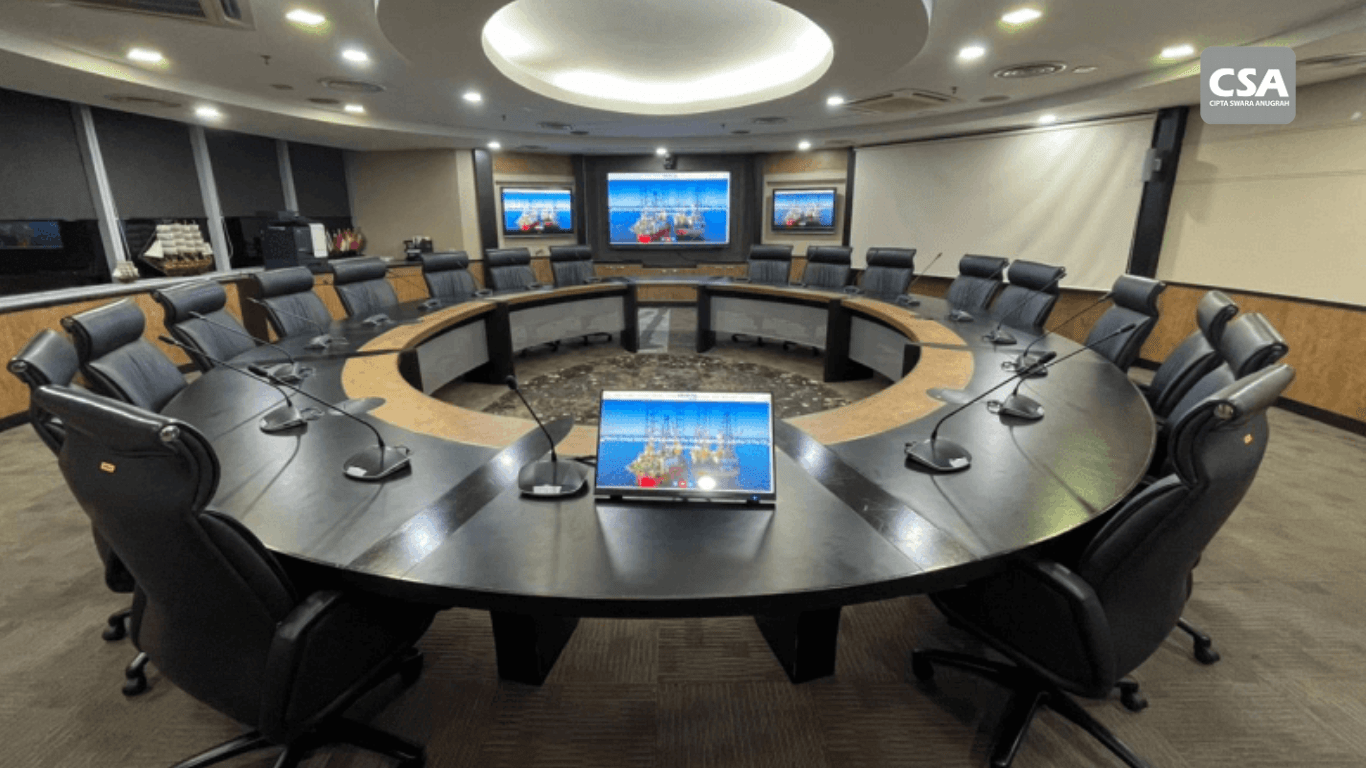
Each meeting room has its own characteristics. Small meeting rooms require simple but consistent systems. Medium-sized rooms may need table microphones with auto mixing and directional speakers. Larger rooms, such as auditoriums, require more complex solutions including wireless microphones, digital signal processors, and line array speakers.
In many cases, a sound system conference room with CSA Indonesia is designed around specific functions such as board meetings, client presentations, employee training, or hybrid conferences. Understanding the room’s purpose helps avoid unnecessary spending while selecting the right equipment.
Key Components of a Professional Conference Room Sound System
1. Conference Microphones
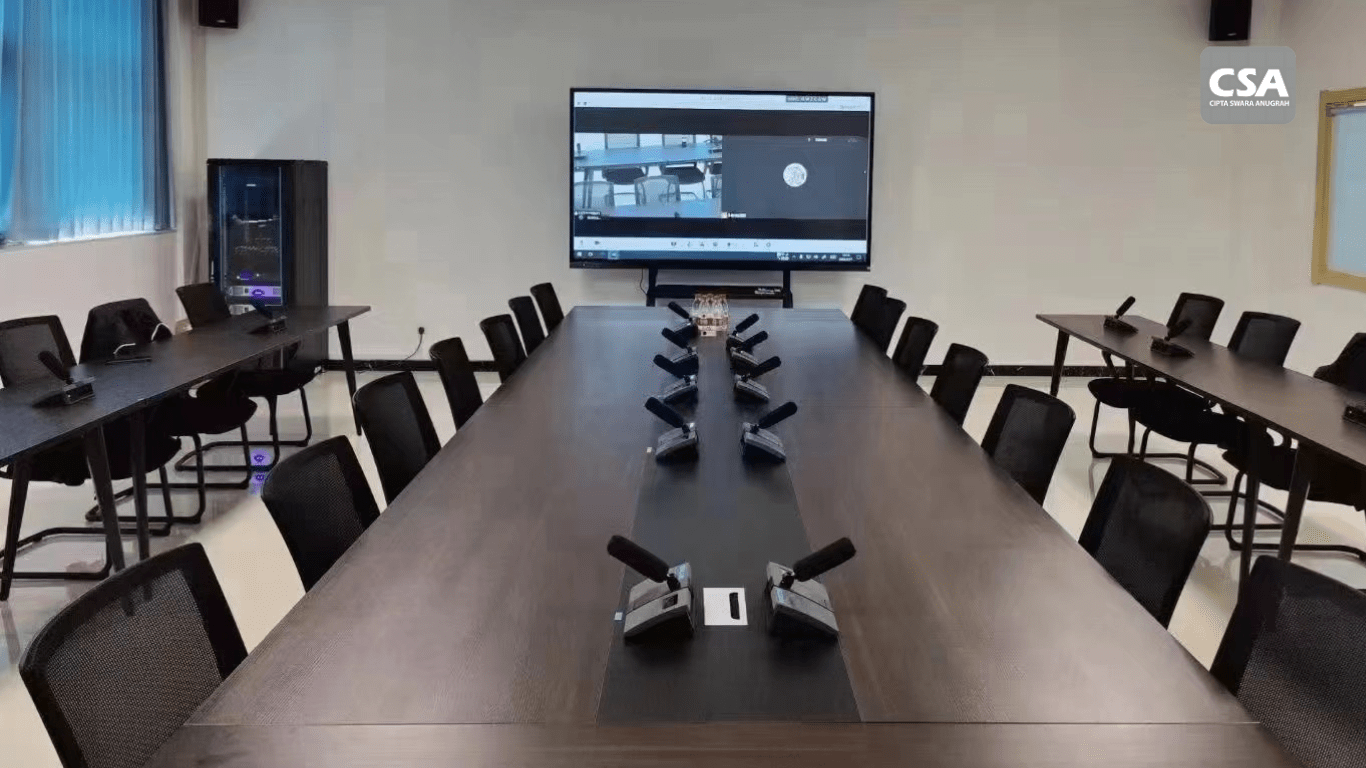
Microphones are the heart of any conference system. Common options include table microphones, ceiling microphones, and wireless microphones. CSA Indonesia typically selects models with strong noise-reduction features to maintain clarity even in busy environments.
2. Room Speakers
Speakers must deliver even sound distribution throughout the room. Ceiling speakers are often chosen for their clean appearance and wide coverage, while wall-mounted or line array speakers are more effective for larger spaces.
3. Digital Signal Processor (DSP)
A DSP manages sound dynamics, ensuring consistent audio for all participants. Features like echo cancellation, automatic gain control, and feedback suppression significantly improve overall clarity.
4. Conference Mixer
Mixers with auto mixing capability allow microphones to be synchronized automatically. This is crucial for meeting rooms with many participants.
5. Video Conference Integration
Audio systems must integrate seamlessly with platforms such as Zoom, Google Meet, and Microsoft Teams. CSA Indonesia ensures compatibility without complicated setup procedures.
CSA Indonesia’s Professional Installation Approach
A high-quality installation determines final system performance. As an experienced company in Audio, Visual, Lighting, and Automation, CSA Indonesia follows structured procedures:
-
On-Site Survey – Analyzing room dimensions, wall materials, and potential audio reflections.
-
Acoustic Analysis – Identifying echo, resonance, and dead spots.
-
Audio System Design – Creating detailed wiring layouts and sound distribution mapping.
-
Equipment Installation – Executed neatly and according to safety standards.
-
Testing and Calibration – Ensuring stable audio performance in various meeting scenarios.
-
User Training – Helping users operate the system easily and confidently.
These steps ensure each project results in a highly professional meeting room ready for daily use.
Read Also: Sound System Conference Room: The Key to Clear Audio for Professional Meetings in 2025
Why Companies Trust CSA Indonesia
Businesses choose CSA Indonesia for several clear reasons:
-
Extensive experience with corporate, government, hospitality, and educational projects.
-
Equipment recommendations based on needs rather than brand favoritism.
-
Stable, fully integrated system performance.
-
Fast and responsive after-sales support.
-
Clean, aesthetic installation and cable management.
Tips to Maximize Conference Room Sound System Performance
To keep audio quality optimal, consider these simple practices:
-
Position seats strategically near audio sources.
-
Use microphones properly and avoid covering them.
-
Keep the room quiet to reduce unnecessary noise pickup.
-
Conduct equipment checks before each meeting.
-
Adjust volume wisely to prevent feedback.
These habits ensure every meeting runs efficiently with clear communication.
Conclusion
High-quality audio systems are becoming essential as companies engage in more collaborative activities. A well-designed sound system enhances focus, supports faster decision-making, and elevates a company’s professional environment. Relying on a sound system conference room with CSA Indonesia means choosing precision, long-term reliability, and expert installation. With the right technology and professional handling, any meeting room can be transformed into a modern communication hub that boosts productivity.
For organizations seeking a more advanced and professional meeting-room experience, CSA Indonesia is the right partner to make it happen.