
In today’s rapidly evolving digital landscape, many companies are starting to understand what is a smart meeting room and how this concept can significantly improve meeting effectiveness. A smart meeting room is not just a trend. It represents the evolution of traditional meeting spaces into intelligent, integrated, and highly efficient collaboration environments.
Understanding this concept is essential, especially for companies aiming to boost team productivity and accelerate decision-making processes. This article explores the definition, characteristics, and working system of smart meeting rooms in a comprehensive and structured way.
What Is a Smart Meeting Room?
A smart meeting room is a modern meeting space that integrates various digital technologies into a single ecosystem. Its main purpose is to create a more effective, interactive, and seamless meeting experience.
Unlike conventional meeting rooms, smart meeting rooms utilize interconnected smart devices. These systems allow users to control multiple aspects of the room automatically, from presentations to remote communication.
This concept emerged from the growing demand for speed, flexibility, and borderless collaboration in modern workplaces.
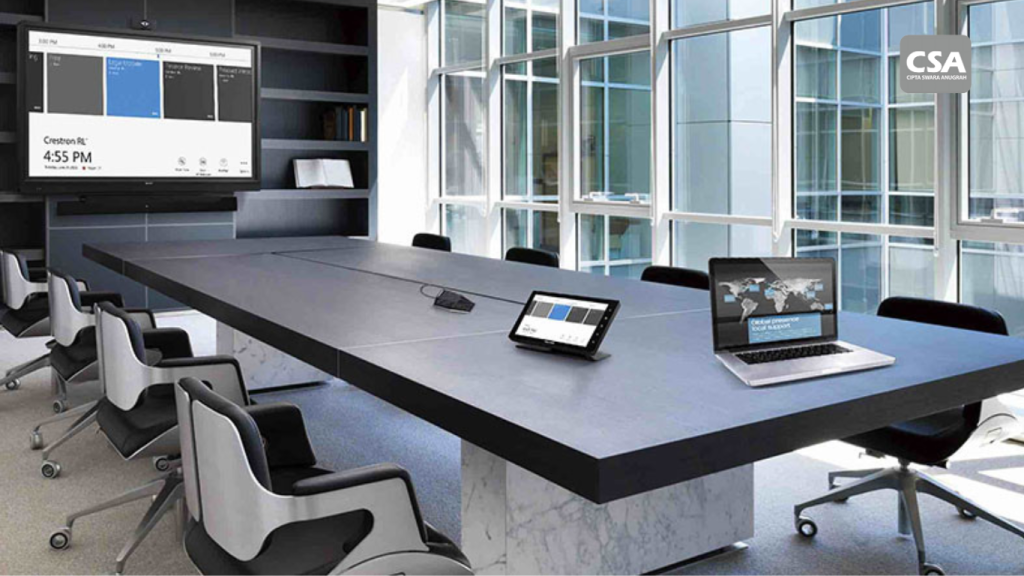
Core Concept of a Smart Meeting Room
To fully understand what is a smart meeting room, it is important to examine its core foundation. A smart meeting room is built on three key pillars.
Technology Integration
All devices within the room are interconnected. There is no longer a need to operate separate systems independently. Everything works within a unified ecosystem.
This integration allows users to manage meetings more efficiently without switching between devices.
System Automation
Smart meeting rooms minimize manual intervention. Many functions operate automatically, such as display settings, audio systems, and lighting controls.
With automation in place, users can focus entirely on discussions instead of technical setup.
Limitless Collaboration
Participants can join meetings from anywhere. There are no geographical limitations. This makes smart meeting rooms highly relevant for hybrid working environments.
Characteristics of a Smart Meeting Room
Several defining features distinguish smart meeting rooms from traditional meeting spaces.
1. Digitally Connected
All devices operate through internet connectivity or internal systems. This enables real-time data sharing and communication.
2. Interactive Environment
Users can directly interact with devices. For example, they can write on digital screens or collaborate on documents in real time.
3. User-Friendly Design
Despite advanced technology, smart meeting rooms are designed to be easy to use. Even non-technical users can operate the system efficiently.
4. Flexible Usage
These rooms can serve multiple purposes, from internal meetings to client presentations.
How a Smart Meeting Room Works
Understanding how it works is essential to fully grasp what is a smart meeting room.
When a meeting starts, users simply activate the main system. All connected devices synchronize automatically. The main display shows presentation content, while audio and video systems are ready to operate.
If remote participants are involved, the video conferencing system activates instantly. Cameras and microphones work together to ensure clear communication.
Participants can also share their screens wirelessly without using cables. This speeds up presentations and enhances collaboration.
Additionally, meeting sessions can be recorded and stored digitally for future access.
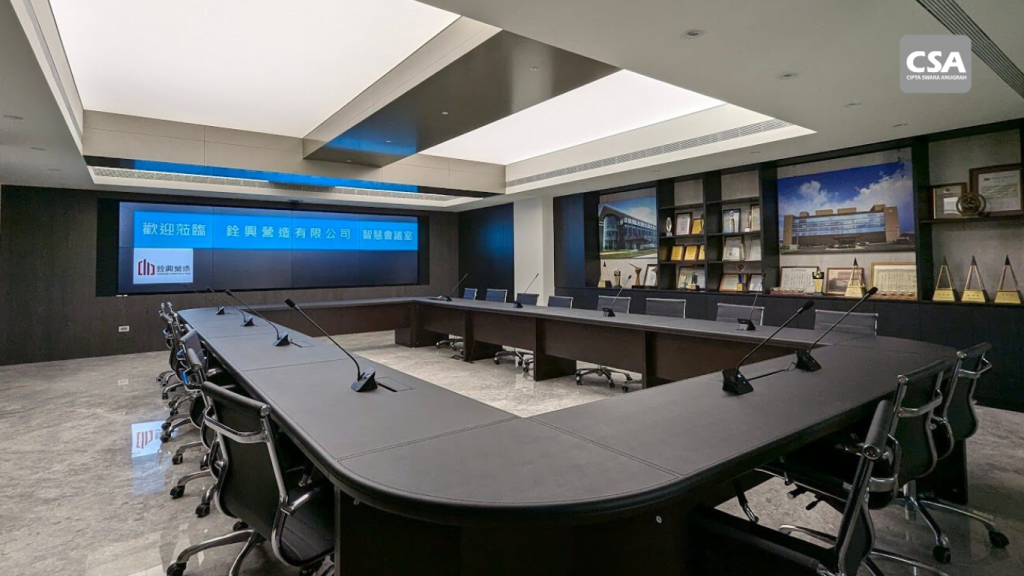
Read Also: The Advantages of Using Smart Meeting Solutions to Boost Business Productivity in the Digital Era
Key Components of a Smart Meeting Room
To better understand what is a smart meeting room, here are its main components.
Interactive Display
This serves as the central hub. Users can present content, write notes, and collaborate directly on the screen.
Video Conferencing System
This system enables high-quality remote communication, which is essential for hybrid meetings.
Audio System
Clear sound is critical. A high-quality audio system ensures every participant can hear and be heard clearly.
Wireless Presentation System
This technology allows users to share screens without cables, making meetings more practical and efficient.
Centralized Control System
All devices can be controlled from a single interface. This eliminates the need to operate each device separately.
Why Smart Meeting Rooms Are Important
Many companies adopt this concept to improve efficiency. Smart meeting rooms solve common issues found in traditional meetings.
Problems such as messy cables, long setup times, and ineffective communication can be minimized.
In addition, modern work environments demand flexibility. Smart meeting rooms enable seamless collaboration across different locations.
Difference Between Smart and Conventional Meeting Rooms
The main difference lies in how systems operate. Traditional meeting rooms rely on manual devices, while smart meeting rooms use automated and integrated systems.
In conventional setups, users often face technical issues. In contrast, smart meeting rooms are designed to minimize disruptions.
Impact of Smart Meeting Rooms on Businesses
Understanding what is a smart meeting room is incomplete without recognizing its impact.
Companies can run meetings more efficiently. Time is no longer wasted on technical setup.
Team collaboration improves significantly. Ideas can be developed in real time.
Decision-making also becomes faster due to easy access to data and communication tools.
Common Misconceptions About Smart Meeting Rooms
Many people think smart meeting rooms are just about having a large display. In reality, the concept is much more advanced.
A smart meeting room is a fully integrated system, not just a collection of devices.
Another misconception is that the technology is difficult to use. In fact, these systems are designed for simplicity and ease of use.
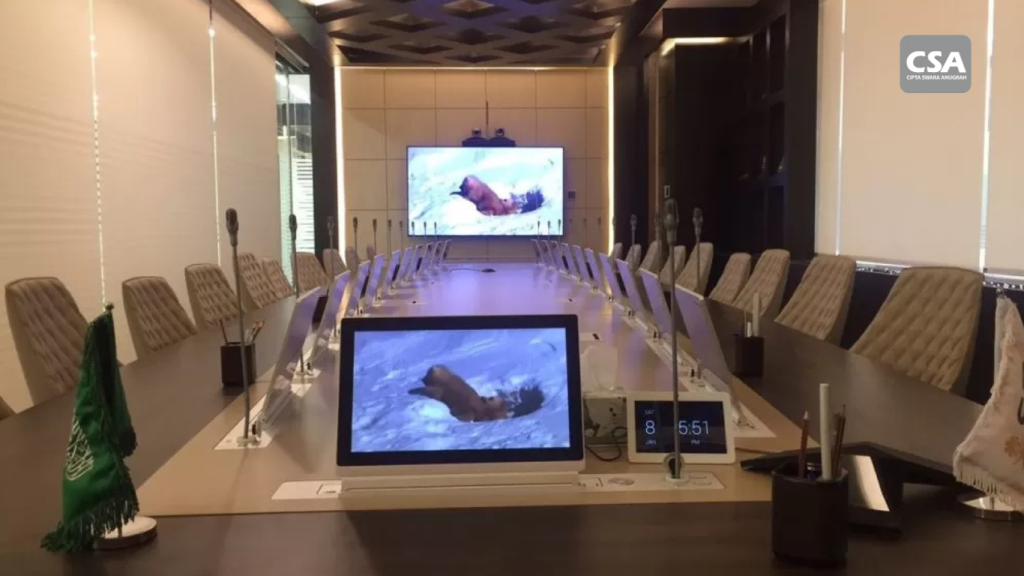
CSA Indonesia Smart Meeting Room Specialist
As a company specializing in Audio, Visual, Lighting, and Automation, CSA Indonesia stands out as a trusted smart meeting room specialist. CSA understands that every company has unique needs, which is why their approach is always based on in-depth consultation and analysis.
CSA Indonesia does not simply provide devices. They design complete systems tailored to your meeting room requirements. From selecting the right interactive flat panel to integrating high-quality audio and video conferencing systems, everything is built into a seamless ecosystem.
One of CSA’s key strengths lies in combining advanced technology with user-friendly design. Each installation ensures that users can operate the system بسهولة, even without technical expertise. This approach maximizes the value of every investment.
In addition, CSA Indonesia offers end-to-end services, including planning, installation, and maintenance. With professional support, companies can avoid common technical issues associated with non-integrated systems.
With strong experience and a proven portfolio, CSA Indonesia is a reliable partner for businesses looking to implement smart meeting room solutions effectively. Their systems are not only modern but also scalable to support future business growth.
Conclusion
Understanding what is a smart meeting room is a crucial step for companies adapting to the digital era. This concept goes beyond technology. It focuses on creating a more effective and collaborative meeting environment.
With integrated, automated, and flexible systems, smart meeting rooms offer a powerful solution to improve meeting productivity.
Companies that adopt this approach gain a competitive advantage in efficiency and decision-making speed.
FAQ About Smart Meeting Rooms
1. What is a smart meeting room in simple terms?
A smart meeting room is a technology-enabled meeting space designed to improve communication and collaboration.
2. What is the main purpose of a smart meeting room?
Its purpose is to enhance efficiency, reduce technical issues, and streamline meetings.
3. Are smart meeting rooms only for large companies?
No. Businesses of all sizes can implement this concept based on their needs.
4. What makes it different from a traditional meeting room?
The main difference is system integration and automation.
5. Is a smart meeting room difficult to use?
No. It is designed to be simple and user-friendly.
6. Does it support hybrid work?
Yes. Smart meeting rooms are ideal for both in-person and remote collaboration.
7. Is it expensive to build a smart meeting room?
Costs vary depending on requirements, but the long-term benefits are significant.