
In today’s rapidly evolving work environment, a critical question arises: why companies need smart meeting rooms as part of their daily operations? This is not just about following a technology trend. It directly relates to efficiency, speed, and effectiveness in running a modern business.
Many companies still rely on conventional meeting rooms that no longer meet today’s demands. Without realizing it, inefficient meetings can slow down team productivity and delay decision-making processes.
Smart meeting rooms provide a solution to these challenges. They integrate advanced technologies to create a more seamless, interactive, and productive meeting experience. Below are the key reasons that clearly explain why companies need smart meeting rooms.
Why Companies Need Smart Meeting Rooms
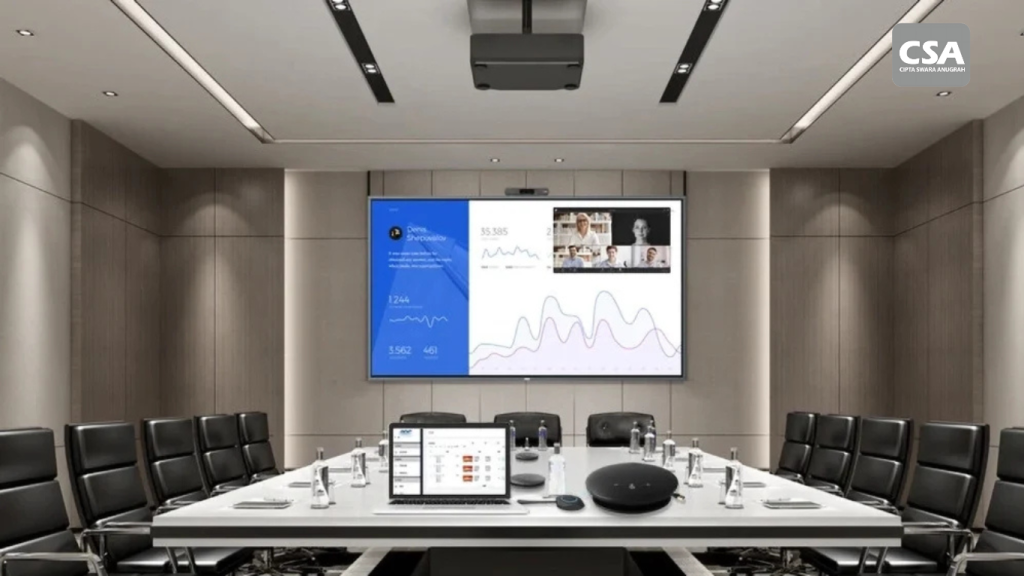
Read Also: Smart Meeting Room VS Traditional Meeting Room: A Comprehensive Comparison for Modern Workspaces
Conventional Meetings Are No Longer Effective
The biggest issue with traditional meeting rooms is inefficiency. Meetings often start late due to technical problems such as incompatible devices, messy cable setups, or unstable connections.
Communication in conventional meetings also tends to be one-way. Many participants become passive listeners instead of active contributors.
Understanding why companies need smart meeting rooms starts here. Integrated technology ensures meetings run smoothly, quickly, and interactively from the very beginning.
Team Productivity Depends on Meeting Systems
Companies often focus on targets and KPIs, but overlook the fact that meetings consume a large portion of working hours.
Ineffective meetings can waste hours every week. Over time, this leads to significant productivity loss.
Smart meeting rooms improve productivity by enabling:
- Instant access to presentation materials
- Real-time collaboration
- Minimal technical disruptions
With an efficient system, teams can focus directly on discussions and solutions. This is one of the strongest reasons why companies need smart meeting rooms.
Faster Decision-Making
In business, speed is a competitive advantage. Companies that delay decisions risk falling behind.
Traditional meetings often take too long without delivering clear outcomes. Discussions repeat due to lack of data visualization and clarity.
Smart meeting rooms change this dynamic. Teams can display data instantly, analyze it together, and make decisions on the spot.
Without this support, the process becomes slower and less effective. This is a key reason why companies need smart meeting rooms to stay competitive.
Supporting Hybrid and Remote Work
Hybrid work has become the new standard. Employees now work from different locations, sometimes across cities or countries.
Without a modern meeting system, communication becomes fragmented. Remote participants often feel disconnected.
Smart meeting rooms ensure equal participation for everyone. Whether attending physically or virtually, all participants can collaborate without barriers.
This directly answers why companies need smart meeting rooms in today’s flexible work environment.
Reducing Operational Costs
Many companies overlook the hidden costs of conventional meetings.
Travel expenses, wasted time, and delayed decisions all impact the company’s financial performance.
Smart meeting rooms significantly reduce these costs. Meetings can be conducted virtually without sacrificing quality.
This efficiency makes a strong case for why companies need smart meeting rooms as a long-term investment.
Enhancing Team Collaboration
Collaboration is not just about discussion. It is about how ideas are developed effectively.
In traditional meeting rooms, brainstorming is limited to whiteboards or slides.
Smart meeting rooms create a more interactive collaboration experience through:
- Digital whiteboards
- Real-time annotations
- Multi-device integration
Teams can share and develop ideas instantly. This leads to more dynamic and productive discussions.
Without the right tools, valuable ideas often remain unexplored. This is another reason why companies need smart meeting rooms.
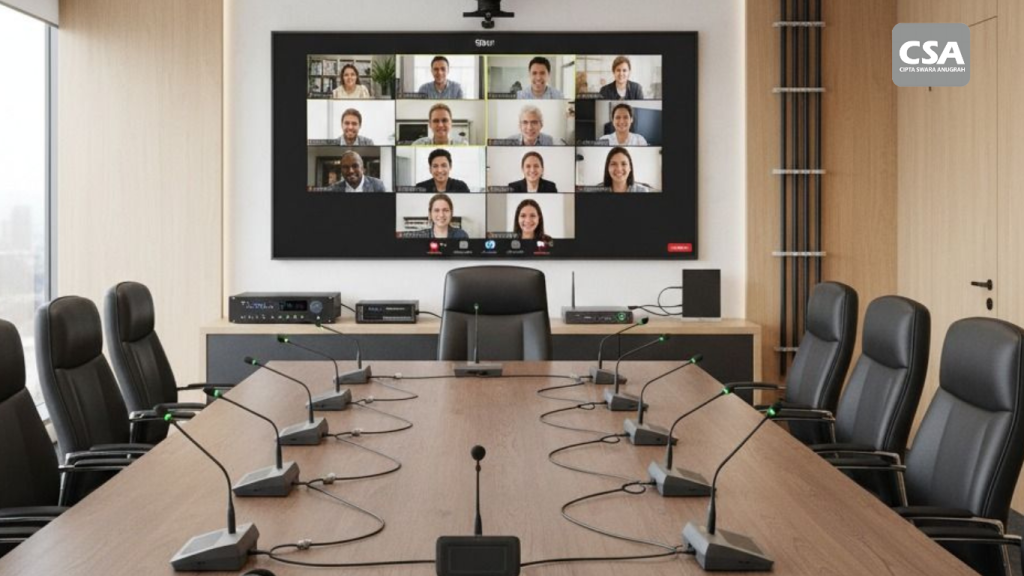
Strengthening Professional Image
Meetings are not only internal. They often involve clients and business partners.
A modern meeting room creates a professional and credible impression. On the other hand, technical issues during meetings can damage a company’s reputation.
Smart meeting rooms ensure smooth presentations, clear visuals, and uninterrupted communication.
This plays a crucial role in building trust, making it another reason why companies need smart meeting rooms.
Integration with Digital Ecosystems
Modern companies rely on various digital tools such as cloud storage, project management platforms, and communication apps.
Traditional meeting rooms fail to integrate with these systems.
Smart meeting rooms offer full integration with a company’s digital ecosystem. Teams can access and use data instantly during meetings.
This creates a more efficient and structured workflow. Without integration, processes become slower and disconnected.
Minimizing Human Error
Human errors often occur during meetings, such as using outdated files, missing key points, or miscommunication.
Smart meeting rooms help reduce these risks through automation features like:
- Cloud storage
- Meeting recording
- Digital note-taking
These features ensure information is accurate and easily accessible.
This further strengthens the case for why companies need smart meeting rooms.
A Strategic Investment, Not Just a Facility
Many companies still see smart meeting rooms as an additional facility. In reality, they are a strategic investment.
The impact goes beyond daily operations and contributes to long-term business growth.
Companies that adopt this technology become more adaptive, agile, and competitive.
This is the most fundamental reason why companies need smart meeting rooms—to ensure business sustainability in the future.
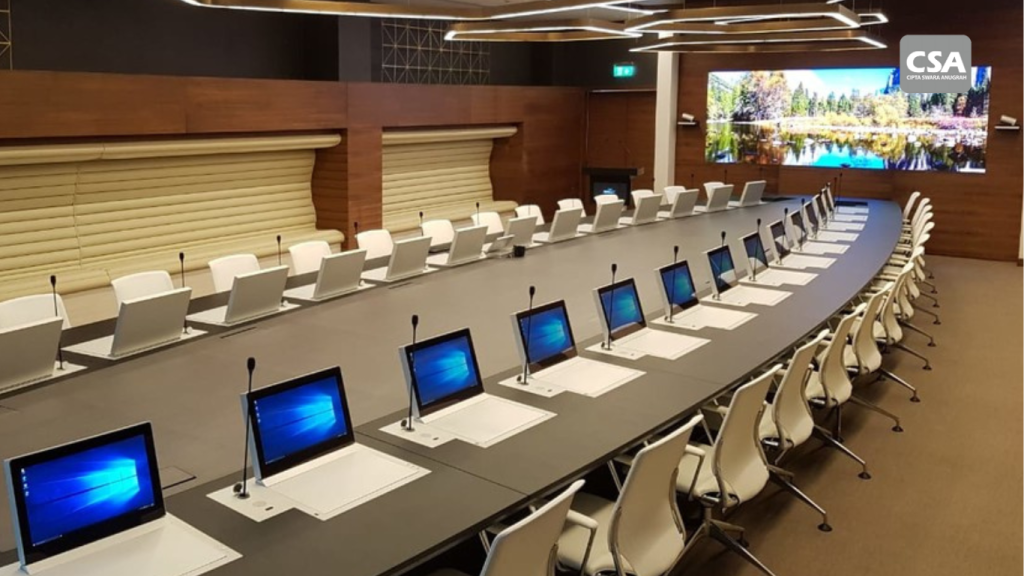
Read Also: Best Smart Meeting Room for Maximum Productivity from CSA Indonesia in the Digital Era
CSA: The Best Smart Meeting Room Specialist in Indonesia for Integrated Solutions
When it comes to proper implementation, choosing the right technology partner is crucial. Many companies already understand why companies need smart meeting rooms, but fail during execution. This is where CSA (Cipta Swara Anugrah) plays a vital role as one of the best smart meeting room specialists in Indonesia.
CSA focuses on Audio, Visual, Lighting, and Automation solutions for business needs. With extensive experience across industries, CSA does not just provide equipment, but delivers fully integrated solutions tailored to each company.
One of CSA’s key strengths is its end-to-end approach. From analyzing meeting room requirements, designing systems, to installation and maintenance, everything is handled professionally.
CSA also understands that every company has unique needs. Therefore, each solution is customized, whether for small, medium, or enterprise-scale businesses.
By utilizing the latest technologies such as interactive displays, premium video conferencing systems, and digital integration, CSA helps companies significantly improve productivity and efficiency.
For businesses aiming to accelerate digital transformation, partnering with a specialist like CSA is not just a smart choice—it is a strategic move that ensures long-term success.
Conclusion
The question why companies need smart meeting rooms is no longer theoretical. It reflects a real need in today’s modern workplace.
From improving productivity and reducing costs to accelerating decision-making, the benefits directly impact business performance.
Companies that continue to rely on outdated systems will face increasing challenges. Meanwhile, those that invest in smart meeting rooms gain a strong competitive advantage.
To stay relevant and grow, adopting this technology is no longer optional—it is essential.
FAQ (Frequently Asked Questions)
1. Why companies need smart meeting rooms instead of traditional ones?
Because smart meeting rooms offer better efficiency, interactive collaboration, and seamless technology integration.
2. Are smart meeting rooms only for large companies?
No. Small and medium-sized businesses can also benefit based on their needs and budget.
3. What is the most noticeable impact of smart meeting rooms?
Improved productivity, faster decision-making, and reduced operational costs.
4. Is implementation complicated?
Not if properly planned. Most systems are user-friendly and easy to use.
5. How fast is the return on investment (ROI)?
It depends on usage, but typically fast due to time and cost efficiency.
6. Are smart meeting rooms secure for company data?
Yes, especially when equipped with encryption and access control systems.
7. What is the first step to implement a smart meeting room?
Start by analyzing company needs, selecting suitable technology, and implementing it gradually.