
Modern companies no longer use meeting rooms solely for internal presentations. Meetings have evolved into hybrid collaboration hubs that connect teams across multiple locations in real time. This is why understanding How Video Conference Systems Work in CSA Indonesia Smart Meeting Rooms has become increasingly important for businesses looking to improve communication efficiency and meeting quality.
Unlike conventional conference systems, smart meeting rooms operate through the integration of multiple audio visual technologies connected within one automated ecosystem. Every device is designed to work together seamlessly, allowing users to start meetings faster, easier, and with minimal technical disruptions.
From automatic cameras and intelligent microphones to speaker systems and centralized control panels, every technology operates behind the scenes to create a smoother meeting experience.
How Video Conference Systems Work in Smart Meeting Rooms
Video conference systems in smart meeting rooms operate through several automated and integrated processes.
When users enter the room, the system detects activity and automatically activates the meeting devices.
Displays turn on. Cameras become active. Audio systems connect instantly. The meeting platform is ready to use.
Once users select a platform such as Zoom, Microsoft Teams, or Google Meet, the system immediately connects all devices to the meeting application.
Cameras capture participant visuals. Microphones pick up voices throughout the room. Speakers distribute remote participant audio evenly across the meeting space.
All audio and video data is then transmitted in real time through the internet network.
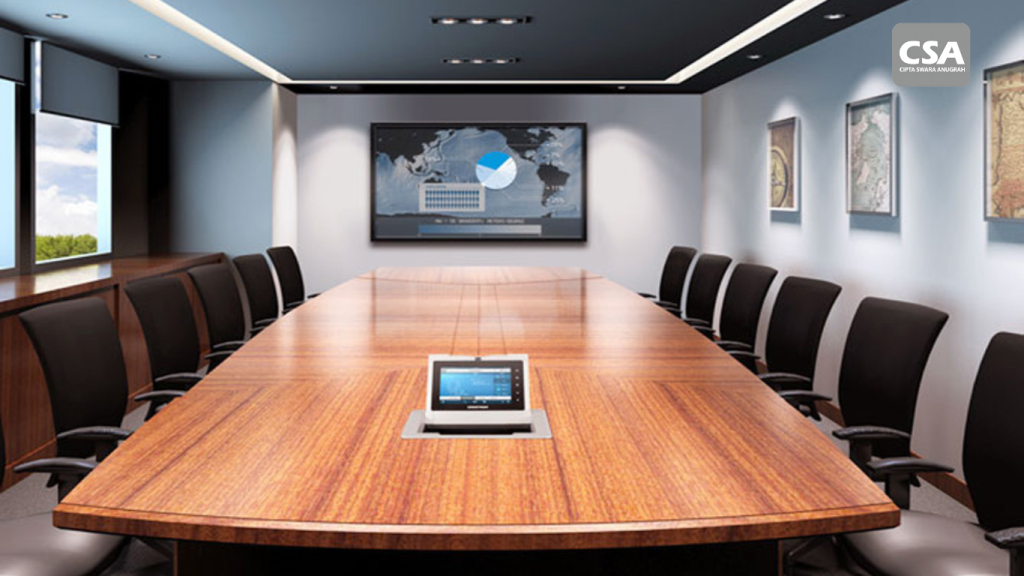
Read Also: Technologies Used in CSA Indonesia Smart Meeting Room
The Integration System as the Main Control Center
Inside a smart meeting room, devices do not operate independently.
Technologies such as the Q-SYS Platform are used to integrate audio, video, cameras, displays, and control systems into one centralized platform.
This integration system acts as the “brain” of the entire video conference operation.
When a meeting starts, the platform manages:
- audio connections
- display switching
- camera control
- audio distribution
- device activation
- video input switching
This approach makes meeting rooms significantly easier to operate.
How Cameras Work in Smart Meeting Rooms
Cameras are one of the most important components in modern video conferencing systems.
Smart meeting rooms commonly use PTZ cameras, which stands for pan, tilt, and zoom.
These cameras can automatically move and follow active speakers inside the room.
When someone starts speaking, the auto-tracking system directs the camera toward the speaker in real time.
This technology creates a far more dynamic meeting experience compared to traditional static cameras.
Remote participants can clearly see speakers without requiring a camera operator.
In some implementations, smart meeting rooms also use additional cameras to provide better viewing angles.
How Ceiling Microphones Work
Audio quality plays a critical role in video conferencing.
For this reason, smart meeting rooms use ceiling microphones equipped with intelligent pickup technology.
The microphones are installed on the ceiling and can capture voices throughout the meeting area.
When someone speaks, the system automatically detects the sound source.
Audio signals are then processed to reduce noise, echo, and unwanted background sounds.
As a result, voices sound clearer for both onsite and remote participants.
This technology also eliminates the need for handheld microphones during meetings.
How Speaker Systems Work
Speaker systems are responsible for distributing remote participant audio throughout the room.
In smart meeting rooms, speakers are designed to deliver balanced sound without distortion.
Speaker placement is carefully planned based on room size and acoustic conditions.
The audio system also performs echo cancellation to minimize feedback during meetings.
This creates a more comfortable and professional communication experience.
How Display Systems Work
Display systems function as the primary visual center during meetings.
Online participants, presentations, documents, and meeting dashboards are shown through the main display.
In modern smart meeting rooms, displays can automatically adapt based on meeting activities.
When presentations begin, the system can instantly switch layouts without manual adjustments.
Some systems also support automatic layer switching for more advanced visual configurations.
How the Control Panel Works
One of the key features of smart meeting rooms is the centralized control panel.
The control panel allows users to manage the entire meeting system through one interface.
Users can:
- adjust audio settings
- select meeting platforms
- control cameras
- manage displays
- control lighting
- switch input sources
All controls are available within one simple and user-friendly interface.
This approach reduces dependency on IT support teams.
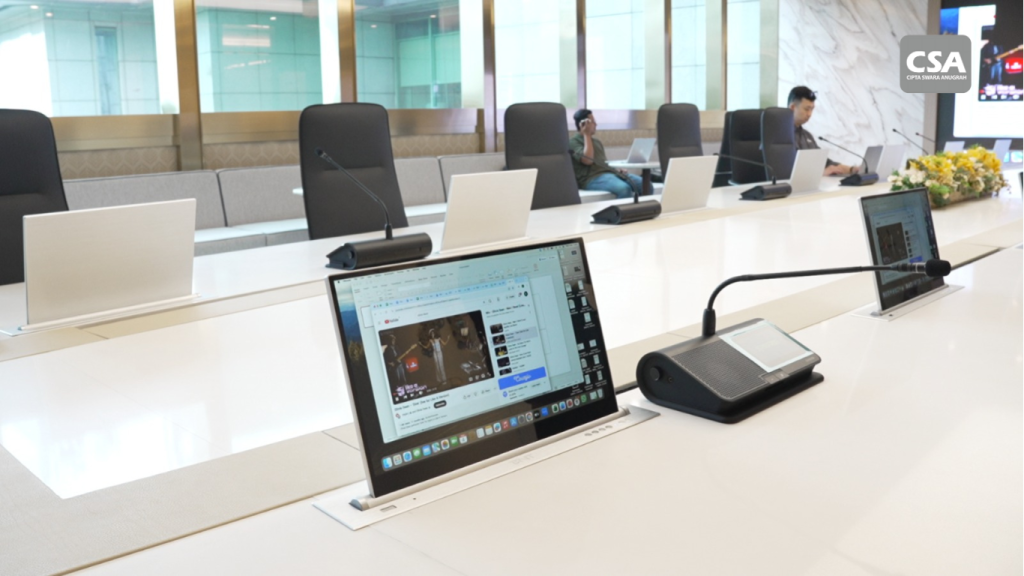
How Meeting Room Automation Works
Automation is one of the biggest differences between smart meeting rooms and conventional meeting spaces.
The automation system connects sensors, audio visual devices, and control systems into one ecosystem.
When the room is in use, the system automatically runs predefined meeting scenarios.
For example:
- displays turn on automatically
- cameras activate instantly
- audio systems connect automatically
- lighting adjusts based on room conditions
Automation speeds up meeting preparation and minimizes technical errors.
How Meeting Platform Switching Works
Modern companies often use multiple meeting platforms.
Because of this, smart meeting rooms are designed to switch between platforms easily.
Users can move from Zoom to Microsoft Teams or Google Meet without unplugging cables or changing devices.
The integration system automatically adjusts audio, camera, and display settings based on the selected platform.
This creates a more flexible and efficient meeting experience.
How Networks Support Video Conferences
Video conferencing depends heavily on stable internet connectivity.
In smart meeting rooms, network systems are designed to handle real-time audio and video transmission efficiently.
Stable bandwidth helps maintain consistent video quality and clear audio communication.
Poor internet connections can cause delays, frozen visuals, or audio interruptions.
This is why network infrastructure becomes one of the most critical components in smart meeting room systems.
How AI Works in Smart Meeting Rooms
Some modern smart meeting rooms are now integrating artificial intelligence or AI technologies.
AI helps systems operate more responsively and automatically.
AI technologies are commonly used for:
- auto-tracking cameras
- voice detection
- automatic framing
- noise reduction
- smart switching
With AI integration, systems can adapt to meeting conditions automatically without manual intervention.
How Hybrid Meetings Work in Smart Meeting Rooms
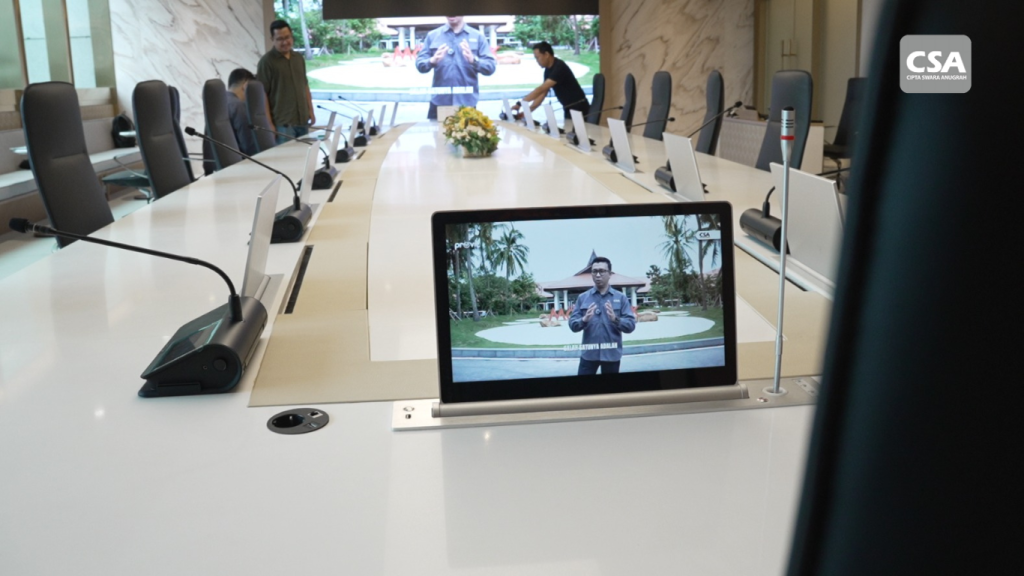
Smart meeting rooms are specifically designed to support hybrid collaboration.
Both onsite and remote participants should experience smooth communication.
This is why the entire audio visual system is designed to create a natural meeting experience for everyone involved.
Cameras automatically follow speakers. Audio remains clear. Visual presentations look professional.
This approach helps companies improve collaboration quality across multiple locations.
How Smart Meeting Rooms Reduce Technical Issues
Traditional meeting rooms often experience technical problems.
These include microphone failures, camera issues, or display connection problems.
Smart meeting rooms reduce these disruptions through system integration and automation.
All devices are preconfigured to work together seamlessly.
This creates a more stable and reliable meeting environment.
The Impact of Video Conference Systems on Productivity
Effective video conference systems directly improve workplace efficiency.
Meetings start faster. Teams stay focused on discussions instead of technical troubleshooting.
Better communication quality also accelerates decision-making processes.
Over time, smart meeting rooms contribute significantly to overall company productivity.
Read Also: Advanced Hybrid Meeting Room: A Modern Meeting Room Solution for Companies
Conclusion
Video conference systems in smart meeting rooms operate through the integration of multiple audio visual technologies within one automated platform.
From PTZ cameras and ceiling microphones to speaker systems, displays, and centralized control panels, every technology works together to create a more efficient and professional meeting experience.
With automated and fully integrated systems, companies can run hybrid meetings with better communication quality and fewer technical disruptions.
FAQ About Video Conference Systems in Smart Meeting Rooms
1. How do video conference systems work in smart meeting rooms?
The system captures audio and video, then transmits them in real time through internet-based meeting platforms.
2. What is the function of a PTZ camera?
PTZ cameras automatically follow speakers to create a more dynamic meeting experience.
3. Why use ceiling microphones?
Ceiling microphones capture voices throughout the room without requiring handheld microphones.
4. What is the purpose of a centralized control panel?
It allows users to control the entire meeting system from one interface.
5. Why are smart meeting rooms more efficient?
Because all systems operate automatically and are fully integrated.
6. Do smart meeting rooms support hybrid meetings?
Yes, they are specifically designed for simultaneous onsite and remote collaboration.
7. What are the benefits of meeting room automation?
Automation speeds up setup processes and minimizes technical disruptions.
8. Why is system integration important in video conferencing?
Integration ensures all devices work together smoothly and reliably.