
As businesses continue to embrace digital transformation, investing in modern Audio Visual technology has become essential for improving collaboration, communication, and workplace productivity. However, purchasing high-quality equipment alone does not guarantee a successful project. Understanding Audio Visual Installation for Companies: Process, Benefits, and What You Need to Prepare is the first step toward building an efficient, reliable, and future-ready workplace.
Audio Visual Installation is far more than mounting displays or connecting conference cameras. It involves a systematic process that ensures every component works together seamlessly according to the room’s purpose, company workflows, and long-term operational goals. Without proper planning and professional installation, businesses may encounter compatibility issues, poor user experience, unnecessary expenses, and costly project revisions.
For this reason, professional Audio Visual Installation always begins with careful planning before any equipment is installed. A structured implementation process minimizes risks while maximizing the return on technology investment.
What Is Audio Visual Installation?
Audio Visual Installation is the process of deploying, configuring, and integrating Audio Visual equipment into a business environment according to a well-planned system design.
The installation process includes much more than physically placing devices inside a room. It ensures that displays, conference cameras, microphones, speakers, control systems, networking infrastructure, and supporting equipment operate as one complete solution.
Whether the project involves a meeting room, executive boardroom, training center, auditorium, or command center, every installation should be tailored to the room’s specific operational requirements.
Professional installation ensures that the entire system performs consistently while remaining easy to operate, maintain, and expand in the future.
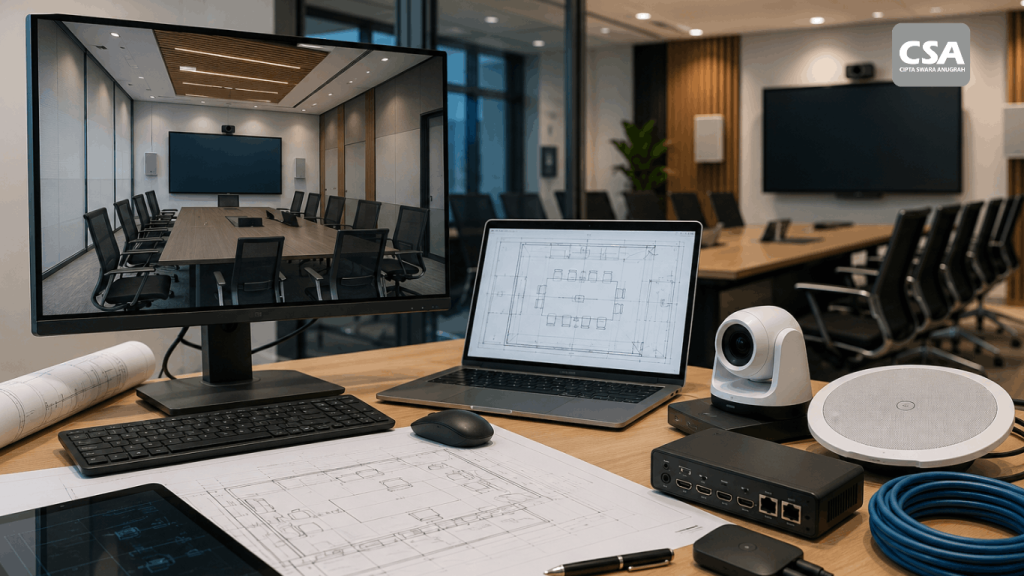
Baca Juga: Why Is Audio Visual Design an Essential Step Before Installation?
Why Audio Visual Installation Requires Careful Planning
Many organizations assume that installing an Audio Visual system simply involves purchasing equipment and asking technicians to install it.
In reality, every room presents different technical challenges.
Factors such as room dimensions, ceiling height, lighting conditions, acoustics, network infrastructure, seating layout, and power availability all influence system performance.
Without proper planning, companies may experience problems such as:
- Displays positioned at poor viewing angles.
- Cameras failing to capture every participant.
- Uneven sound distribution.
- Microphones with inconsistent voice pickup.
- Complicated cable management.
- Difficult system operation.
A structured installation process prevents these issues while ensuring the final solution supports business activities effectively.
The Audio Visual Installation Process
Every professional Audio Visual project follows a systematic workflow designed to reduce implementation risks and deliver consistent performance.
Although project requirements may differ, the overall process generally includes the following stages.
1. Initial Consultation
Every successful installation begins with understanding the client’s objectives.
During the consultation stage, the project team gathers information about:
- Room functions.
- Business activities.
- Collaboration requirements.
- User expectations.
- Existing infrastructure.
- Future expansion plans.
This discussion provides the foundation for every decision made throughout the project.
2. Site Survey
Once project requirements are understood, engineers conduct a comprehensive site survey.
This step allows the team to evaluate the physical environment before installation begins.
The survey typically examines:
- Room dimensions.
- Seating layout.
- Lighting conditions.
- Acoustic characteristics.
- Electrical capacity.
- Network infrastructure.
- Ceiling construction.
- Wall conditions.
- Equipment mounting locations.
Collecting accurate site information helps eliminate unexpected challenges during installation.
3. Requirement Analysis
Following the site survey, engineers analyze all collected information to determine the most appropriate solution.
Rather than recommending products based solely on specifications, professional installers evaluate how technology will support the company’s operational workflow.
This analysis ensures every device contributes to an efficient and user-friendly meeting environment.
4. System Design
After identifying project requirements, engineers develop a detailed installation plan.
The system design includes:
- Equipment layout.
- Display positioning.
- Camera placement.
- Speaker distribution.
- Microphone coverage.
- Cable routing.
- Network integration.
- Control system architecture.
A complete design provides clear technical guidance before any installation work begins.
This significantly reduces installation errors while improving project efficiency.
5. Infrastructure Preparation
Before installing equipment, the necessary infrastructure must be prepared.
This stage may include:
- Cable installation.
- Electrical preparation.
- Network configuration.
- Equipment racks.
- Mounting brackets.
- Structural reinforcement.
- Conduit installation.
Completing these preparations beforehand allows technicians to install equipment more efficiently while maintaining a clean and organized workspace.
6. Equipment Installation
Once the infrastructure is ready, technicians begin installing the planned Audio Visual devices.
Depending on the project scope, installation may involve:
- Professional displays.
- Interactive Flat Panels.
- LED walls.
- PTZ conference cameras.
- Ceiling microphones.
- Wireless microphones.
- Digital Signal Processors (DSP).
- Amplifiers.
- Ceiling speakers.
- Control panels.
- Video conferencing systems.
Every component is installed according to the approved system design to ensure consistent performance and simplify future maintenance.
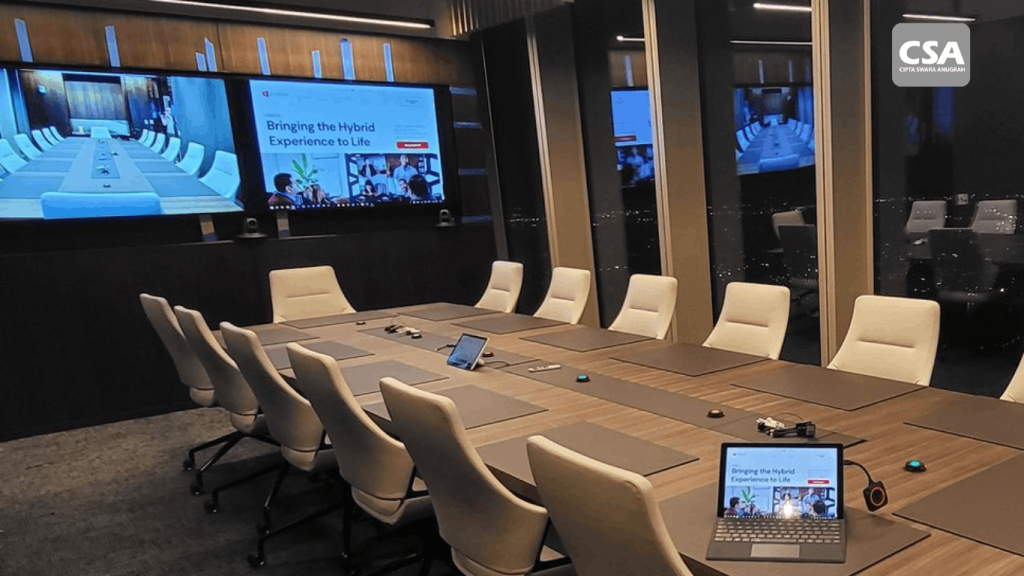
Read Also: How to Determine Audio Visual Requirements for Your Office to Maximize Investment Efficiency
7. System Integration
After all equipment has been installed, the next stage is system integration.
This process connects every Audio Visual device into a unified platform that operates smoothly and efficiently.
Rather than functioning independently, displays, conference cameras, microphones, speakers, wireless presentation systems, control panels, and video conferencing platforms work together as a single solution.
Professional system integration also ensures compatibility between hardware and software, reducing operational issues while providing a more intuitive user experience.
A properly integrated system enables employees to start meetings quickly without dealing with complicated technical settings.
8. System Configuration
Once integration is complete, engineers configure every device according to the project’s technical requirements.
Configuration typically includes:
- Audio calibration.
- Video optimization.
- Camera presets.
- Microphone sensitivity adjustments.
- Speaker equalization.
- Network settings.
- Control panel programming.
- User access configuration.
The purpose of this stage is to optimize overall system performance while ensuring every component functions reliably in daily business operations.
9. Testing and Commissioning
Before the project is officially handed over, every system undergoes comprehensive testing.
This stage verifies that each component performs according to the approved design and operational requirements.
Testing generally includes:
- Display performance.
- Audio quality.
- Microphone coverage.
- Camera functionality.
- Video conferencing compatibility.
- Network stability.
- Control system response.
- Signal transmission.
After successful testing, the commissioning process confirms that the entire Audio Visual system is fully operational and ready for everyday use.
Commissioning also minimizes the possibility of technical issues after project completion.
10. User Training
Even the most advanced Audio Visual system cannot deliver maximum value if users are unfamiliar with its operation.
For this reason, professional installation projects usually conclude with user training.
Training sessions help employees understand:
- How to start meetings.
- How to operate displays.
- How to use wireless presentation systems.
- How to control conference cameras.
- How to adjust audio settings.
- Basic troubleshooting procedures.
Well-trained users increase system adoption while reducing dependence on technical support for routine operations.
Benefits of Professional Audio Visual Installation
Working with an experienced Audio Visual installation partner offers advantages that extend beyond proper equipment installation.
Some of the key benefits include:
Reliable System Performance
Professional installation ensures every component operates according to manufacturer recommendations and project requirements.
Better User Experience
Employees can conduct meetings, presentations, and hybrid collaborations with minimal technical interruptions.
Higher Installation Quality
Proper cable management, equipment placement, and system configuration contribute to cleaner installations and improved reliability.
Easier Maintenance
Comprehensive documentation and organized infrastructure simplify future maintenance and troubleshooting.
Long-Term Scalability
A professionally installed system allows businesses to expand their Audio Visual infrastructure without rebuilding the entire installation.
What Should Companies Prepare Before Starting an Audio Visual Installation Project?
Preparation is essential for ensuring a successful implementation.
Before installation begins, companies should identify several important factors, including:
- The primary purpose of the room.
- Number of expected participants.
- Available room dimensions.
- Existing network infrastructure.
- Electrical capacity.
- Meeting and collaboration requirements.
- Budget allocation.
- Project timeline.
- Future expansion plans.
Preparing this information in advance enables consultants to recommend solutions that align with both operational needs and long-term business objectives.
Common Mistakes During Audio Visual Installation
Many installation challenges arise because organizations focus only on purchasing equipment while overlooking the planning process.
Some of the most common mistakes include:
- Buying devices before evaluating actual requirements.
- Skipping the site survey.
- Ignoring room acoustics.
- Choosing display sizes that do not match viewing distances.
- Installing cameras in ineffective locations.
- Poor cable management.
- Failing to conduct system testing.
- Neglecting project documentation.
Avoiding these mistakes helps reduce project costs while improving overall system reliability.
Why Choose CSA Indonesia for Audio Visual Installation?
Successful Audio Visual Installation requires more than technical expertise.
It demands careful planning, professional execution, and long-term support.
CSA Indonesia (Cipta Swara Anugrah) provides comprehensive Audio Visual services, starting from consultation and site surveys to system design, installation, integration, commissioning, and maintenance.
By understanding each client’s operational requirements, CSA Indonesia delivers customized Audio Visual solutions that improve collaboration, increase productivity, and support future business growth.
Rather than simply installing equipment, CSA Indonesia develops integrated technology environments that enable organizations to communicate more effectively and operate more efficiently.
Conclusion
Audio Visual Installation is much more than placing technology inside a room.
It is a structured process that combines planning, engineering, installation, integration, testing, and user training into one complete solution.
When performed professionally, Audio Visual Installation helps businesses maximize technology investments, improve collaboration, simplify daily operations, and prepare their workspaces for future growth.
Organizations that invest in proper planning and experienced installation partners gain a reliable, scalable, and high-performing Audio Visual system that continues to deliver value for years to come.
Frequently Asked Questions (FAQ)
What is Audio Visual Installation?
Audio Visual Installation is the process of installing, configuring, and integrating Audio Visual equipment to create a reliable system that supports communication, collaboration, and business operations.
Why is professional Audio Visual Installation important?
Professional installation ensures proper equipment placement, system compatibility, optimal performance, and long-term reliability while reducing installation risks.
How long does an Audio Visual Installation project take?
Project duration depends on room size, system complexity, infrastructure readiness, and the number of devices being installed.
What should companies prepare before installation?
Companies should prepare room information, business requirements, network infrastructure, electrical capacity, project budget, implementation timeline, and future expansion plans.
What is the difference between Audio Visual Installation and Audio Visual Integration?
Installation focuses on deploying and configuring equipment, while integration connects multiple technologies into a unified system that operates seamlessly.
Why should businesses choose CSA Indonesia?
CSA Indonesia offers end-to-end Audio Visual solutions, including consultation, system design, installation, integration, commissioning, and maintenance, ensuring every project delivers reliable performance and long-term business value.