
A sound system that is too loud can disturb customers in a restaurant. In an office, unclear audio can disrupt presentations. Meanwhile, a hall requires even sound distribution across a large audience area. That is why choosing the right sound system for your business should start with the room’s function, acoustic characteristics, and daily activities.
A good audio system is not simply about producing loud sound. It should deliver clear, comfortable, and consistent audio throughout the areas that require sound coverage.
Every business also has different audio requirements. Restaurants need comfortable background music to create the right atmosphere. Offices need flexible audio solutions for communication and presentations. Meeting rooms prioritize speech clarity, while halls require wider coverage for larger audiences.
For this reason, audio equipment should be selected based on the specific needs of each space. This approach helps businesses achieve a more effective system that is also easier to operate.
Tips for Choosing the Right Sound System for Your Business Needs
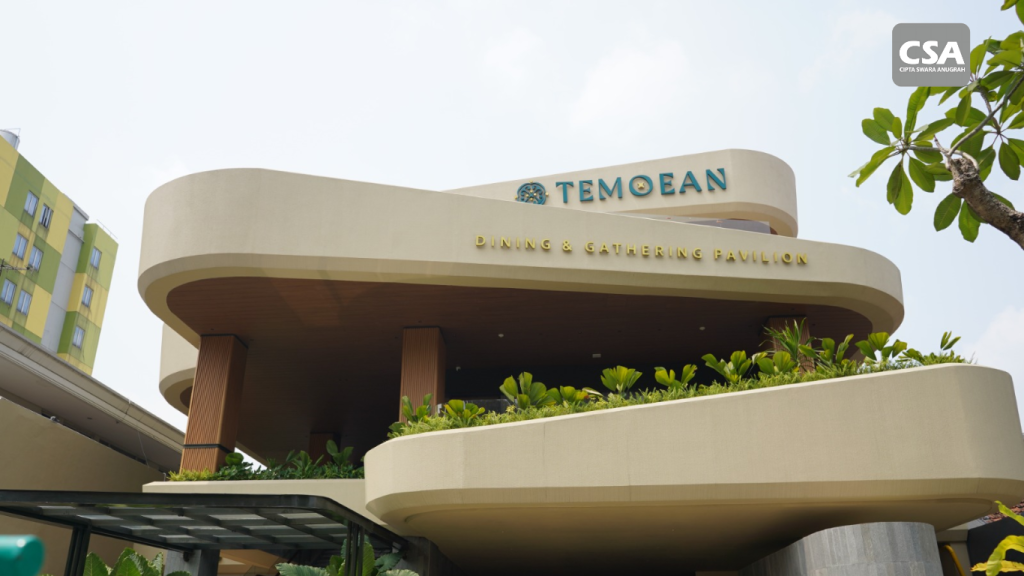
Read Also: Restaurant Sound System Installation at Temoan Bogor by CSA Indonesia
Determine the Main Purpose of the Audio System
The first step is to determine how the audio system will be used. Do not choose equipment before understanding the activities taking place in the room.
Restaurants typically use audio for background music. The system should provide even coverage at a comfortable volume. Music should enhance the atmosphere without interfering with customer conversations.
Offices have more diverse requirements. An audio system may support presentations, announcements, background music, internal events, and communication between rooms.
Meeting rooms focus primarily on communication. Participants should be able to hear speakers clearly from different seating positions. If the room is used for video conferencing, the audio system should also integrate with conferencing equipment.
Halls present different requirements. They need systems with wider coverage for seminars, conferences, performances, corporate events, and other large-scale activities.
Match the System to the Room Size and Layout
Room size directly affects audio system planning. However, the total area is not the only factor that matters.
Ceiling height, room shape, audience position, and furniture layout can also affect sound distribution. Materials such as glass, concrete, and other hard surfaces may create unwanted sound reflections.
A long room may require multiple speaker points to maintain consistent sound from the front to the back.
On the other hand, using high-powered speakers in a small room does not necessarily produce better results. Excessive volume can make the space uncomfortable.
For this reason, the system should be designed around the characteristics of the room rather than simply focusing on output power.
Consider the Coverage Area
Coverage is one of the most important factors when designing an audio system. The system should provide consistent sound across all areas where audio is required.
Consider a restaurant where speakers are installed only on one side. Areas close to the speakers may receive excessive volume, while tables farther away may receive very little sound.
A similar problem can occur in a hall. Audience members sitting near the sound source may experience excessive volume, while those at the back may struggle to hear the presenter.
Proper coverage planning helps prevent these issues. The number, type, and placement of speakers should match the areas that need to be covered.
Choose Speakers Based on the Application
Not every type of speaker is suitable for every space. Speaker selection should reflect the function and characteristics of the room.
Restaurants can benefit from speakers that provide wide and comfortable sound distribution. Ceiling speakers can also be a suitable option when businesses want a clean and discreet installation.
Offices may require different configurations for workspaces, presentation rooms, and public areas. Meeting rooms need equipment that maintains speech clarity across the seating area.
Halls require systems with wider coverage. Speaker configurations can be adjusted according to room size, stage position, and audience capacity.
Therefore, speaker selection should not rely solely on size or wattage. Sound characteristics and dispersion patterns are equally important.
Consider Audio Zoning for Multiple Areas
Businesses with multiple areas can benefit from an audio zoning system. This approach allows each area to have its own audio settings based on its specific requirements.
A restaurant, for example, may have a dining area, lounge, private room, and outdoor space. Each zone may require a different volume level or audio source.
Hotels often require a similar approach. Lobbies, restaurants, ballrooms, corridors, and public areas have different audio requirements.
With audio zoning, operators can manage each area more flexibly. The system can be adjusted according to daily activities and operating conditions.
Audio Requirements for Restaurants
Restaurants need audio that supports the overall atmosphere without becoming a distraction. Music should complement the dining experience rather than dominate it.
Sound distribution is especially important. Each table should receive a relatively consistent audio level.
Restaurants with multiple areas also need flexible control. Music in a lounge, dining area, and outdoor space may require different volume levels.
A well-designed system helps create a consistent atmosphere throughout operating hours. Operators can also adjust settings based on the restaurant’s current conditions.
Audio Requirements for Offices
Office audio systems have a wide range of applications. In addition to background music, they can support presentations, announcements, internal events, and communication between different areas.
Open workspaces need audio that does not interfere with concentration. Presentation rooms, on the other hand, require focused and clear sound.
If an office has multiple rooms, a multi-zone audio configuration can provide greater flexibility. Operators can control the source and volume based on the needs of each area.
Integration with a control system can also simplify operation. Users do not need to manage multiple devices separately.

Read Also: Meeting Room Sound System: The Key to Effective Communication in Modern Meeting Spaces in 2026
Audio Requirements for Halls
Halls present more complex challenges because of their size and audience capacity. The system must cover the entire area without creating significant differences in volume.
The type of event also affects system requirements. Seminars require excellent speech clarity, while concerts and performances require a system capable of handling more dynamic audio.
Stage and audience positions should be considered during the planning process. Proper speaker placement helps create more consistent sound distribution.
For large-scale projects, system design should involve technical calculations. This approach helps determine the right equipment configuration based on the venue’s actual conditions.
Audio Requirements for Meeting Rooms
Meeting rooms have one primary requirement: clear communication.
Participants should be able to hear speakers clearly without excessive volume. The system should also support conversations from different seating positions.
Requirements become more complex when the room is used for video conferencing. Microphones, speakers, cameras, displays, and conferencing equipment need to work together as one system.
This integration creates a simpler meeting experience. Users can start a meeting without having to operate every device separately.
Consider the Room’s Acoustic Conditions
Even high-quality audio equipment cannot perform at its best if the room has poor acoustic conditions.
Sound reflections can occur from walls, glass, floors, and ceilings. Excessive reflections may create echo and make speech difficult to understand.
For this reason, acoustic evaluation should be part of the planning process. Appropriate interior elements can help control unwanted sound reflections.
This approach is particularly important for meeting rooms, halls, auditoriums, and other spaces where speech clarity is essential.
Do Not Overlook Amplifiers and DSP
Speakers are only one part of a complete audio system. The amplifier must be properly matched to the speakers and the required output.
A DSP, or Digital Signal Processor, also plays an important role in professional audio systems. It can help manage equalization, crossover, delay, and other audio parameters.
In multi-zone systems, DSP can help manage several areas from a centralized system. This makes the overall solution more flexible and easier to adjust.
For this reason, businesses should evaluate the entire audio chain rather than focusing only on the speakers.
Make Sure the System Can Be Integrated
Modern businesses often use several technologies within the same space. Audio systems can be integrated with displays, video conferencing, lighting, and control systems.
Integration makes daily operation more convenient. Users can manage multiple devices through a centralized control system.
A meeting room, for example, can combine conference audio, displays, cameras, and room controls. A restaurant can integrate audio with lighting and other atmosphere settings.
This approach also helps businesses prepare their systems for future requirements.
Consider Future Expansion
Business needs can change over time. A room may be expanded, renovated, or assigned a new function.
For this reason, businesses should choose systems that can be expanded when necessary. Modular solutions can simplify the addition of new devices or audio zones in the future.
Planning for future expansion from the beginning can also reduce modification costs. An integrator can consider potential development requirements before installation begins.
Match the Investment to the Actual Requirements
Equipment price should not be the only factor when determining the value of an audio system. Performance, durability, flexibility, and ease of operation should also be considered.
High-specification equipment is not always the best choice if it does not match the needs of the room.
On the other hand, an overly basic system may create limitations as the business grows.
The best approach is to find the right balance between requirements, performance, and budget. This allows the audio investment to deliver greater long-term value.
Why Do Businesses Need an AV Integrator?
A professional audio system requires more than simply purchasing equipment. Every component must work according to the design and requirements of the space.
An AV integrator helps translate business requirements into an integrated audiovisual solution. The process can include room analysis, system planning, equipment selection, installation, configuration, and control integration.
CSA Indonesia provides AV solutions for a wide range of commercial applications. Each project can be designed according to the function of the space and the needs of its users.
This approach helps businesses create a more structured audio solution. Each component can work as part of one integrated system rather than as separate pieces of equipment.
Conclusion
Choosing an audio system for a business requires careful planning based on the characteristics of each space. Restaurants need comfortable ambience. Offices need flexibility for communication and presentations. Halls require wide and consistent coverage. Meeting rooms prioritize speech clarity and conferencing integration.
Room size, acoustics, speaker placement, audio zoning, amplifiers, DSP, and control systems should also be considered. All of these factors determine how the system will perform in everyday use.
For more complex commercial applications, working with a professional AV integrator can help businesses develop a more suitable system design. With proper planning, businesses can achieve an audio solution that is comfortable, easy to operate, and ready to adapt to future needs.
FAQ
1. How do you choose a sound system for a business?
Start by identifying the room’s function, size, number of users, acoustic characteristics, and activities. Then select equipment based on the required coverage and audio quality.
2. Is a sound system for a restaurant different from one for an office?
Yes. Restaurants generally prioritize ambience and even sound distribution. Offices often require systems that support presentations, announcements, and internal communication.
3. Why is audio zoning important for businesses?
Audio zoning allows different areas to have separate volume levels and audio sources. It is useful for restaurants, hotels, offices, and facilities with multiple areas.
4. Does room size affect speaker selection?
Yes. Room size, shape, ceiling height, and audience position all affect sound coverage. These factors help determine the number and placement of speakers required.
5. What is the function of a DSP in an audio system?
A DSP helps manage audio parameters such as equalization, crossover, and delay. It can also help manage multiple audio zones within one system.
6. When does a business need an AV integrator?
An AV integrator is useful when a project involves multiple devices or requires the integration of audio, video, conferencing, lighting, and control systems.
7. Can an audio system be expanded after installation?
Yes, provided that future expansion is considered during the initial design. Modular systems can make it easier to add devices or expand audio coverage later.