
In the digital transformation era, Tips for Choosing a Professional AVL Integrator for Companies has become a critical topic for modern organizations. Many companies are investing significant budgets in Audio, Video, and Lighting (AVL) systems to support hybrid meetings, presentation rooms, and command center operations.
However, real-world projects often fail to deliver optimal results. The issue is rarely the equipment itself, but rather the improper selection of the integration partner from the very beginning.
This mistake often leads to unstable systems, poor usability, lack of integration, and high long-term maintenance costs.
Therefore, choosing an AVL integrator is not just a technical decision. It is a strategic business decision that directly impacts productivity and operational efficiency.
Why Choosing the Right AVL Integrator Determines System Success
AVL systems are not just collections of devices. They are complex ecosystems that combine audio processing, video distribution, lighting control, network infrastructure, and automation systems.
All components must work together as a unified system.
When the integrator lacks expertise, common issues include:
- Uneven sound distribution across rooms
- Microphone noise and feedback issues
- Video delay or synchronization problems
- Complicated system operation
- Lack of automation efficiency
On the other hand, a professional integrator ensures the system is stable, efficient, and easy to operate even for non-technical users.
Tips for Choosing a Professional AVL Integrator for Companies
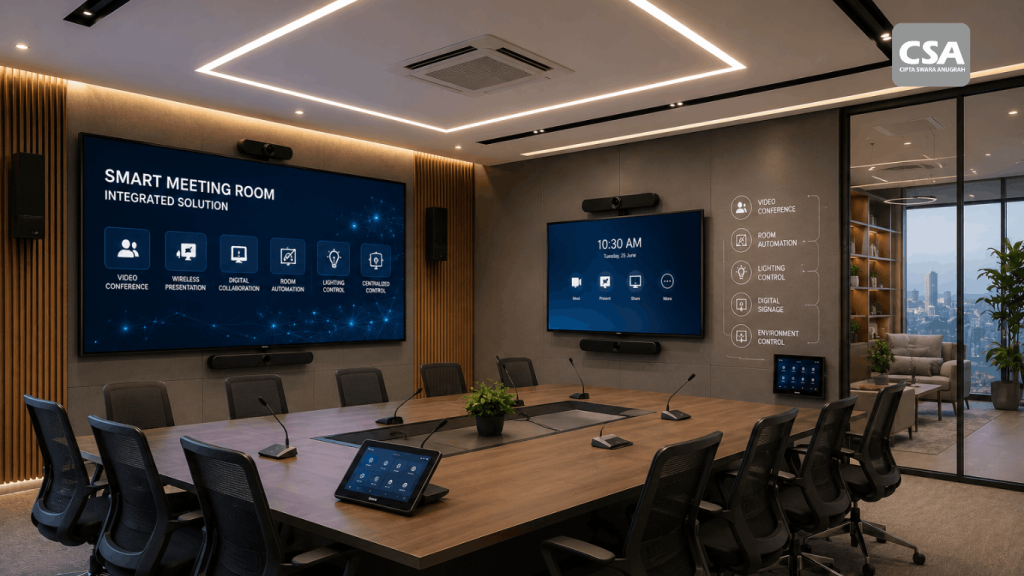
1. Choose an Integrator with Proven Project Experience
Experience is one of the most important indicators in Tips for Choosing a Professional AVL Integrator for Companies.
Experienced integrators have typically handled complex conditions such as:
- Difficult room acoustics
- Large-scale building structures
- Multi-room integration systems
- Hybrid meeting environments
The more experience an integrator has, the better their ability to anticipate problems during the design phase rather than reacting after installation.
Companies should evaluate:
- Years of experience in the AVL industry
- Number of completed projects
- Variety of project types
- Industries served
2. Evaluate Their Project Portfolio in Detail
A portfolio is not just a list of clients, but a reflection of technical capability.
Relevant project types include:
- Corporate meeting rooms
- Auditoriums
- Hotel ballrooms
- Command centers
- Educational institutions
- Places of worship
Each environment presents different technical challenges.
For example:
- Auditoriums require even sound coverage across large spaces
- Meeting rooms require stable conferencing systems
- Command centers require high-precision video wall systems
3. Ensure They Have an In-House Engineering Team
Many vendors operate only as sales companies and outsource technical work to third parties.
This creates risks such as:
- Inconsistent installation standards
- Poor quality control
- Lack of accountability
Professional integrators have internal teams such as:
- Audio engineers
- Video engineers
- Lighting specialists
- Network AV engineers
- Control system programmers
4. Avoid Vendors That Only Sell Products
There is a major difference between distributors and system integrators.
Typical vendors only focus on selling products, while integrators focus on delivering solutions.
If a vendor immediately offers equipment without proper analysis, it is a warning sign.
A true integrator will understand:
- Room purpose and function
- Number of users
- Operational workflow
- Long-term system requirements
5. Always Require a Proper Site Survey
A site survey is a critical step before system design begins.
It includes:
- Room measurement
- Acoustic analysis
- Lighting evaluation
- Device placement planning
- Cable routing design
- Power and network assessment
Without a proper survey, system design becomes assumption-based and risky.
6. System Design Capability Matters More Than Products
Professional integrators do not start with products—they start with system design.
Key technical documents should include:
- Signal flow diagrams
- Rack layout design
- Audio coverage planning
- Video distribution mapping
- Network topology
Without proper system design, even expensive equipment will not perform optimally.
7. Multi-Brand Expertise Is Essential
A professional integrator is not tied to a single brand.
They typically combine:
- Professional speaker systems
- DSP audio processors
- LED displays
- Interactive flat panels
- PTZ cameras
- Control systems
The ability to work across multiple brands ensures the solution is objective and tailored to project needs.
8. Integration and Automation Capability
Modern AVL systems must support automation and centralized control.
For example, a “Meeting Mode” can automatically:
- Turn on displays
- Activate cameras
- Power audio systems
- Adjust lighting levels
- Connect video conferencing systems
If everything must be operated manually, the system is not fully optimized.
9. After-Sales Support and SLA Are Critical
AVL systems require continuous support beyond installation.
Important services include:
- Service Level Agreement (SLA)
- Remote technical support
- On-site maintenance
- Firmware and software updates
- Preventive maintenance
Without strong after-sales support, system performance will degrade over time.
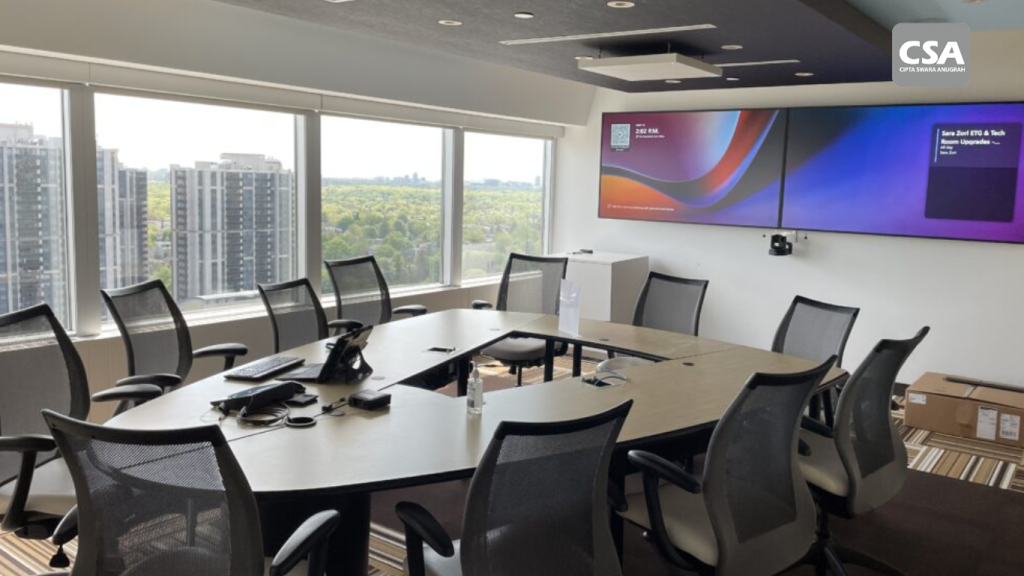
10. Never Choose Based on Price Alone
Low-cost proposals often hide long-term risks such as:
- No proper audio tuning
- Poor installation standards
- Lack of commissioning
- No user training
- Minimal documentation
As a result, companies often spend more on repairs and system corrections later.
11. Proper Documentation Is Essential
Documentation ensures long-term system sustainability.
It should include:
- As-built drawings
- Wiring diagrams
- System configurations
- IP address mapping
- Equipment lists
Without documentation, troubleshooting becomes slow and difficult.
12. Check Reputation and Client Testimonials
A strong reputation reflects consistent performance.
Companies should review:
- Past clients
- Customer testimonials
- Repeat project engagements
- Case studies
A good integrator is often chosen repeatedly by the same clients.
13. Choose a Solution-Oriented Partner
A professional integrator always starts by asking:
- What is the purpose of this space?
- Who will use it?
- What is the workflow?
They do not immediately push products but focus on solving business needs.
Common Mistakes Companies Make When Choosing an AVL Integrator
Many companies fail due to:
- Choosing based only on price
- Ignoring project portfolios
- Skipping site surveys
- Not requesting system design
- Overlooking after-sales service
Why CSA Indonesia Is Trusted by Many Companies
In AVL (Audio, Video, Lighting, and Automation) implementation, choosing the right integrator is a strategic decision.
One of the companies operating in this field is CSA Indonesia (Cipta Swara Anugrah).
CSA Indonesia provides end-to-end solutions, including:
- Needs consultation
- Site surveys
- System design
- Installation and integration
- Commissioning
- User training
- Maintenance and technical support
This approach ensures systems are stable, easy to operate, and scalable for future business needs.
CSA Indonesia also has experience handling various projects such as meeting rooms, auditoriums, and large-scale integration systems across different industries.
Conclusion
Choosing an AVL integrator is a long-term strategic decision that directly impacts system performance and business productivity.
By understanding Tips for Choosing a Professional AVL Integrator for Companies, organizations can avoid costly mistakes and ensure their investment delivers maximum value.
A true integrator does not just install systems—they deliver complete, reliable, and future-ready solutions.
FAQ
1. What is an AVL Integrator?
An AVL integrator is a company that designs and integrates audio, video, lighting, and automation systems into a unified solution.
2. Why is buying equipment alone not enough?
Because devices must be properly integrated to function as a stable system.
3. What is the most important factor in choosing an AVL integrator?
Experience, system design capability, and after-sales support.
4. Is a site survey necessary?
Yes, because without it, system design is based on assumptions.
5. What is the risk of choosing the cheapest vendor?
Poor quality installation, lack of tuning, and higher long-term maintenance costs.
6. What is the difference between a vendor and a system integrator?
A vendor sells products, while an integrator delivers complete solutions.
7. Can all AVL systems be integrated?
Yes, if designed properly by a professional integrator.
8. How long does AVL installation take?
It depends on project scale, ranging from days to several months.
9. Is after-sales service important?
Yes, because AVL systems require ongoing maintenance and updates.
10. Why is documentation important?
It simplifies maintenance, troubleshooting, and future system upgrades.