
Selecting the right Audio Visual vendor is one of the most important decisions when planning a meeting room, boardroom, training facility, hotel, auditorium, or any commercial space. These Tips for Choosing a Professional Audio Visual Vendor can help businesses avoid costly mistakes while ensuring that every Audio Visual investment delivers long-term value.
Many organisations focus primarily on comparing equipment specifications or finding the lowest quotation. However, the success of an Audio Visual project depends on much more than the products being installed. The vendor’s expertise in planning, system design, installation, integration, and project management ultimately determines how well the entire system performs.
Choosing the wrong vendor can lead to project delays, budget overruns, compatibility issues, poor user experience, and expensive maintenance costs. On the other hand, working with an experienced Audio Visual partner helps ensure that every technology supports business operations efficiently for years to come.
Why Choosing the Right Audio Visual Vendor Matters
An Audio Visual system is a long-term investment rather than a one-time purchase.
Whether installed in a corporate office, educational institution, hotel, healthcare facility, or government building, the system is expected to support daily communication, presentations, collaboration, and business operations.
If the project is poorly executed, organisations may face recurring technical problems that reduce productivity and increase operational costs.
For this reason, selecting a professional Audio Visual vendor should be considered a strategic business decision instead of simply comparing product prices.
A qualified vendor understands not only the technology itself but also how the system will support the client’s operational goals.
Read Also: Why Should Audio Visual Systems Be Designed as One Integrated System?
What Defines a Professional Audio Visual Vendor?
A professional Audio Visual vendor offers much more than equipment sales.
Rather than recommending products immediately, experienced vendors begin by understanding the client’s objectives, operational requirements, and future business plans.
Their services typically include:
- Project consultation
- Site survey
- System design
- Equipment recommendation
- Installation
- System integration
- Configuration
- Testing and commissioning
- User training
- Maintenance and technical support
This comprehensive approach ensures that every component functions as part of one complete Audio Visual solution instead of operating independently.
Tips for Choosing a Professional Audio Visual Vendor
1. Choose a Vendor That Understands Your Business Requirements
Every organisation has different operational needs.
A meeting room requires a different solution from a hotel ballroom.
A university lecture hall has different requirements than a corporate boardroom.
Instead of immediately recommending equipment, a professional vendor begins by asking questions.
For example:
- What is the purpose of the room?
- How many users will occupy the space?
- Will the room support hybrid meetings?
- How frequently will the system be used?
- Is future expansion planned?
These discussions allow the vendor to recommend solutions that genuinely match business requirements rather than selling unnecessary equipment.
2. Review the Vendor’s Project Experience
Experience plays a significant role in determining project quality.
An Audio Visual vendor that has completed projects across various industries is generally better prepared to handle technical challenges and unexpected situations.
When evaluating a vendor, review projects similar to your own.
Examples include:
- Corporate offices
- Hotels and resorts
- Boardrooms
- Training centres
- Auditoriums
- Educational facilities
- Hospitality venues
Relevant experience demonstrates the vendor’s ability to understand industry-specific operational requirements.
3. Look for Solution-Oriented Recommendations
One of the clearest signs of a professional Audio Visual vendor is the ability to provide solutions rather than simply offering products.
Instead of presenting a catalogue of equipment, the vendor should explain:
- Why certain technologies are recommended
- How each component contributes to the overall system
- How the proposed solution supports business objectives
- Opportunities for future scalability
This consultative approach provides greater confidence that the system has been designed for long-term success.
Read Also: Why Sound System Design Matters More Than Choosing Expensive Speakers
4. Evaluate the Vendor’s System Integration Capabilities
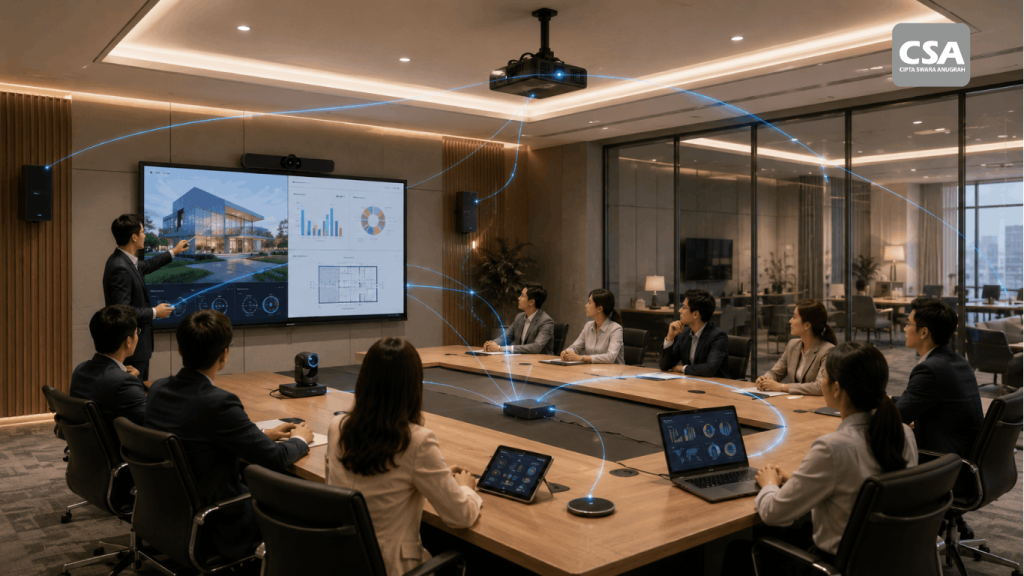
Modern Audio Visual environments involve much more than speakers and displays.
Today’s business spaces often combine:
- Professional audio systems
- Displays or LED walls
- Video conferencing platforms
- Cameras
- Microphones
- Wireless presentation systems
- Lighting control
- Room automation
- Centralised control systems
Each technology must communicate seamlessly with the others.
Without proper integration, users may experience operational difficulties, inconsistent performance, or compatibility issues.
A professional Audio Visual vendor should demonstrate strong expertise in integrating multiple technologies into one unified system that is simple, reliable, and easy to operate.
5. Ensure the Vendor Conducts a Site Survey
One of the most overlooked yet essential steps in an Audio Visual project is the site survey.
Every room presents unique challenges that cannot be fully understood from drawings or floor plans alone.
During a site survey, the vendor evaluates important factors such as:
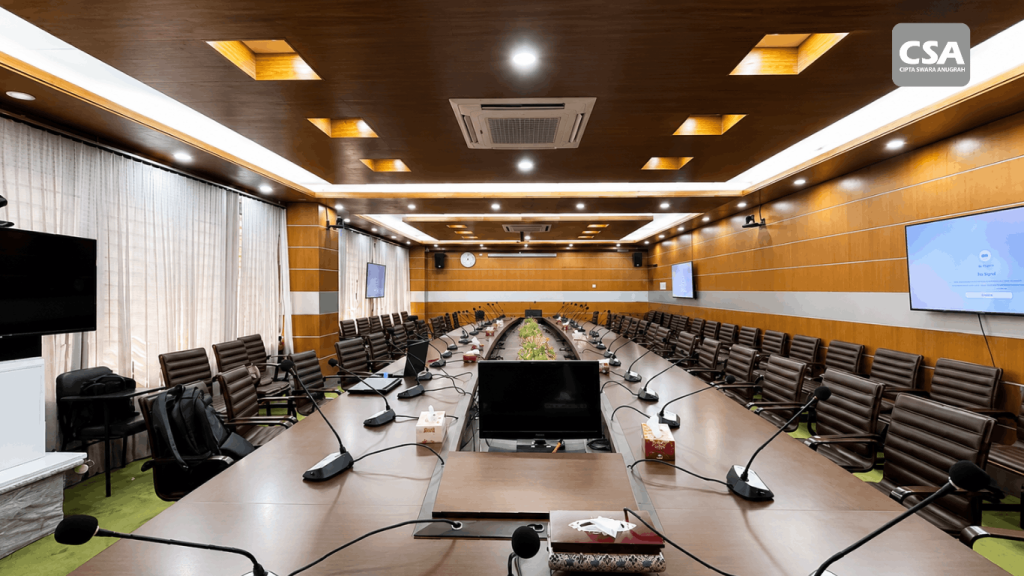
- Room dimensions
- Ceiling height
- Existing infrastructure
- Cable pathways
- Electrical requirements
- Speaker placement
- Display positioning
- Acoustic characteristics
- Potential installation constraints
This information forms the foundation for an effective system design and helps minimise installation issues later in the project.
Skipping this stage often results in poor equipment placement, uneven audio coverage, inefficient cable management, and unnecessary additional costs.
6. Check Whether the Vendor Provides Complete Project Documentation
A professional Audio Visual project does not end after the installation is completed.
Comprehensive documentation is essential for future maintenance, troubleshooting, system upgrades, and operational continuity.
Before selecting a vendor, ask whether they provide documentation such as:
- System drawings
- Wiring diagrams
- Equipment layouts
- Configuration records
- User manuals
- Testing and commissioning reports
Proper documentation enables your internal team or future technicians to understand how the system has been designed and configured.
Without it, even minor modifications can become time-consuming and costly.
7. Evaluate the Vendor’s After-Sales Support
Technology requires ongoing support throughout its lifecycle.
Even the best-designed Audio Visual systems may eventually require software updates, preventive maintenance, troubleshooting, or equipment replacement.
This is why after-sales service should be one of the key factors when evaluating an Audio Visual vendor.
Ask questions such as:
- Do they offer preventive maintenance?
- Is technical support available when needed?
- How quickly do they respond to service requests?
- Do they provide warranty support?
- Can they assist with future system upgrades?
Reliable after-sales support helps minimise downtime and ensures the system continues operating at peak performance.
8. Don’t Make Price Your Only Decision Factor
One of the most common mistakes businesses make is choosing the vendor with the lowest quotation.
Although budget is always important, the cheapest proposal may not provide the best long-term value.
Lower prices sometimes result from reduced engineering work, limited testing, lower-quality installation, or the absence of post-installation support.
Instead of focusing solely on the initial project cost, consider the total value the vendor brings.
Evaluate factors such as:
- Technical expertise
- Project experience
- System reliability
- Quality of installation
- Future scalability
- Maintenance support
A well-designed Audio Visual system often delivers greater operational efficiency and lower long-term costs than a cheaper solution that requires frequent repairs or upgrades.
9. Assess the Vendor’s Project Management Capabilities
Successful Audio Visual projects require more than technical knowledge.
They also require effective project management.
Professional vendors coordinate with architects, interior designers, contractors, electrical teams, and IT departments to ensure smooth project execution.
Strong project management typically includes:
- Clear project scheduling
- Regular progress updates
- Coordination with other contractors
- Quality assurance
- Risk management
- On-time project delivery
Choosing a vendor with structured project management reduces delays and helps maintain project quality from start to finish.
Common Mistakes When Choosing an Audio Visual Vendor
Many organisations unknowingly make decisions that create long-term operational challenges.
Some of the most common mistakes include:
- Selecting a vendor based only on price.
- Ignoring the vendor’s previous project experience.
- Skipping the site survey.
- Failing to review the proposed system design.
- Overlooking after-sales support.
- Choosing a supplier that only sells products instead of delivering complete solutions.
Avoiding these mistakes can significantly improve the success of your Audio Visual investment.
Why Choosing the Right Vendor Is a Long-Term Investment
A professional Audio Visual vendor contributes far more than equipment installation.
The right partner helps organisations create systems that are reliable, scalable, and easy to manage throughout their operational lifecycle.
A properly designed solution offers numerous long-term advantages, including:
- Higher system reliability
- Improved user experience
- Lower maintenance costs
- Easier future expansion
- Better return on investment
Rather than viewing vendor selection as a purchasing decision, businesses should see it as selecting a long-term technology partner.
CSA Indonesia as Your Professional Audio Visual Partner
Choosing a professional Audio Visual vendor requires careful evaluation of experience, technical expertise, project management, and long-term support.
CSA Indonesia delivers comprehensive Audio Visual solutions that cover every stage of the project lifecycle.
Its services include needs analysis, site surveys, system design, equipment selection, installation, integration, configuration, testing, and commissioning.
By focusing on complete system performance rather than simply supplying equipment, CSA Indonesia helps organisations build reliable Audio Visual environments that support productivity, collaboration, and business growth.
Conclusion
Choosing the right Audio Visual vendor is one of the most important decisions in any technology project.
While equipment quality certainly matters, the success of an Audio Visual system ultimately depends on the expertise of the team responsible for planning, designing, integrating, and supporting it.
Following these Tips for Choosing a Professional Audio Visual Vendor allows organisations to minimise project risks, improve operational efficiency, and maximise the value of their technology investment.
A professional vendor does more than install equipment—they become a trusted partner who understands business objectives and delivers solutions that continue to perform well for many years.
Frequently Asked Questions
What should I look for when choosing an Audio Visual vendor?
Look for experience, technical expertise, project portfolio, system integration capabilities, project management, after-sales support, and the ability to understand your business requirements.
Why is a site survey important before an Audio Visual project?
A site survey helps identify room conditions, infrastructure, acoustic characteristics, cable pathways, and installation challenges before the project begins.
Is choosing the cheapest Audio Visual vendor a good idea?
Not necessarily. A lower quotation may exclude important engineering services, testing, documentation, or long-term support, leading to higher operational costs later.
Why is project documentation important?
Documentation simplifies maintenance, troubleshooting, future upgrades, and system modifications throughout the system’s lifecycle.
What services should a professional Audio Visual vendor provide?
Professional vendors typically offer consultation, site surveys, system design, equipment selection, installation, integration, testing, commissioning, training, and maintenance support.
Why should businesses work with CSA Indonesia?
CSA Indonesia provides end-to-end Audio Visual solutions, from planning and system design to installation, integration, testing, and after-sales support, helping organisations create reliable and future-ready Audio Visual environments.