
In today’s rapidly evolving business environment, Meeting Room Solution has become one of the most important technologies for companies that want to improve communication, collaboration, and operational efficiency.
A meeting room is no longer just a place where employees gather to discuss ideas or make decisions. Modern meeting spaces have transformed into strategic environments that support business presentations, client meetings, employee collaboration, training sessions, and hybrid meetings involving participants from different locations.
However, many companies still experience challenges when using traditional meeting rooms. Meetings often start late because devices are difficult to operate, presentation systems are not properly connected, audio quality is unclear, or video conference equipment fails to deliver a professional experience.
These problems can reduce productivity, waste valuable time, and create an impression that does not reflect the company’s professionalism.
Through the implementation of a well-designed Meeting Room Solution, businesses can create smarter, more efficient, and user-friendly meeting environments that are ready to support current and future collaboration needs.
What Is a Meeting Room Solution?
A Meeting Room Solution is an integrated technology system that combines audio visual equipment, collaboration tools, control systems, and supporting infrastructure to create a more effective meeting environment.
Unlike conventional meeting rooms that rely on separate devices operating independently, a professional meeting room solution connects all components into a unified ecosystem.
The main purpose is to simplify the user experience.
Instead of manually operating the display, camera, microphone, speaker, and other equipment individually, users can control the entire system through a single interface.
With an integrated solution, employees can start meetings faster, share presentations more easily, and communicate more effectively with both internal teams and external partners.
A modern Meeting Room Solution can support various business activities, including:
- Internal company meetings.
- Executive board meetings.
- Client presentations.
- Training and workshops.
- Hybrid collaboration with remote teams.
- Video conferences with international partners.
The goal is not only to install advanced technology but also to create a meeting environment where technology works naturally without creating additional complexity.
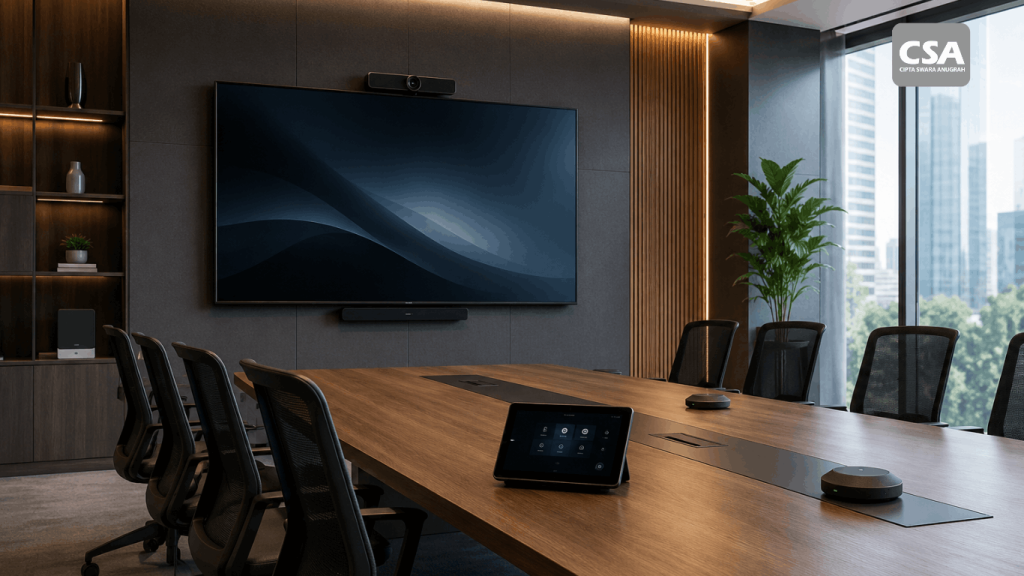
Meeting Room Solution: The Key to Creating an Efficient and Professional Modern Meeting Space
Read Also: 7 Signs Your Office Needs Audio Visual Integration to Improve Business Productivity
Why Do Companies Need Meeting Room Solutions?
The way companies work has changed significantly over the past few years.
The growth of hybrid working models has created new challenges where employees are no longer always located in the same office. Some participants may attend meetings inside the conference room, while others join remotely from branch offices, homes, or different countries.
This situation requires meeting rooms that can provide equal communication experiences for everyone.
A participant inside the room should be able to communicate clearly with someone joining virtually. The remote participant should also be able to see presentations, follow discussions, and interact naturally with everyone in the meeting.
Without an integrated system, companies often face problems such as:
- Poor microphone coverage.
- Unclear voice communication.
- Limited camera angles.
- Complicated device setup.
- Slow presentation switching.
- Unstable video conferencing connections.
A professional Meeting Room Solution eliminates these challenges by connecting all devices into one intelligent system.
The result is a meeting environment that is faster, easier to operate, and more reliable.
Beyond improving productivity, an integrated meeting room also reduces operational downtime because employees no longer need to spend unnecessary time preparing technical equipment before every meeting.
The Evolution of Modern Meeting Rooms
A modern meeting room is not defined only by its interior design, expensive furniture, or large display screens.
The real value comes from how effectively technology supports communication and collaboration.
Today’s professional meeting spaces are designed around three important principles:
1. Simplicity
Technology should make work easier, not more complicated.
A good meeting room solution allows employees from different departments to operate the system without requiring advanced technical knowledge.
With an intuitive control interface, users can simply press one button to:
- Turn on the display system.
- Activate the conference camera.
- Start the audio system.
- Connect to a video conference platform.
- Begin presenting content.
This simple experience reduces dependence on IT teams and allows meetings to start on time.
2. Hybrid Collaboration Capability
Hybrid meetings have become an essential part of modern business operations.
A professional meeting room must provide:
- Clear audio communication.
- High-quality video.
- Wide camera coverage.
- Reliable network connectivity.
- Easy content sharing.
These elements ensure that both physical and remote participants can collaborate effectively.
3. Future Scalability
Business needs continue to grow and change.
A small meeting room today may become a larger collaboration space in the future. Companies may eventually require training rooms, executive boardrooms, or larger conference environments with more advanced technology.
A properly designed Meeting Room Solution allows businesses to expand their systems without replacing the entire infrastructure.
This approach provides better long-term investment value and ensures the technology remains relevant as business requirements evolve.
Essential Components of a Meeting Room Solution
A successful meeting room does not depend on a single device.
The best results come from combining multiple technologies that work together as one complete system.
Each component plays an important role in creating a professional collaboration experience.
1. High-Quality Display System
The display system becomes the main visual communication platform inside a meeting room.
Companies can choose different display technologies based on room size, usage requirements, and budget, including:
- Interactive Flat Panel Display.
- LED Display.
- Video Wall.
- Professional Projector System.
A high-quality display ensures that participants can clearly view presentations, business data, documents, and multimedia content.
For collaborative environments, Interactive Flat Panels are increasingly popular because they allow users to present, write, annotate, and interact directly with displayed content.
For larger corporate spaces such as conference halls or executive meeting rooms, LED displays and video walls provide better visibility for larger audiences.
2. Professional Audio System
Audio quality is one of the most critical elements in any meeting room.
A meeting can still fail even with an excellent display if participants cannot hear each other clearly.
A professional audio system typically includes:
- Speakers.
- Amplifiers.
- Digital Signal Processor (DSP).
- Audio mixers.
- Echo cancellation technology.
- Noise reduction solutions.
Proper audio design ensures sound is distributed evenly throughout the room while minimizing unwanted noise and echo.
For hybrid meetings, a well-designed audio system ensures remote participants can hear discussions clearly while participants inside the room can communicate naturally.
3. Video Conference Camera System
Video communication has become a core requirement for modern meeting spaces.
A professional video conference camera allows remote participants to see speakers clearly and experience a more natural interaction.
Many companies now use:
- PTZ Cameras.
- Auto Tracking Cameras.
- Intelligent Conference Cameras.
These technologies can automatically follow speakers, adjust framing, and capture discussions more effectively.
As a result, online participants feel more engaged and connected during meetings.
4. Professional Microphone System
The microphone system must be carefully selected based on room function and capacity.
Different meeting environments require different microphone solutions.
Examples include:
- Wireless microphones for presentations and executive meetings.
- Ceiling microphones for conference rooms.
- Gooseneck microphones for discussion-based meetings.
- Table microphones for collaborative spaces.
A properly designed microphone system ensures every participant’s voice can be captured clearly without reducing comfort inside the room.
Smart Technologies That Make Meeting Rooms More Intelligent
A professional Meeting Room Solution is not limited to installing displays, cameras, speakers, and microphones. To achieve maximum efficiency, all devices must work together through intelligent technologies that create a seamless collaboration ecosystem.
Modern meeting rooms are designed to reduce complexity and provide a smoother user experience. The goal is simple: users should focus on communication and decision-making rather than dealing with technical issues.
Several technologies play an important role in creating a smarter meeting environment.
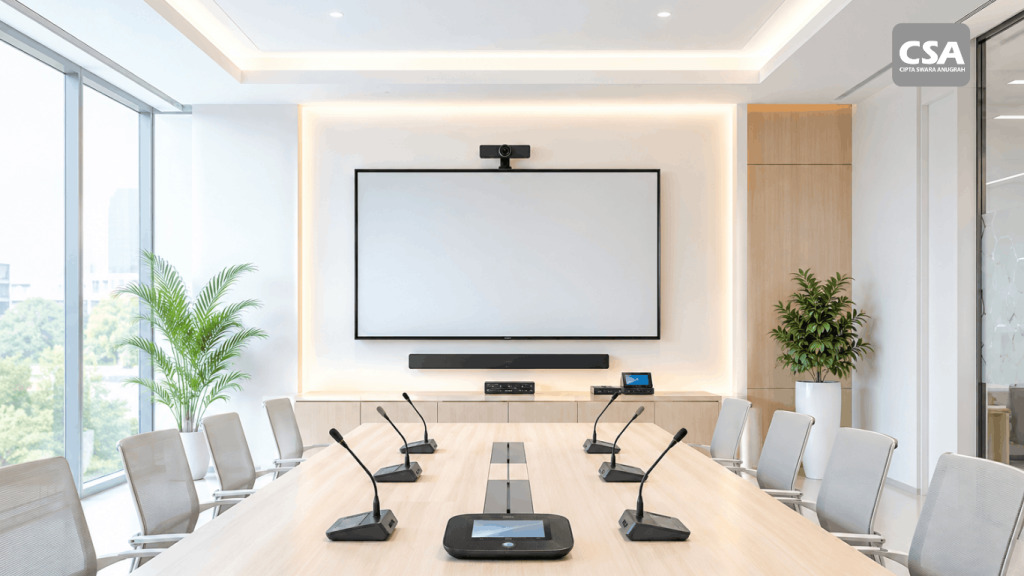
AV Control System: Managing All Devices Through One Platform
One of the most important technologies in a modern meeting room is the AV Control System.
This system allows multiple devices to be controlled through a single interface, such as a touch panel, tablet, or centralized control application.
Instead of operating each device separately, users can control:
- Display systems.
- Video conference cameras.
- Audio systems.
- Lighting systems.
- Room automation.
- Presentation devices.
For example, with a single “Start Meeting” command, the system can automatically:
- Turn on the display.
- Activate the camera.
- Adjust microphone settings.
- Start the audio system.
- Set lighting conditions.
- Prepare the room for presentation mode.
This significantly improves efficiency because employees no longer need technical knowledge to operate complex AV equipment.
Wireless Presentation System: Faster and More Flexible Collaboration
Traditional meeting rooms often depend on HDMI cables or adapters to connect laptops with display systems.
Although this method works, it can create several problems, such as:
- Missing cables.
- Compatibility issues.
- Limited mobility.
- Time wasted during setup.
A Wireless Presentation System solves these challenges by allowing users to share content wirelessly from laptops, tablets, or smartphones.
Benefits include:
- Faster content sharing.
- Cleaner meeting room design.
- Better flexibility for multiple presenters.
- Improved collaboration between teams.
With wireless presentation technology, employees can switch presenters quickly without disconnecting and reconnecting cables.
This creates a more dynamic and efficient meeting experience.
Room Scheduling System: Optimizing Meeting Space Management
For companies with multiple meeting rooms, managing room availability can become a challenge.
A Room Scheduling System helps organizations manage meeting spaces more effectively.
Digital scheduling panels installed outside meeting rooms allow employees to:
- Check room availability.
- Reserve meeting spaces.
- View upcoming schedules.
- Avoid double bookings.
This technology improves workplace efficiency, especially in large corporate environments where many teams share meeting facilities.
By integrating room scheduling with company calendars, employees can easily organize meetings without unnecessary coordination.
AV Over IP: The Future of Scalable Audio Visual Infrastructure
As businesses grow, their technology requirements also become more complex.
Traditional AV systems often require significant cabling and hardware upgrades when companies expand their meeting facilities.
AV over IP technology provides a more flexible solution by distributing audio and video signals through existing network infrastructure.
Advantages of AV over IP include:
- Easier system expansion.
- Centralized management.
- Flexible device placement.
- Better scalability.
- Reduced infrastructure complexity.
This technology is especially beneficial for companies that operate multiple meeting rooms, training centers, command centers, or large corporate facilities.
Why Meeting Room Solution Is More Than Just Buying AV Equipment
Many companies believe that creating a modern meeting room only requires purchasing advanced devices with high specifications.
However, successful meeting room implementation depends on more than the quality of individual equipment.
The most important factor is how every component is designed, integrated, and optimized to work together.
A premium camera cannot deliver the best experience if the audio system is poorly designed.
A high-resolution display will not provide maximum value if users struggle with complicated operation.
A professional meeting room requires proper planning, including:
- Room size analysis.
- Acoustic considerations.
- User requirements.
- Device compatibility.
- Network infrastructure.
- Future expansion planning.
This is why companies often work with professional Audio Visual Integrators to ensure every technology component functions as one complete solution.
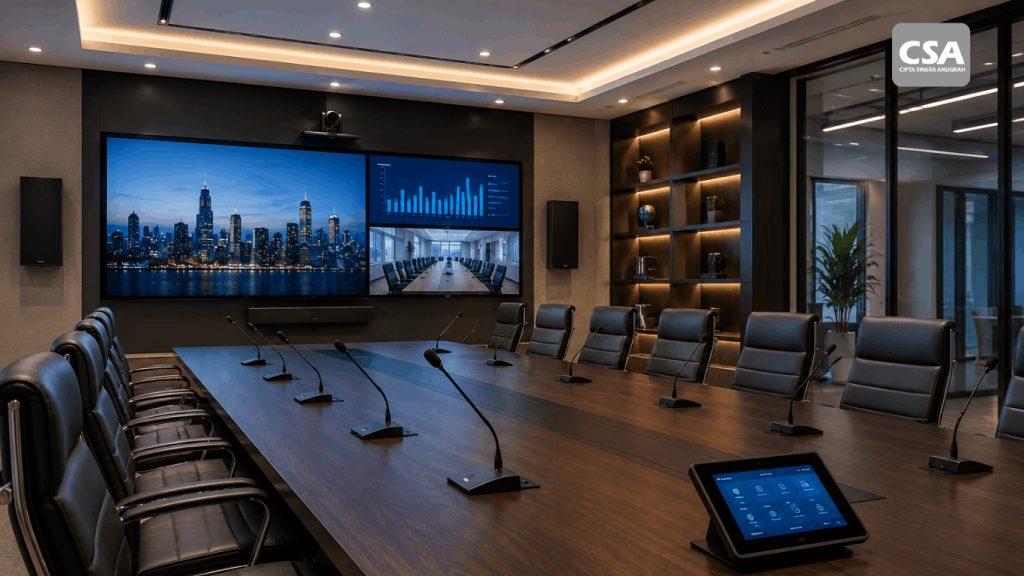
Benefits of Meeting Room Solution for Businesses
Implementing a professional Meeting Room Solution provides significant advantages for companies across different industries.
1. Increased Meeting Efficiency
One of the biggest benefits is saving valuable time.
Employees no longer need to spend several minutes preparing equipment before meetings.
With integrated technology, meetings can start faster because devices are already configured and ready to use.
This allows teams to focus on:
- Discussion.
- Decision-making.
- Problem-solving.
- Business strategy.
2. Improved Communication Quality
Clear communication is the foundation of successful meetings.
Professional audio and video systems ensure that every participant can communicate effectively, whether they are inside the meeting room or joining remotely.
High-quality solutions provide:
- Clear voice transmission.
- Better video quality.
- Reduced background noise.
- Improved participant engagement.
This creates a more natural experience during hybrid meetings.
3. Enhanced Professional Image
A modern meeting room reflects the professionalism of a company.
When clients, investors, or business partners experience a well-designed meeting environment, it creates confidence and demonstrates that the company values innovation and operational excellence.
A professional meeting room can strengthen:
- Client relationships.
- Brand perception.
- Business credibility.
4. Better Long-Term Investment
Technology needs continue to evolve.
A properly designed Meeting Room Solution allows companies to upgrade systems gradually without replacing the entire infrastructure.
This provides:
- Lower future upgrade costs.
- Better technology sustainability.
- Easier system expansion.
A well-planned solution becomes a long-term investment rather than a temporary improvement.
Common Mistakes When Designing a Meeting Room
Building a professional meeting room requires careful planning.
Unfortunately, many companies make mistakes because they focus only on purchasing equipment rather than designing a complete system.
Some common mistakes include:
Choosing Devices Without Considering Compatibility
Purchasing different devices from various brands without checking integration compatibility can create operational problems.
Every component must work together properly, including:
- Cameras.
- Displays.
- Audio processors.
- Control systems.
- Collaboration platforms.
Ignoring Room Characteristics
Every room has different acoustic and technical requirements.
A microphone system designed for a small meeting room may not perform well in a large conference room.
Factors such as:
- Room size.
- Ceiling height.
- Wall materials.
- Number of participants.
must be considered during system design.
Prioritizing Specifications Over User Experience
The most expensive equipment does not always create the best meeting experience.
A successful solution focuses on:
- Ease of use.
- Reliability.
- Integration.
- User comfort.
Technology should simplify work, not make operations more complicated.
Neglecting Network Infrastructure
Modern meeting rooms depend heavily on network performance.
Video conferencing, wireless presentation, and AV over IP systems require stable and reliable network infrastructure.
Ignoring network readiness can reduce system performance.
Not Planning for Future Expansion
Business requirements change over time.
A meeting room that works today may require additional features in the future.
Companies should consider scalability from the beginning to avoid expensive redesigns.
Why Companies Need a Professional Audio Visual Integrator
A successful Meeting Room Solution requires more than selecting equipment.
It requires technical expertise, experience, and a complete understanding of how different technologies interact.
A professional Audio Visual Integrator helps companies through every stage, including:
- Consultation.
- Site survey.
- System design.
- Equipment selection.
- Installation.
- Integration.
- Testing and commissioning.
- Maintenance support.
The role of an integrator is to transform individual devices into a complete technology ecosystem.
With the right partner, companies can achieve a meeting room that is reliable, easy to operate, and ready for future development.