
Audio Visual Integration vs. Conventional Audio Visual Installation has become a common topic among companies planning to build modern meeting rooms, boardrooms, auditoriums, command centers, and collaborative workspaces. Unfortunately, many organizations still assume these two concepts are identical. In reality, they differ significantly in terms of design philosophy, functionality, and long-term business value.
This misunderstanding often leads companies to invest heavily in premium equipment without achieving the expected results. They purchase high-end displays, professional speakers, conferencing cameras, and advanced microphones, yet the overall system remains difficult to operate because each device functions independently. Instead of improving productivity, employees spend valuable time troubleshooting technical issues before every meeting.
Before investing in an audio visual system, businesses should understand the fundamental differences between conventional installation and Audio Visual Integration. This knowledge helps organizations choose a solution that meets today’s operational needs while remaining flexible enough to support future technological growth.
Conventional Audio Visual Installation: A Device-Oriented Approach
Conventional audio visual installation focuses on installing individual devices according to their specific functions without connecting them into a unified ecosystem.
For example, a meeting room may include a television, projector, conference camera, wireless microphone, and sound system. Although each device performs well individually, they operate independently and require separate controls.
Users typically need to turn on the display manually, connect a laptop with an HDMI cable, activate the conferencing camera, adjust the speaker volume, configure the microphone, and finally launch the video conferencing application.
While this approach is relatively simple and usually requires a lower initial investment, daily operation becomes more complicated as additional devices are added to the room.
The more equipment involved, the greater the possibility of technical issues, operational errors, and wasted time before meetings even begin.
Audio Visual Integration: One Intelligent and Connected Ecosystem
Unlike conventional installation, Audio Visual Integration is designed to make every device work together as one intelligent system.
Displays, cameras, microphones, speakers, lighting controls, room scheduling systems, and automation platforms are connected through a centralized control system. Instead of operating each device individually, users manage everything from a single interface.
Imagine entering a meeting room and simply pressing the “Start Meeting” button.
Within seconds, the display powers on, the conferencing camera activates, the microphones connect automatically, the audio system adjusts itself, the room lighting changes to presentation mode, and the preferred video conferencing platform launches instantly.
The entire meeting room becomes ready without requiring multiple manual steps.
This seamless experience represents the biggest advantage of Audio Visual Integration. The focus shifts from managing technology to improving collaboration and productivity.
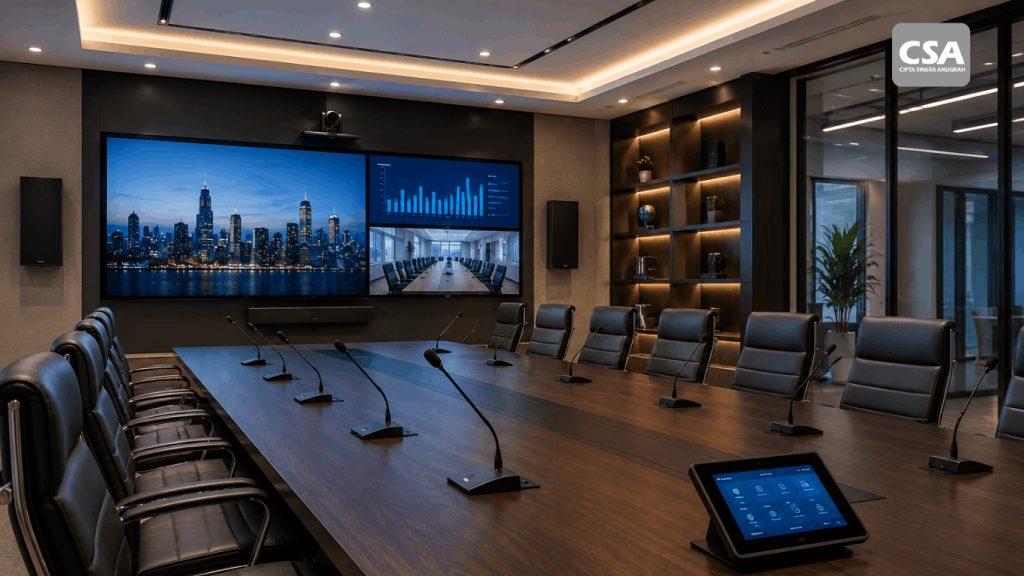
Audio Visual Integration vs. Conventional Audio Visual Installation
Comparing How Both Systems Work
The most noticeable difference lies in the way each system operates.
With conventional installation, every device functions independently. If one component changes, users often need to adjust other devices manually. This process increases complexity and creates unnecessary delays.
Audio Visual Integration, on the other hand, enables devices to communicate with one another automatically.
Instead of treating displays, cameras, microphones, and speakers as separate products, the system manages them as a single coordinated environment.
This centralized approach minimizes user intervention and significantly improves operational efficiency.
For organizations that conduct multiple meetings every day, even a few minutes saved during each session can translate into substantial productivity gains over time.
Ease of Use
Many companies invest in premium equipment but overlook one critical factor: user experience.
As a result, sophisticated meeting rooms often become too complicated for regular employees to operate. Only IT personnel or technical staff fully understand the system, creating unnecessary dependency.
With conventional installation, users must learn how to operate multiple remote controls, switch between different input sources, configure audio settings, and troubleshoot connectivity problems.
Audio Visual Integration simplifies this entire process.
A single touch panel, mobile application, or centralized controller allows users to manage every connected device through one intuitive interface.
Even first-time users can start a meeting confidently without requiring extensive technical training.
This simplicity reduces operational mistakes while allowing employees to focus on communication instead of technology.
Meeting Efficiency
Meeting efficiency is another area where the differences become very clear.
In conventional installations, meetings are frequently delayed because a laptop cannot detect the display, the conferencing camera fails to connect, the microphone requires additional configuration, or the audio settings need manual adjustment.
Although these issues may appear minor, they accumulate over time and reduce overall workplace productivity.
Audio Visual Integration eliminates most of these repetitive tasks.
The system prepares the meeting environment automatically, allowing participants to begin discussions immediately.
This streamlined workflow is particularly valuable for businesses that rely heavily on hybrid meetings, executive presentations, client discussions, and cross-office collaboration.
Scalability for Future Growth
Business requirements continue to evolve.
A company that currently operates one meeting room may later require executive boardrooms, training facilities, auditoriums, command centers, or additional office locations.
With conventional audio visual installation, expanding the system often requires significant modifications or even replacing existing infrastructure because scalability was not considered during the initial deployment.
Audio Visual Integration is designed with future expansion in mind.
New displays, cameras, collaboration devices, automation systems, and conferencing technologies can be incorporated into the existing infrastructure without rebuilding the entire system.
This flexibility protects the company’s technology investment while supporting long-term digital transformation initiatives.
Which Solution Is Right for Your Business?
Conventional audio visual installation remains a practical option for organizations with simple presentation requirements and limited budgets.
However, businesses that depend on hybrid collaboration, executive meetings, corporate communication, training centers, auditoriums, or mission-critical operations will gain far greater value from Audio Visual Integration.
Rather than simply connecting devices, an integrated system creates a smarter, more efficient working environment that enhances productivity, simplifies daily operations, and prepares organizations for future technological developments.
Initial Cost vs. Long-Term Investment
One of the main reasons companies still choose conventional audio visual installation is its lower upfront cost. Since the approach focuses on installing individual devices, businesses can often reduce their initial investment by purchasing only the equipment they currently need.
However, evaluating an audio visual system based solely on its purchase price can be misleading.
As business operations grow, companies typically expand their meeting spaces, adopt hybrid collaboration technologies, upgrade conferencing equipment, or implement room automation. If the original system was not designed for future expansion, every upgrade may require additional cabling, hardware replacement, and system reconfiguration.
Audio Visual Integration is built with scalability in mind.
Instead of replacing the entire infrastructure, businesses can gradually expand the system by adding new devices while maintaining compatibility with the existing platform. This approach maximizes the value of the original investment and significantly reduces future upgrade costs.
Maintenance and System Management
Maintenance is another area where the differences become increasingly apparent.
With conventional audio visual installation, every device operates independently. When a problem occurs, IT personnel must inspect each component separately to identify the source of the issue.
This troubleshooting process can become time-consuming, especially when multiple brands and technologies are involved.
Audio Visual Integration simplifies system management.
Since every component is connected within a centralized ecosystem, monitoring, diagnostics, and maintenance become much more efficient. Documentation is also more organized, allowing technical teams to resolve issues faster while minimizing downtime.
For businesses that rely on uninterrupted daily operations, this advantage can make a significant difference.
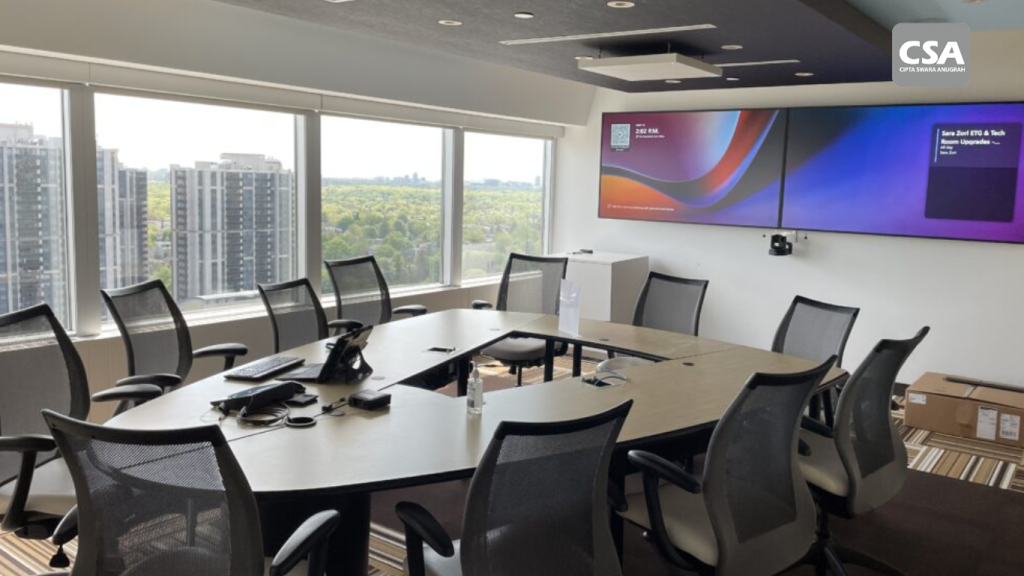
Automation Capabilities
Automation is one of the strongest advantages of Audio Visual Integration.
In a conventional installation, users perform nearly every action manually. They need to power on displays, configure microphones, select input sources, connect conferencing devices, and adjust room settings before each meeting.
An integrated system transforms this experience completely.
With a single command, the system can automatically:
- Turn on the display.
- Activate the conferencing camera.
- Enable microphones.
- Adjust the room lighting.
- Power the audio system.
- Launch the preferred video conferencing platform.
These automated workflows reduce preparation time while creating a more consistent and professional meeting experience.
Comparison Table
| Feature | Conventional Audio Visual Installation | Audio Visual Integration |
|---|---|---|
| System Concept | Individual device installation | Fully integrated ecosystem |
| Operation | Manual | Centralized control |
| User Experience | Moderate | Highly intuitive |
| Automation | Not available | Available |
| Scalability | Limited | Highly scalable |
| Meeting Efficiency | Standard | Significantly improved |
| Maintenance | More complex | Simplified |
| Device Compatibility | Limited | Fully integrated |
| Long-Term Value | Lower | Higher |
The comparison clearly demonstrates that the difference extends far beyond equipment installation.
Audio Visual Integration creates a unified technology environment that improves operational efficiency, simplifies user interaction, and supports future business growth.
Common Mistakes Companies Still Make
Many organizations assume that purchasing premium equipment automatically results in a high-quality meeting room.
Unfortunately, expensive hardware alone cannot guarantee a seamless user experience.
Some of the most common mistakes include:
- Purchasing devices from different manufacturers without considering compatibility.
- Focusing only on hardware instead of complete system design.
- Ignoring network infrastructure requirements.
- Selecting the cheapest installation rather than the most suitable solution.
- Failing to consider future expansion plans.
These decisions often lead to higher operational costs, additional upgrades, and recurring technical issues that could have been avoided through proper system planning.
When Should You Choose Audio Visual Integration?
Conventional installation remains a practical option for small meeting rooms or presentation spaces with limited technical requirements.
However, Audio Visual Integration becomes the preferred solution when businesses require:
- Executive boardrooms.
- Hybrid meeting environments.
- Corporate training centers.
- Auditoriums.
- Command and control centers.
- Multi-room collaboration.
- Smart office environments.
For organizations that depend on efficient communication and reliable technology, an integrated system provides long-term operational advantages that conventional installations cannot easily match.

Read Also: Smart Meeting Rooms for Businesses: A Technology Investment That Delivers High ROI
Build the Right Solution with CSA Indonesia
Designing an effective audio visual system requires much more than selecting premium equipment.
A successful project begins with understanding business objectives, room functionality, user experience, and future scalability.
As a company specializing in Audio, Visual, Lighting, and Automation, CSA Indonesia (Cipta Swara Anugrah) delivers comprehensive solutions tailored to each client’s operational needs. Its services include consultation, site surveys, system design, installation, equipment integration, commissioning, and ongoing maintenance.
By combining technical expertise with a consultative approach, CSA Indonesia helps businesses create intelligent audio visual environments that improve collaboration, increase productivity, and support long-term digital transformation.
Conclusion
Understanding the differences between Audio Visual Integration and conventional audio visual installation is essential before making any technology investment.
While conventional installation remains suitable for basic presentation environments, it offers limited flexibility, automation, and scalability.
Audio Visual Integration, on the other hand, delivers a connected ecosystem that simplifies operation, enhances collaboration, improves meeting efficiency, and supports future technological expansion.
Although the initial investment may be higher, the long-term operational benefits often outweigh the additional cost.
By partnering with an experienced integration specialist, businesses can develop modern, reliable, and future-ready audio visual systems that continue delivering value as organizational needs evolve.
FAQ
What is the main difference between Audio Visual Integration and conventional audio visual installation?
Conventional installation focuses on installing individual devices, while Audio Visual Integration connects all equipment into a centralized system that operates as a single ecosystem.
Is Audio Visual Integration more expensive?
The initial investment is generally higher. However, it offers better scalability, easier maintenance, improved efficiency, and lower long-term operating costs.
Does every company need Audio Visual Integration?
Not necessarily. Small businesses with basic presentation needs may find conventional installation sufficient. Companies relying on hybrid collaboration and advanced meeting environments benefit much more from an integrated solution.
What are the biggest advantages of Audio Visual Integration?
Its key benefits include centralized control, automation, simplified operation, improved meeting efficiency, easier maintenance, and future scalability.
Why should companies work with an Audio Visual Integrator?
An experienced integrator ensures that every component works seamlessly together while designing a solution that aligns with the organization’s operational goals and future expansion plans.
How can businesses choose the right audio visual solution?
Companies should evaluate their operational requirements, future growth plans, available infrastructure, and work with a professional integration partner capable of delivering a complete end-to-end solution.