
7 Signs Your Office Needs Audio Visual Integration is a topic that every modern business should understand. As hybrid work, digital collaboration, and virtual meetings become standard, companies are expected to provide meeting spaces that are efficient, reliable, and easy to use. Unfortunately, many organizations continue to rely on outdated audio visual systems that no longer support today’s workplace demands.
At first glance, everything may seem to function properly. The display turns on, the speakers produce sound, and the conference camera works. However, if employees repeatedly waste valuable time connecting cables, troubleshooting devices, or asking IT staff for assistance before every meeting, the real issue is not the equipment itself it is the lack of an integrated audio visual system.
Audio Visual Integration transforms separate devices into a single intelligent ecosystem. Instead of operating each device individually, users can control the entire meeting environment through one centralized interface. Before investing in new technology, it is important to recognize whether your office is already showing signs that an integrated AV solution is necessary.
Why Audio Visual Integration Has Become Essential for Modern Offices
Today’s workplace depends on fast communication and seamless collaboration.
Meetings often involve participants joining from different cities, countries, or even continents. Employees regularly switch between in-person discussions, hybrid meetings, presentations, and online training sessions throughout the day.
As technology becomes more central to daily operations, businesses require systems that work efficiently without creating unnecessary complexity.
This is where Audio Visual Integration delivers significant value.
Instead of managing multiple independent devices, companies benefit from a unified system that improves productivity while simplifying daily operations.
7 Signs Your Office Needs Audio Visual Integration to Improve Business Productivity
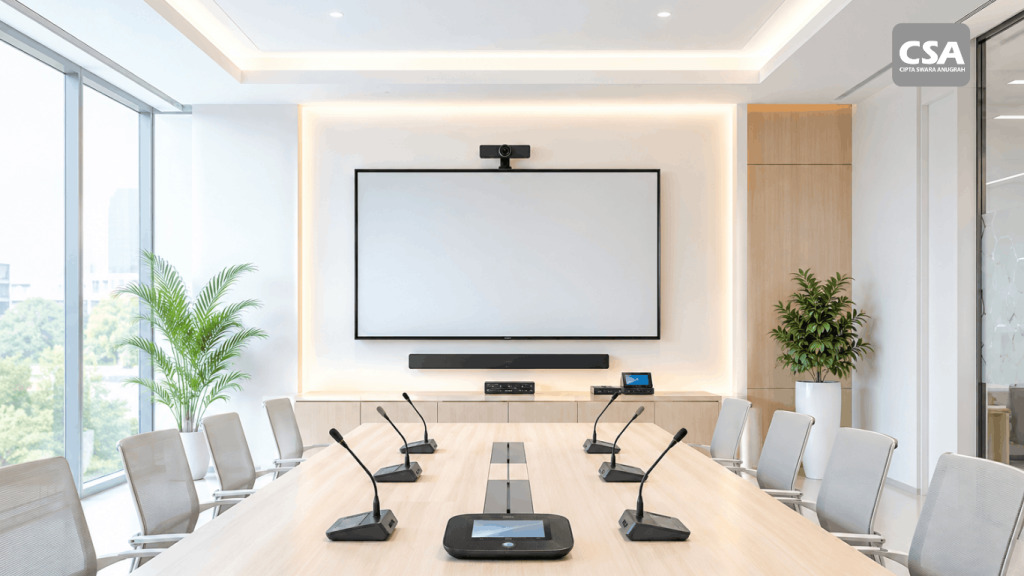
Sign #1 – Meetings Rarely Start on Time
One of the clearest indicators is when meetings consistently begin several minutes late because employees are still setting up equipment.
Common situations include:
- Searching for the correct HDMI cable.
- Switching display inputs repeatedly.
- Connecting external speakers.
- Configuring microphones.
- Restarting the conferencing camera.
- Waiting for the projector to respond.
Although these delays may appear minor, losing five to ten minutes before every meeting quickly adds up across an entire organization.
An integrated audio visual system eliminates these repetitive tasks by preparing the room automatically, allowing meetings to begin immediately.
Sign #2 – Your Devices Operate Independently
Many offices gradually purchase new technology whenever a need arises.
A larger display is installed one year. A conference camera follows the next year. Later, wireless microphones and additional speakers are added.
While every device performs its intended function, they often operate independently without communicating with one another.
As a result, users must manage several remote controls, manually change settings, and operate different interfaces every time they use the meeting room.
Audio Visual Integration solves this problem by connecting every component into one intelligent ecosystem, providing a consistent and user-friendly experience.
Sign #3 – Audio and Video Quality Frequently Interrupt Meetings
Technical problems during meetings reduce productivity and create an unprofessional impression.
Typical issues include:
- Echo during video conferences.
- Background noise affecting communication.
- Inconsistent microphone performance.
- Poor speaker coverage.
- Camera angles that fail to capture every participant.
- Low-quality video transmission.
When these problems occur regularly, replacing a single device rarely solves the issue.
In many cases, the real problem lies in the absence of proper system integration.
An integrated AV solution optimizes every component to work together, ensuring clear audio, high-quality video, and a more reliable meeting experience.
Sign #4 – Hybrid Meetings Never Run Smoothly
Hybrid collaboration has become a standard business practice.
However, many meeting rooms were originally designed only for face-to-face discussions.
As a result, remote participants often struggle to hear conversations clearly, while people inside the room experience poor camera coverage or inconsistent audio performance.
These limitations reduce collaboration and make online participants feel disconnected from the discussion.
Audio Visual Integration addresses these challenges by combining professional cameras, intelligent microphones, digital signal processing, centralized control, and collaboration platforms into one coordinated solution.
The result is a meeting environment where both in-room and remote participants enjoy the same high-quality communication experience.
Sign #5 – Employees Depend on the IT Team for Every Meeting
A modern meeting room should be easy for everyone to operate, regardless of their technical background.
Unfortunately, many companies still rely on IT personnel whenever employees need to start a presentation, launch a video conference, or switch between different input sources.
This dependency often creates unnecessary delays, especially when the IT team is unavailable or handling other priorities.
A meeting room should support productivity—not create additional obstacles.
Audio Visual Integration simplifies the user experience by centralizing every function into a single control interface. Instead of remembering multiple operating procedures, users can manage the entire room through one intuitive touch panel or control application.
This ease of use allows employees to focus on collaboration rather than technology.
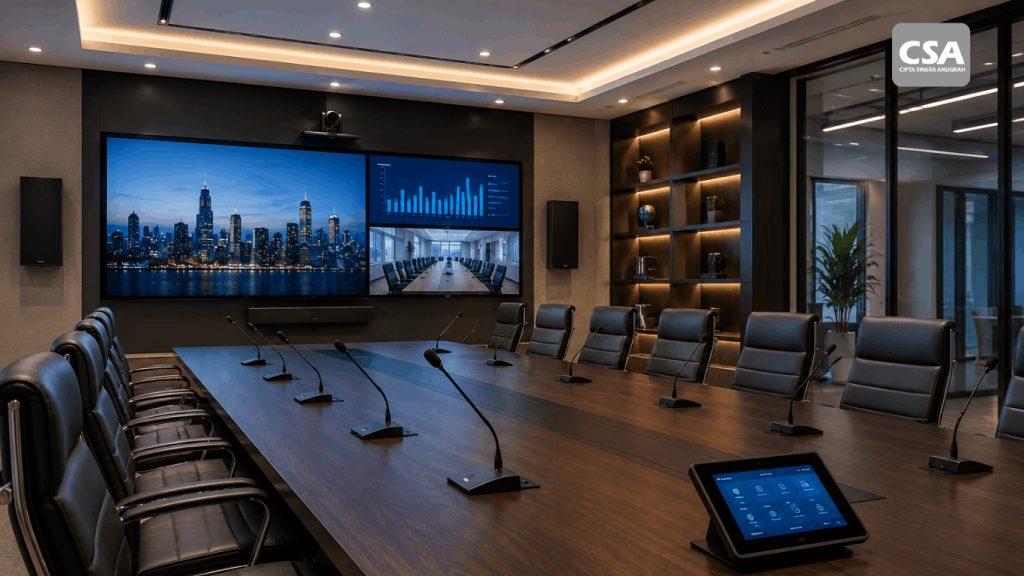
Sign #6 – Your Meeting Rooms Are Difficult to Upgrade
Business requirements continue to evolve.
A meeting room that met your needs three years ago may no longer support today’s hybrid collaboration, larger displays, or advanced conferencing technologies.
With conventional AV installations, adding new equipment often requires replacing existing infrastructure, installing additional cabling, or modifying room configurations.
These upgrades can become expensive and disruptive.
Audio Visual Integration is designed with scalability in mind.
Because the system is built as a connected ecosystem, businesses can introduce new technologies without rebuilding the entire environment.
Whether adding another display, upgrading conferencing cameras, or expanding to multiple meeting rooms, the infrastructure is ready to support future growth.
Sign #7 – Your Company Is Moving Toward Digital Transformation
Digital transformation affects far more than software and cloud services.
Modern workplaces also require intelligent meeting environments that improve communication, collaboration, and operational efficiency.
If your organization plans to implement smart meeting rooms, centralized monitoring, automation, wireless collaboration, or enterprise-wide communication systems, conventional AV installations may no longer be sufficient.
Audio Visual Integration provides the technological foundation needed to support these initiatives while ensuring every connected device works together seamlessly.
It is no longer just an investment in meeting room technology—it is an investment in long-term business efficiency.
What Happens If These Problems Are Ignored?
Many organizations underestimate the impact of inefficient meeting technology because the problems appear relatively small.
However, when these issues occur every day, the cumulative effect becomes significant.
Meetings start late.
Employees waste valuable working hours solving technical problems.
Communication quality decreases.
Remote participants become less engaged.
Clients and business partners experience unprofessional presentations.
Operational costs continue to rise as companies repeatedly replace individual devices instead of improving the overall system.
Over time, these hidden inefficiencies can reduce productivity across the organization.
How Audio Visual Integration Solves These Challenges
Audio Visual Integration addresses these issues by connecting every component into one intelligent platform.
Instead of operating displays, cameras, microphones, speakers, lighting, and conferencing systems independently, everything functions as one coordinated solution.
With a single touch, users can:
- Power on every required device.
- Launch video conferencing platforms.
- Activate professional cameras.
- Enable microphones automatically.
- Adjust room lighting.
- Select presentation sources.
- Control audio settings.
- Begin meetings within seconds.
This streamlined workflow reduces complexity while delivering a more professional and consistent user experience.
Build a Smarter Workplace with CSA Indonesia
Implementing Audio Visual Integration requires more than purchasing high-quality equipment.
Successful projects begin with careful planning, system design, and professional integration that aligns with business objectives.
As a company specializing in Audio, Visual, Lighting, and Automation, CSA Indonesia (Cipta Swara Anugrah) delivers complete end-to-end solutions for modern workplaces.
Its services include consultation, site surveys, system design, installation, equipment integration, commissioning, and preventive maintenance.
By understanding each client’s operational requirements, CSA Indonesia develops intelligent AV environments that improve collaboration, simplify system management, and support long-term business growth.
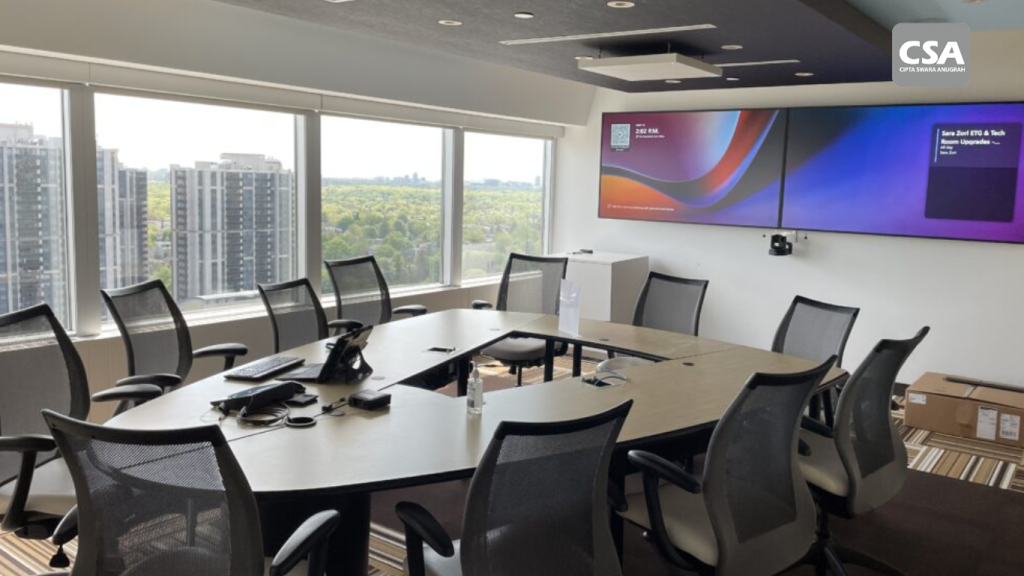
Conclusion
Technology should help employees work more efficiently—not create unnecessary complications.
If your organization regularly experiences delayed meetings, disconnected devices, inconsistent audio and video quality, complicated room operation, limited scalability, or increasing collaboration challenges, these are strong indicators that your office has outgrown a conventional AV installation.
Audio Visual Integration transforms separate technologies into one connected ecosystem that is easier to operate, more reliable, and better prepared for future business expansion.
Rather than viewing it as another technology expense, businesses should consider Audio Visual Integration a strategic investment that enhances productivity, improves communication, and supports digital transformation for years to come.
FAQ
What is Audio Visual Integration?
Audio Visual Integration is the process of connecting displays, cameras, microphones, speakers, control systems, and other AV technologies into one centralized system that operates as a unified ecosystem.
How do I know if my office needs Audio Visual Integration?
Common signs include delayed meetings, disconnected devices, poor audio and video quality, dependence on IT support, limited scalability, and increasing hybrid collaboration requirements.
Is Audio Visual Integration suitable for small businesses?
Yes. Small businesses can also benefit from integrated AV solutions, especially if they frequently conduct online meetings, client presentations, or hybrid collaboration sessions.
What are the biggest advantages of an integrated AV system?
The primary benefits include simplified operation, centralized control, automation, improved meeting efficiency, better collaboration, easier maintenance, and long-term scalability.
Why should companies work with a professional AV Integrator?
A professional integrator ensures that every device is compatible, properly configured, and designed to meet both current operational needs and future expansion plans.
Can Audio Visual Integration be expanded in the future?
Absolutely. One of the greatest strengths of an integrated AV system is its scalability, allowing businesses to add new technologies without rebuilding the entire infrastructure.