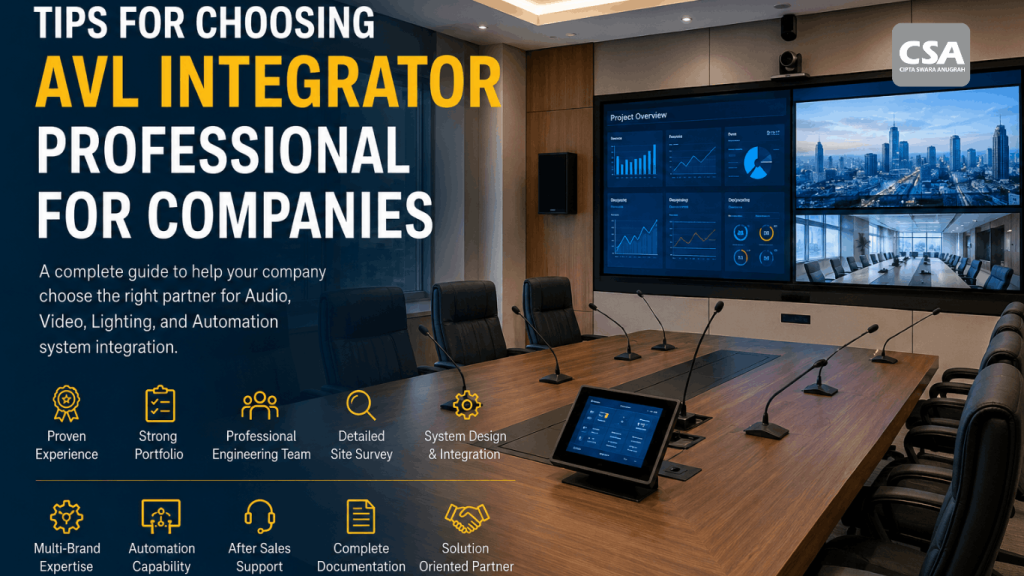
Modern workplaces rely heavily on technology to support communication, collaboration, and daily operations. Meeting rooms, boardrooms, training centers, command centers, and collaborative workspaces all depend on Audio Visual systems that function reliably and seamlessly. This is one of the main reasons large companies choose AV System Integrators instead of purchasing equipment independently. Their objective is not simply to own the latest technology, but to build an integrated system that supports long-term business performance.
At first glance, purchasing displays, cameras, microphones, speakers, and other Audio Visual devices separately may appear to be a cost-effective solution. However, implementing a professional AV environment involves much more than selecting individual products. Every component must work together as part of a unified system that delivers consistent performance, simplifies operation, and remains scalable as business requirements evolve.
This is where an AV System Integrator provides significant value. Rather than focusing solely on individual devices, an integrator designs, implements, and optimizes a complete Audio Visual ecosystem tailored to an organization’s operational needs.
Why Large Companies Choose AV System Integrators Instead of Purchasing Equipment Independently
Purchasing Audio Visual Equipment Is Not the Same as Building an Integrated System
Many organizations initially assume that creating an Audio Visual environment is simply a matter of purchasing the necessary equipment.
The process often begins with a shopping list consisting of a large display, video conferencing camera, wireless microphones, loudspeakers, and presentation devices. Once the equipment arrives, the expectation is that everything can simply be connected and used immediately.
In reality, professional Audio Visual systems require much more than assembling hardware.
Each device must communicate effectively with the others while delivering a smooth and reliable user experience. A meeting room, for example, should allow users to start presentations, launch video conferences, adjust audio levels, and switch input sources without unnecessary complexity.
Without proper system integration, even premium equipment may fail to deliver the expected performance.
Large companies recognize that their investment extends beyond purchasing technology. They invest in operational efficiency, reliability, and long-term productivity.
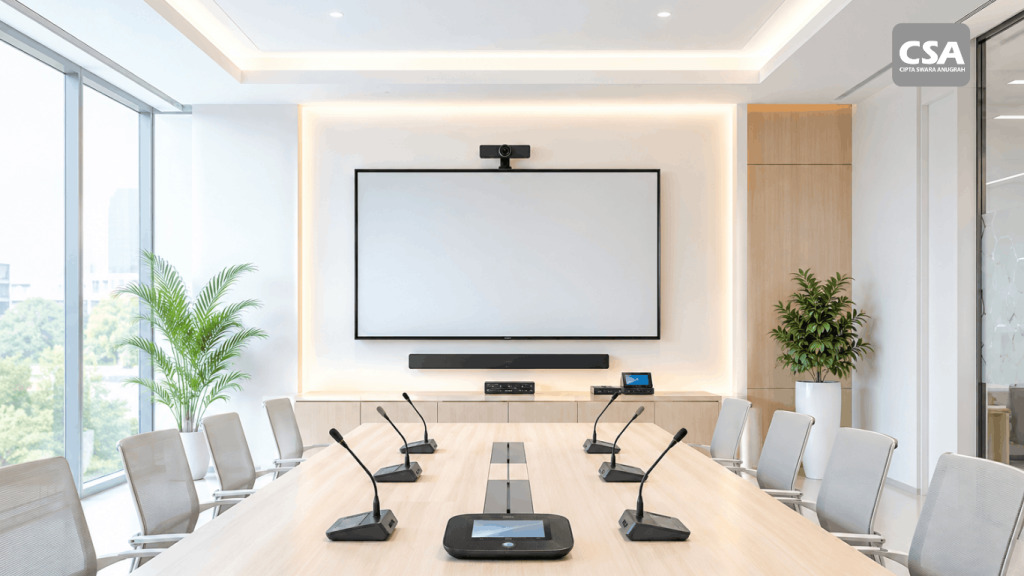
System Integration Has Become Increasingly Complex
Today’s corporate Audio Visual environments consist of multiple technologies working simultaneously.
A single meeting room may include:
- Interactive displays or large-format commercial displays.
- PTZ video conferencing cameras.
- Ceiling or wireless microphones.
- Professional loudspeaker systems.
- Digital Signal Processors (DSP).
- Room control systems.
- Wireless presentation solutions.
- Video conferencing platforms.
- Network infrastructure.
Each component performs a different function, but all must operate as one integrated solution.
Compatibility between devices has become increasingly important as businesses adopt hybrid meeting environments. Employees expect every meeting to begin quickly without technical interruptions, regardless of whether participants join from the office or remotely.
Achieving this level of reliability requires careful planning long before installation begins.
Large organizations understand that successful integration involves technical expertise across multiple disciplines, including networking, acoustics, control systems, signal routing, software configuration, and user experience design.
The Risks of Purchasing Equipment Independently
Buying Audio Visual equipment from multiple vendors may initially seem like a practical approach, especially when comparing product prices.
However, many organizations discover unexpected challenges once implementation begins.
One of the most common issues is compatibility. Devices from different manufacturers may support different communication protocols, software platforms, or connection standards, making integration far more complicated than anticipated.
Another challenge involves system design.
Selecting the wrong display size, microphone type, speaker configuration, or camera placement can significantly reduce meeting quality, even when premium equipment is used.
Organizations also face operational challenges after installation.
When multiple suppliers are involved, identifying responsibility during technical issues often becomes complicated. One vendor may point to another supplier, while internal IT teams spend valuable time coordinating troubleshooting instead of focusing on strategic business initiatives.
As organizations continue expanding, independently purchased systems may also become difficult to upgrade or standardize across multiple offices.
These challenges demonstrate that purchasing hardware alone does not guarantee a successful Audio Visual environment.
Why Large Enterprises Prioritize Long-Term Business Value
Large organizations rarely evaluate technology investments based solely on initial purchase costs.
Instead, they consider the total business impact over many years.
An unreliable meeting room can lead to delayed decision-making, interrupted client presentations, reduced employee productivity, and unnecessary operational downtime.
Although purchasing equipment independently may appear less expensive at first, additional costs often arise through repeated troubleshooting, replacement equipment, inconsistent user experiences, and future system modifications.
For this reason, many enterprise organizations focus on building standardized, scalable, and reliable Audio Visual infrastructures rather than assembling individual products based only on short-term budgets.
Their priority is creating technology environments that continue supporting collaboration as the company grows.
An AV System Integrator Delivers More Than Equipment
One of the biggest differences between purchasing products independently and working with an AV System Integrator lies in the overall project approach.
Instead of beginning with product selection, an AV System Integrator starts by understanding how the space will actually be used.
Questions typically include:
- How many people will use the room?
- Will the space support hybrid meetings?
- What collaboration platforms will be used?
- How should users control the entire system?
- What future expansion plans should be considered?
- How can the system remain simple for daily operation?
The answers to these questions shape every design decision.
Rather than recommending equipment based solely on specifications, an AV System Integrator develops a complete solution that aligns with operational objectives, user expectations, and long-term business requirements.
This strategic approach enables organizations to maximize their technology investment while minimizing future operational challenges.