
AVL Integrator services in Indonesia are becoming increasingly important as companies develop professional spaces with complex technology systems. These requirements go beyond audio or visual equipment alone. Many projects also require lighting, automation, control systems, and the integration of multiple devices into one ecosystem.
Auditoriums, hotels, convention centers, restaurants, meeting rooms, and MICE venues all have different requirements. Therefore, selecting individual devices without considering the entire system does not always produce optimal results.
A high-quality speaker still requires proper design and configuration. An LED wall also needs the right signal distribution system. Lighting must adapt to the function of the space and the activities taking place inside it.
This is where an AVL Integrator becomes essential. An integrator looks at the project as a whole, from user requirements and room conditions to equipment selection, installation, integration, and system testing.
What Is an AVL Integrator?
AVL stands for Audio, Visual, and Lighting. An AVL Integrator is a professional partner that brings these three elements together into one connected system.
Audio handles sound requirements. Visual manages displays and content distribution. Lighting controls illumination according to the function and atmosphere of the space.
However, an integrator’s role goes beyond installing equipment.
The integrator must ensure that every system communicates and operates according to the project design. This requires knowledge of equipment, networking, control systems, acoustics, lighting, and operational requirements.
For example, an auditorium may require speakers, an LED wall, microphones, and stage lighting. Each device may come from a different product category.
Without proper planning, these systems may operate independently. Users may then need to control multiple devices manually.
AVL integration takes a different approach. The systems are designed to work together as one complete solution.
Why Do Professional Projects Need an AVL Integrator?
Professional projects often involve complex technology requirements. Users need more than equipment. They need systems that are easy to operate and perform consistently.
Imagine a hotel ballroom being used for a conference. The operator may need to manage microphones, music, presentations, an LED wall, cameras, and lighting.
If every device has its own control interface, event operations can become complicated.
An integrated system can simplify this process. Operators can manage multiple functions through a centralized control system designed for the venue.
An integrator can also help reduce potential problems during the planning stage.
Some key benefits include:
- Integrated equipment operation
- Simpler system management
- Structured installation
- Room-specific system design
- More efficient troubleshooting
- Easier future system expansion
This approach becomes especially valuable for projects involving multiple devices and operational requirements.
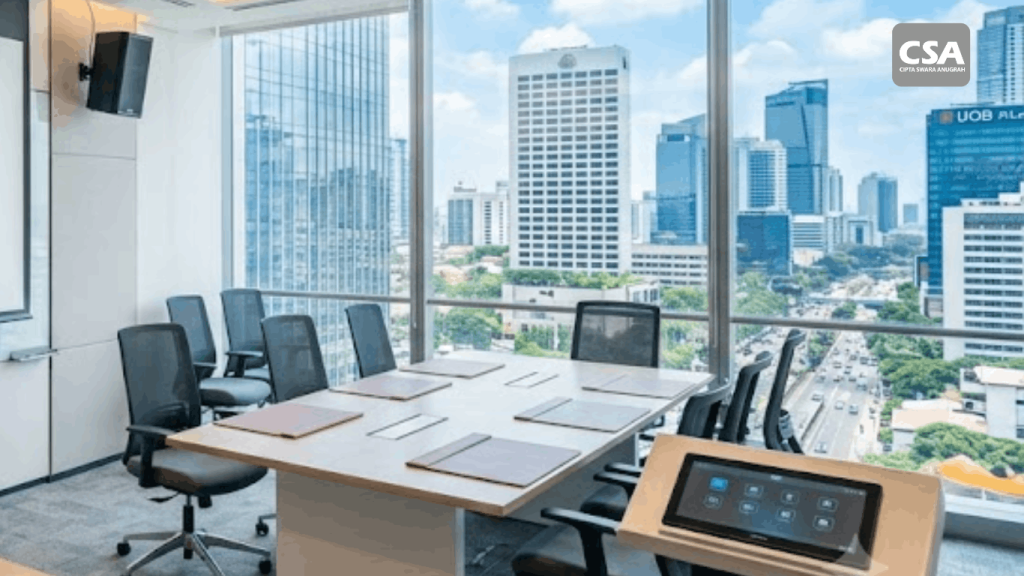
Audio Integration for Professional Systems
Audio forms one of the core elements of an AVL project. The system must deliver clear sound that matches the requirements of the space.
Components may include speakers, amplifiers, mixers, microphones, DSPs, and distributed audio systems.
Sound System
Speaker selection should consider room dimensions, audience positioning, coverage requirements, and acoustic characteristics.
The goal is not simply to produce high volume. The system should deliver even and comfortable sound throughout the space.
Digital Signal Processor
A DSP helps manage and process audio signals. It can support routing, equalization, mixing, and signal management according to the system requirements.
CSA Indonesia has also published content covering DSP technology and its role in integrated audio visual systems.
Distributed Audio
Distributed audio allows sound to be delivered across multiple areas within one facility.
This approach works well for hotels, restaurants, retail spaces, offices, and other commercial environments.
Each zone may require different volume levels or audio sources. The system should therefore follow the function of each area.
Visual Integration for More Effective Communication
Visual systems help organizations communicate information effectively. The technology can vary depending on the project’s requirements.
Common solutions include:
- LED walls
- Video walls
- Projectors
- Displays
- Video processors
- Video distribution
- Digital signage
- Video conferencing systems
LED Walls and Video Walls
LED walls can support auditoriums, ballrooms, event venues, and other large-scale spaces.
Video walls are commonly used for monitoring, command centers, and information display applications.
Technology selection should consider viewing distance, room size, ambient lighting, resolution, and content requirements.
Video Conferencing
Video conferencing allows users to communicate with participants in different locations.
Cameras, microphones, speakers, displays, and conferencing platforms need to work together properly.
This integration is highly relevant for companies that conduct hybrid meetings and conferences.
Lighting Integration for More Adaptive Spaces
Lighting is an important element that distinguishes AVL integration from conventional audio visual systems.
Lighting does more than illuminate a room. It can create atmosphere, support activities, and enhance the user experience.
Lighting requirements may include:
- Smart lighting
- Lighting automation
- Architectural lighting
- Stage lighting
- Lighting control
- Scene control
For example, an auditorium can use different lighting scenes for seminars, presentations, performances, and formal events.
Hotels and restaurants can also use lighting presets for different times and activities.
A centralized control system makes these changes easier to manage.
How Do Audio, Visual, and Lighting Work as One System?
This is one of the most important responsibilities of an integrator.
A project does not simply need audio, visual, and lighting equipment. These systems must follow a coordinated workflow.
Consider an auditorium.
Audio manages microphones and speakers.
Visual manages LED walls, projectors, and presentation sources.
Lighting controls stage and audience lighting.
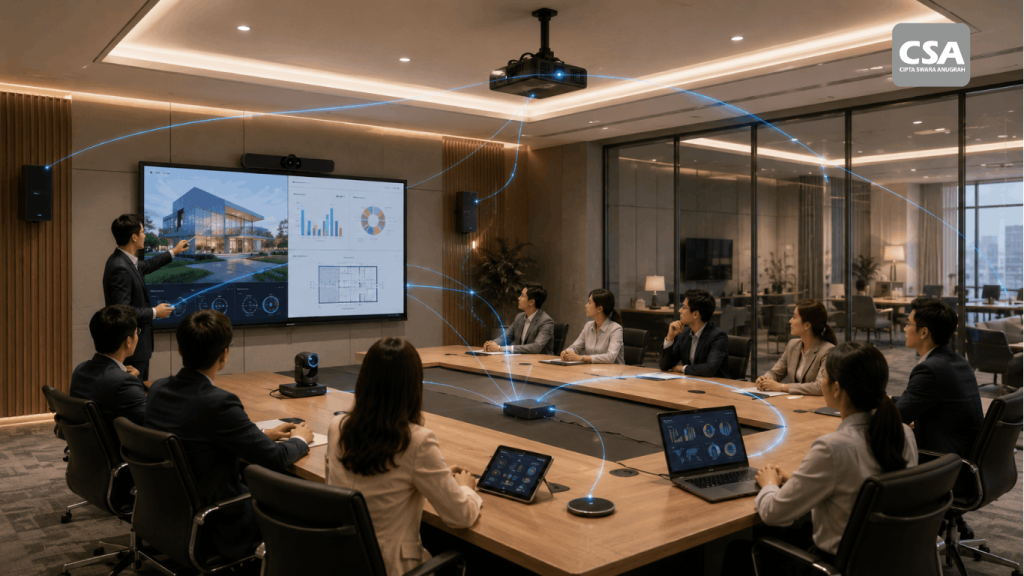
A control system then connects these functions so operators can manage them more efficiently.
When a presentation begins, an operator can select a specific scene. The system can then adjust the display, audio, and lighting according to the configured settings.
This approach makes complex technology easier for users to operate.
Read Also: Why Should Audio Visual Systems Be Designed as One Integrated System?
Types of Projects That Need AVL Integration
Integration requirements can be found across many professional facilities.
Auditoriums
Auditoriums require audio coverage, presentation displays, microphones, lighting, recording, and sometimes video conferencing.
Hotels and Convention Centers
Hotels require flexible systems because one space may host different types of events.
Ballrooms, meeting rooms, restaurants, lobbies, and public areas can each require different audio, visual, and lighting configurations.
CSA Indonesia has experience supporting integrated technology requirements in hospitality environments, including HARRIS Hotel & Convention Serpong.
Restaurants
Restaurants require comfortable audio that does not interfere with conversations. Different areas may also need zoning and individual volume control.
CSA Indonesia provides Restaurant Audio Solutions as part of its technology services.
Corporate Buildings
Companies may require integrated meeting rooms, presentation systems, video conferencing, digital signage, sound systems, and room automation.
MICE and Event Venues
MICE venues require systems that can adapt to different event formats. Conferences, seminars, exhibitions, and corporate events may require different configurations.
CSA Indonesia has also developed content around integrated audio visual systems for MICE and large-scale conference requirements.
Outdoor Hospitality and Commercial Spaces
Outdoor environments introduce additional challenges. Systems need to consider environmental conditions, sound distribution, visual requirements, and lighting.
CSA Indonesia has also worked on outdoor audio visual solutions for Sonada Beach Club in Bintan.
The AVL Integration Process
Professional integration requires a structured process.
1. Needs Analysis
The team identifies user requirements, room functions, capacity, and planned activities.
2. Site Survey
The site is assessed before system design begins. The team can review room dimensions, infrastructure, equipment locations, and installation requirements.
3. System Design
The team develops the system architecture based on project requirements.
This stage determines how audio, visual, lighting, control, and supporting systems will interact.
4. Equipment Selection
Equipment is selected based on actual system requirements rather than simply choosing the highest specifications.
5. Installation
Technicians install equipment, cabling, racks, and supporting components according to the system design.
6. Integration and Programming
Each device is configured to communicate with the integrated system.
The control system is also programmed according to user requirements.
7. Testing and Commissioning
The complete system is tested before handover.
This process ensures that audio, visual, lighting, and control functions operate according to the design.
AVL Integrator vs Equipment Vendor: What Is the Difference?
The main difference lies in the approach to the project.
An equipment vendor generally focuses on specific products. An integrator looks at the entire system.
For example, a company may need an LED wall.
A vendor can offer an LED wall based on its specifications.
An integrator looks at the wider requirements. The team considers content sources, video processors, signal distribution, control systems, networking, installation, and operational requirements.
This approach helps businesses build systems that match their actual needs.
How to Choose the Right AVL Integrator?
Choosing an integrator requires more than comparing equipment prices.
First, evaluate the company’s system design capabilities. The integrator should be able to translate user requirements into a practical technology design.
Second, review project experience. Experience with an auditorium differs from experience with a restaurant or office.
Third, evaluate integration capabilities. Audio, visual, lighting, and control systems should work together properly.
Fourth, make sure the integrator provides testing and commissioning.
Finally, consider post-project support. Professional systems may require maintenance and technical assistance after implementation.
CSA Indonesia as an AVL Integrator in Indonesia
CSA Indonesia provides AVL integration solutions for professional environments, covering Audio, Visual, and Lighting requirements across different types of projects.
CSA’s approach goes beyond equipment supply or installation. The team can help address project requirements as a complete system, from planning and design to technology integration.
CSA Indonesia Audio Integration
For audio requirements, CSA handles sound system installation, audio integration, distributed audio, DSP, and professional audio systems for different environments.
These solutions can support meeting rooms, auditoriums, hotels, restaurants, MICE venues, and commercial facilities.
CSA has also worked on hospitality audio projects, including sound system optimization at MYZE Hotel Waingapu to enhance the venue’s audio experience.
CSA Indonesia Visual Integration
For visual requirements, solutions can include LED walls, displays, video conferencing, video distribution, and integrated visual systems.
CSA has also developed services and content around professional visual system installation for modern business environments.
The integration approach ensures that visual systems do not operate independently. Devices can be designed to connect with content sources, audio systems, and control systems.
CSA Indonesia Lighting Integration
Lighting is an important part of CSA’s positioning as an AVL Integrator.
CSA provides Smart Lighting Automation as part of its technology solutions for integrated environments.
Lighting systems can support meeting rooms, hospitality spaces, auditoriums, commercial facilities, and professional venues.
Lighting integration also allows users to create different scenes or presets based on specific activities.
Integrated Systems in One Ecosystem
The key strength of AVL integration lies in the relationship between different systems.
Imagine a hotel ballroom being used for a conference.
Audio manages microphones and speakers. Visual displays presentations through an LED wall. Lighting creates the appropriate stage atmosphere. The control system helps operators manage the entire setup.
This is what makes a professional project easier to operate.
CSA Indonesia can support the design of these relationships based on the specific requirements of each project.
CSA Indonesia Experience Across Professional Environments
CSA’s portfolio and published project content demonstrate experience across hospitality, MICE, meeting venues, restaurants, and outdoor environments.
This experience matters because every project presents different challenges.
Hotels require flexibility. Auditoriums require consistent coverage. Restaurants require comfortable audio. MICE venues require systems that can adapt to different event formats.
For this reason, professional technology solutions should not rely on the same approach for every project.
Why Choose CSA Indonesia?
CSA Indonesia approaches each project as an integrated technology ecosystem.
The team can help develop solutions based on room requirements, functions, equipment, system integration, and user experience.
With this approach, companies do not have to manage multiple technology systems independently.
Audio, visual, lighting, automation, and control can be designed as part of one integrated technology ecosystem.
For companies developing or upgrading professional facilities, this approach can help create systems that are more structured, easier to operate, and ready to support long-term requirements.
If your project requires Audio, Visual, and Lighting integration, CSA Indonesia can help design a solution based on the characteristics of your space and operational requirements.
Conclusion
Audio, Visual, and Lighting systems no longer have to operate as separate technologies. Modern technology allows these systems to work together within a more integrated ecosystem.
Professional projects therefore need more than an equipment vendor. They need a partner that can understand requirements, design the system, integrate technologies, manage installation, and ensure that every component performs as intended.
CSA Indonesia takes on this role through its AVL Integration approach.
With capabilities covering Audio, Visual, Lighting, Smart Lighting Automation, and professional technology integration, CSA Indonesia can help companies and venue operators develop more structured technology systems.
From clear and evenly distributed sound to optimized visual presentation and lighting that supports the atmosphere of a space, every element can be designed to work together as one system.
If you are planning an Audio, Visual, and Lighting integration project, CSA Indonesia can help develop an integrated solution tailored to your venue’s characteristics and operational requirements.
FAQ About AVL Integrators
1. What is an AVL Integrator?
An AVL Integrator is a professional partner that designs and integrates Audio, Visual, and Lighting systems so different technologies can operate as one complete solution.
2. What services does an AVL Integrator provide?
Services may include audio systems, visual systems, lighting, control systems, automation, installation, integration, programming, testing, and commissioning.
3. Are AVL Integrators only needed by large companies?
No. Integration can benefit restaurants, hotels, auditoriums, offices, educational institutions, places of worship, commercial buildings, and event venues.
4. What is the difference between an AVL Integrator and an equipment distributor?
A distributor focuses on supplying products. An integrator focuses on how different products work together as one system based on the project’s requirements.
5. Why is lighting part of AVL?
Lighting plays an important role in the experience and functionality of a space or event. Integrated lighting allows illumination to adapt to activities and connect with other control systems.
6. Can an AVL system be expanded in the future?
Yes. A properly designed system can account for future expansion, additional equipment, and changes in room functionality.
7. Does CSA Indonesia provide Audio, Visual, and Lighting integration?
Yes. CSA Indonesia positions itself as an AVL Integrator with solutions covering Audio, Visual, Lighting, Smart Lighting Automation, and technology integration for professional environments.
8. When should you involve an AVL Integrator?
Ideally, an integrator should be involved during the planning stage. This allows infrastructure, equipment, installation, integration, and control requirements to be considered from the beginning.