
Professional Audio Visual Installation Services in Indonesia are increasingly important for companies looking to build modern workspaces with integrated technology systems. The need goes beyond installing speakers, displays, cameras, or microphones. Every device must work together as one system to support communication, collaboration, presentations, and daily business operations effectively.
Many companies already use high-end audio visual equipment. However, the results do not always meet expectations. Sound may not be distributed evenly. Microphones can produce feedback. Cameras may fail to capture all meeting participants. Users may also struggle to operate multiple devices at the same time.
These problems do not always come from the quality of the equipment. They can result from poor system design, incorrect device placement, improper configuration, or inadequate integration.
That is why a professional approach is essential. The installation process should begin with understanding the room requirements, followed by system design, equipment selection, installation, integration, configuration, testing, and commissioning.
Why Do Businesses Need Professional Audio Visual Installation?
Audio visual systems have become an important part of modern business operations. Meeting rooms, boardrooms, training rooms, auditoriums, and hospitality facilities increasingly rely on AV technology to support different activities.
However, every room has different requirements.
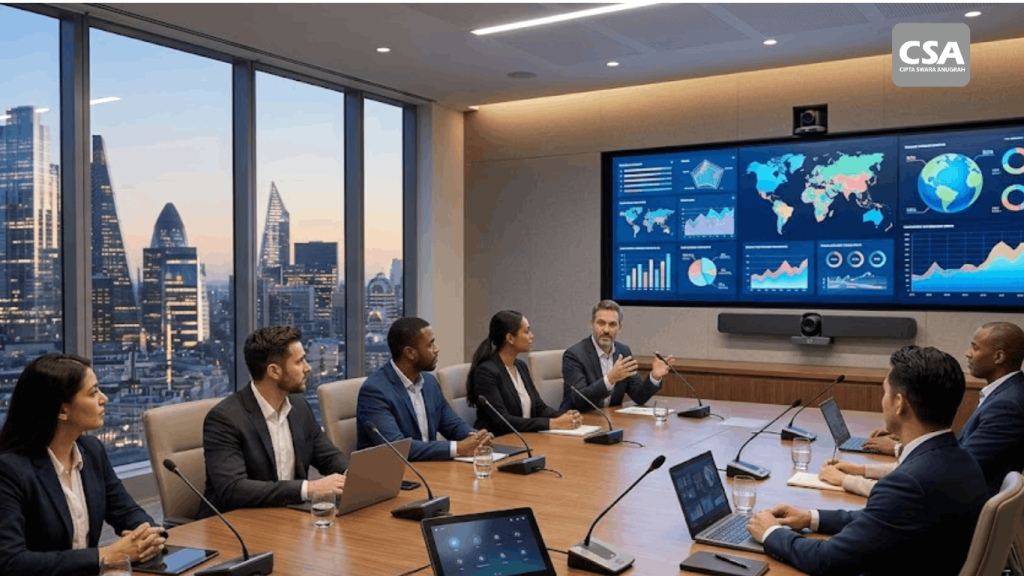
A small meeting room may only need a display, camera, speakers, and microphones. A boardroom may require video conferencing, DSP, room control, and more advanced system integration.
An auditorium presents another level of complexity. The system must consider sound distribution, visual coverage, audience capacity, and the operation of multiple devices.
Installing equipment without proper planning can create problems after the system is already in use. Businesses may eventually need to change configurations or replace equipment.
A professional approach helps reduce these risks from the beginning. The system is designed around actual requirements rather than simply based on the available equipment.
Read Also: Audio Visual Solutions for Corporate That Improve Productivity and Operational Efficiency
Audio Visual Installation Is More Than Installing Equipment
One common mistake in AV projects is treating installation as a simple equipment mounting process.
In reality, the process is much more complex.
A high-quality speaker does not automatically deliver even sound coverage if it is positioned incorrectly. A high-performance microphone can also produce poor communication results when it is placed in the wrong location.
The same principle applies to visual equipment. Cameras, displays, and projectors must be positioned according to user requirements and room characteristics.
That is why a professional AV project involves several interconnected stages.
1. Needs Analysis
The first step is understanding how the room will be used.
The installation team needs to consider the number of users, room activities, communication requirements, existing systems, and potential future expansion.
This process helps businesses avoid purchasing equipment that does not contribute to the actual requirements.
2. System Design
Once the requirements are clear, the project moves into system design.
The design determines how audio, visual, networking, and control components will work together.
The team can also determine the position of speakers, microphones, cameras, displays, equipment racks, and cable pathways.
A well-planned design creates a clear foundation for the installation process.
3. Equipment Selection
Equipment should be selected according to the system requirements.
Businesses do not always need the highest-specification equipment. What matters more is compatibility between the equipment, room, user activities, and available budget.
This approach helps businesses make their technology investment more efficient.
4. Installation and Cabling
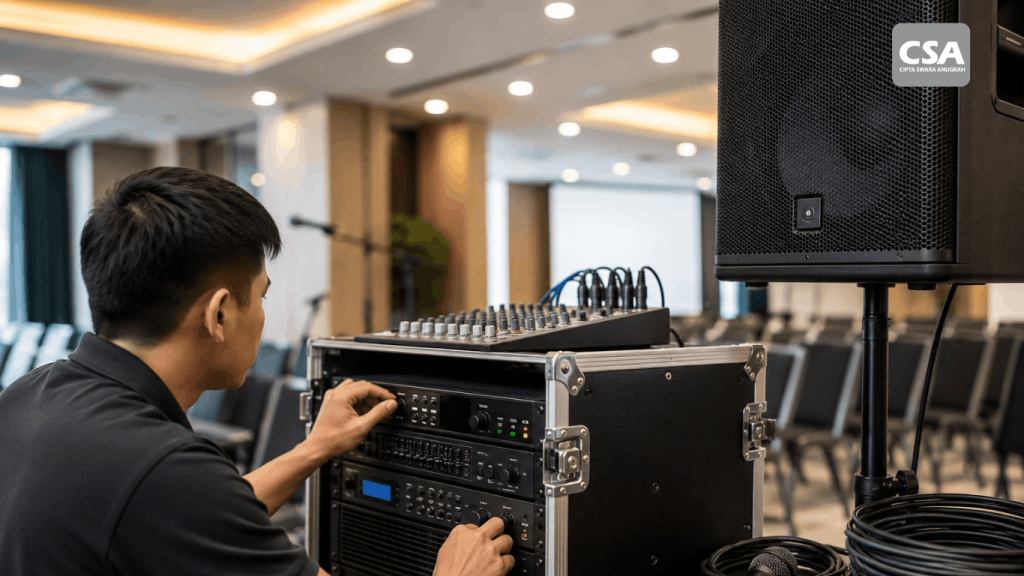
After the design is finalized, technicians install the equipment.
Cabling is an important part of this stage. Cable pathways should remain organized, safe, and accessible for future inspection and maintenance.
A clean installation also helps maintain a professional appearance throughout the room.
5. Integration and Configuration
Installed equipment needs to be configured so that every component can work as part of one system.
DSPs, amplifiers, speakers, microphones, displays, cameras, video conferencing systems, and control devices must follow the established system design.
For more complex environments, integration allows users to operate multiple functions through a simpler control interface.
6. Testing and Commissioning
The final stage ensures that the system performs according to its design.
Technicians test audio, video, connectivity, control functions, and system integration.
If problems are identified, adjustments can be made before the system is handed over to the users.
This process ensures that the system is not merely installed, but fully ready for operation.
Read Also: Meeting Room Solution: The Key to Creating an Efficient and Professional Modern Meeting Space
What Is Included in a Professional Audio Visual System?
Every project has different requirements. However, several components commonly form part of an integrated AV system.
Audio System
An audio system may include speakers, amplifiers, microphones, mixers, DSPs, and other supporting equipment.
The configuration should match the room size and communication requirements.
Visual System
A visual system may include displays, projectors, LED walls, video processors, and signal distribution equipment.
Visual technology should be selected based on viewing distance, room size, lighting conditions, and presentation requirements.
Video Conference System
Video conferencing has become an essential part of modern hybrid workplaces.
The system can combine cameras, microphones, speakers, displays, and conferencing platforms within one environment.
The goal is to create a more natural communication experience between participants inside and outside the meeting room.
DSP and Signal Processing
A Digital Signal Processor, or DSP, manages audio signal processing.
It can support routing, equalization, mixing, and other audio processing requirements.
Proper DSP configuration can improve the quality and consistency of an audio system.
Control System
A control system simplifies the operation of multiple devices.
Users can access specific functions through a single interface instead of operating each device separately.
This approach is particularly useful in meeting rooms and facilities with complex technology requirements.
Professional AV Installation for Different Types of Spaces
Integrated AV systems can be implemented across various environments. Each project requires a different approach.
Meeting Rooms
Meeting rooms require clear audio communication and visual displays that participants can easily see.
Video conferencing integration can also support meetings involving participants from different locations.
Boardrooms
Boardrooms require a more professional technology environment for executive meetings and important business decisions.
Control systems, video conferencing, displays, microphones, and audio equipment can be integrated to make meetings more efficient.
Training Rooms
Training rooms require systems that support presentations and learning activities for multiple participants.
Even sound distribution and clear visual content are important factors in these environments.
Auditoriums
Auditoriums require more complex system planning.
Sound distribution must reach the audience evenly, while the visual system must provide clear content from different viewing positions.
Hotels, Restaurants, and Hospitality
The hospitality industry requires technology that supports the overall guest experience.
Background music, distributed audio, digital signage, conference systems, and automation can become part of the overall solution.
CSA Indonesia has worked on various audio visual requirements across hospitality and commercial environments. These projects include sound system optimization for MYZE Hotel Waingapu and an outdoor audio visual solution for Sonada Beach Club in Bintan.
How to Choose a Professional Audio Visual Vendor?
Choosing a vendor should not be based solely on equipment prices or installation costs.
Businesses should evaluate the vendor’s ability to manage the entire project.
Strong System Design Capabilities
A professional vendor should be able to translate business requirements into a clear system design.
Understanding of Device Integration
Modern AV systems often involve different types of equipment. The vendor must understand how these components can work together as an integrated environment.
Qualified Technical Team
Technical expertise is essential during installation, configuration, testing, commissioning, and troubleshooting.
Testing and Commissioning
A professional vendor should not simply hand over the system after mounting the equipment.
Testing is necessary to confirm that all functions operate according to the design.
Post-Installation Support
AV systems require ongoing maintenance. Technical support after project completion can help maintain system performance over time.
Project Experience
Experience across different types of projects helps an AV vendor understand the specific requirements and challenges of each environment.
Why Is AV Integration More Important Than Simply Choosing Expensive Equipment?
High-specification equipment does not automatically create a high-performing AV system.
System performance depends on how the equipment is designed, installed, configured, and integrated.
Speakers require the right configuration. Microphones need proper positioning. Cameras must provide suitable coverage. DSPs need to be configured according to the room requirements.
All these components must operate as part of one ecosystem.
For this reason, businesses should view an AV project as a complete system. The focus should not only be on equipment specifications, but also on the final result the technology needs to deliver.
Why Should Businesses Involve an Integrator from the Beginning?
Involving an integrator during the early planning stage can help businesses make better technology decisions.
An integrator can assess room requirements before equipment is purchased.
This approach also helps align the AV design with the building environment. Network infrastructure, electrical requirements, acoustics, cable pathways, and equipment placement can all be considered early in the project.
As a result, businesses can reduce the need for major changes once installation has already started.
CSA Indonesia as a Partner for Professional AV Projects
Choosing an AV partner is not simply about finding a company that can install equipment. Businesses need an integrator that understands their requirements, designs the system, handles installation, integrates the equipment, and ensures that the final system performs according to its intended purpose.
CSA Indonesia provides AV integration solutions to help businesses build well-planned and integrated audio visual systems.
Its services include AV integration, sound system installation, smart lighting automation, LED wall rental, and audio solutions for restaurants and hospitality environments.
This integrated approach allows audio visual systems to be designed around room functions, user requirements, and daily business activities.
CSA Indonesia also has experience working on professional projects across corporate, hospitality, commercial, and outdoor environments.
For businesses planning meeting rooms, boardrooms, auditoriums, hospitality facilities, or commercial spaces, involving an integrator at the early planning stage can help ensure that the right system is selected from the beginning.
The goal is not simply to make the equipment turn on.
The system should operate reliably, remain easy to use, work as an integrated environment, and support the operational requirements of the business.
With the right approach, an audio visual investment can deliver long-term value for the organization.
If your company is planning an audio visual project, consult CSA Indonesia to explore a solution designed around your space, technology requirements, and business activities.
FAQ About Professional Audio Visual Installation
1. How much does professional AV installation cost?
The cost depends on room size, number of devices, integration requirements, network infrastructure, control systems, and overall project complexity. An estimate is usually prepared after the project requirements have been assessed.
2. Does the company need to purchase the equipment itself?
Not necessarily. An integrator can help determine the right equipment based on system requirements, room functions, and the available budget.
3. Is AV installation only suitable for corporate offices?
No. AV systems can also be implemented in hotels, restaurants, resorts, auditoriums, convention centers, commercial facilities, places of worship, and other professional environments.
4. What is the difference between an AV vendor and an AV integrator?
An AV vendor may primarily focus on supplying equipment. An AV integrator provides a broader scope that can include system design, installation, configuration, integration, testing, and commissioning.
5. Why is system design important before installation?
System design helps determine equipment, installation positions, signal pathways, network requirements, and system configuration. Proper planning can reduce the risk of changes during project implementation.
6. Does an AV system require maintenance?
Yes. Maintenance helps preserve equipment and system performance. Regular inspections can also identify potential problems before they affect daily operations.
7. When should a business contact an AV integrator?
Ideally, an integrator should be involved during the planning stage. This allows the team to help develop system requirements before equipment is purchased or construction work begins.
8. Can CSA Indonesia handle integrated AV projects?
CSA Indonesia provides AV integration solutions and supporting services for corporate, hospitality, and commercial environments. Its approach covers system planning and implementation based on project requirements.