
The rapid development of workplace technology has encouraged many companies to seek more modern, efficient, and integrated working systems. That is why understanding that a Smart Office Room is an essential part of digital business transformation has become increasingly relevant in 2026.
Modern companies no longer need ordinary office spaces. They require workplace ecosystems that support productivity, hybrid collaboration, automation workflows, and seamless digital communication.
Changes in working patterns have transformed offices into more than just places to work. Today’s modern offices must function as collaboration hubs, communication centers, presentation spaces, and decision-making environments.
Because of this shift, smart office rooms are becoming the new standard in modern workplaces.
Integrated technology helps companies create more efficient and more comfortable working experiences for their teams.
What Is a Smart Office Room?
A smart office room is a modern workspace that uses integrated technology to improve operational efficiency, communication, and user experience.
This concept combines:
- automation systems
- audiovisual technology
- intelligent collaboration
- wireless communication
- centralized control
- smart sensor technology
into one connected workplace ecosystem.
A smart office room is not only about modern appearance.
The system is designed to help companies create workflows that are:
- faster
- more flexible
- more efficient
- more comfortable to use
This approach helps businesses improve work quality while supporting comprehensive digital transformation.
Why Smart Office Rooms Are Important in 2026
The rise of hybrid working has become one of the main reasons behind the growing demand for smart office rooms.
Many companies now have teams working from:
- headquarters
- home offices
- branch offices
- coworking spaces
- multiple locations
This situation requires communication and collaboration to operate more flexibly.
Conventional office spaces often fail to support these modern workplace demands effectively.
As a result, companies are increasingly building smart office rooms to create more seamless communication and more modern workflows.
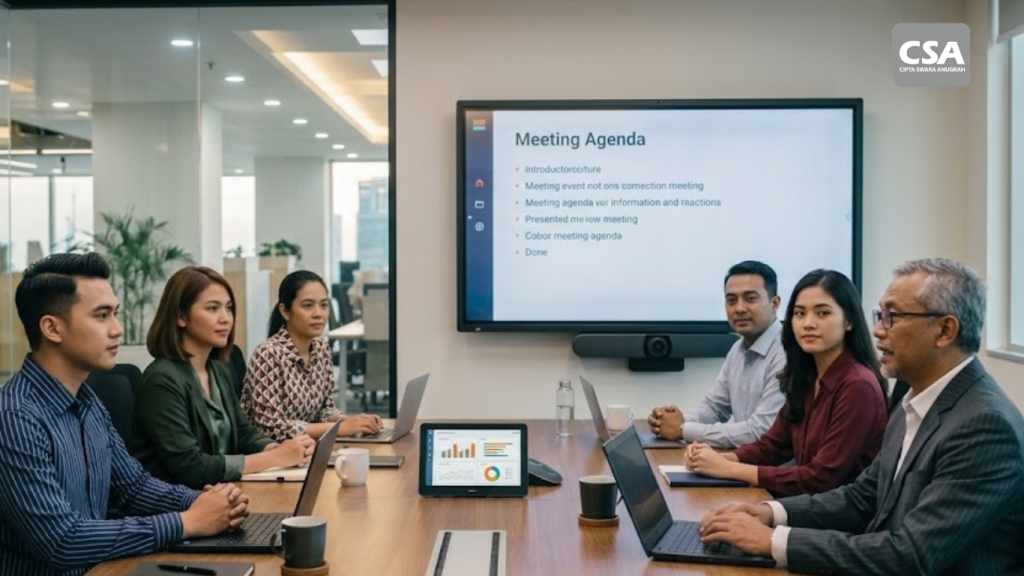
Read Also: How Integrated AV Systems Work for Modern Workplaces and Smart Meeting Rooms
Smart Office Rooms Improve Workplace Productivity
Productivity is one of the most important factors in modern workplaces.
Many companies lose valuable time because of:
- delayed meetings
- difficult device operation
- disconnected systems
- excessive troubleshooting
- unstable communication
Smart office rooms help reduce these obstacles through automation systems and integrated technology.
When all devices operate within one ecosystem, workflows become significantly more efficient.
Employees can focus on their work without being interrupted by technical issues.
Technologies Used in Smart Office Rooms
Smart office rooms use various modern technologies to create smarter workplaces.
Some of the most commonly used technologies include:
- interactive displays
- PTZ cameras
- intelligent ceiling microphones
- wireless presentation systems
- DSP audio processors
- occupancy sensors
- centralized control panels
All these technologies work together within one integrated system.
This approach helps companies create more stable and more professional digital workplaces.
Interactive Displays Enhance Modern Collaboration
Interactive displays are one of the key technologies used in smart office rooms.
These devices make meetings and presentations more interactive.
Users can perform:
- digital annotations
- brainstorming sessions
- collaborative presentations
- wireless sharing
directly through interactive screens.
Interactive displays also improve hybrid meetings because all participants can view and interact with content in real time.
PTZ Cameras Support Hybrid Collaboration
Hybrid collaboration requires professional visual quality.
That is why many smart office rooms use PTZ cameras.
PTZ stands for:
- Pan
- Tilt
- Zoom
These cameras can automatically follow speakers using AI tracking technology.
This technology helps hybrid communication feel more natural and more professional.
PTZ cameras are ideal for:
- executive boardrooms
- training rooms
- smart meeting rooms
- auditoriums
- collaborative workspaces
Intelligent Microphones Create More Natural Communication
The growth of digital workplaces has increased the need for high-quality audio systems.
Smart office rooms commonly use intelligent ceiling microphones to capture voices automatically.
Users do not need to hold microphones while speaking.
This technology makes communication feel:
- more natural
- more comfortable
- more professional
Some intelligent microphones can even detect the direction of the speaker’s voice automatically.
This significantly improves hybrid meeting quality.
Wireless Presentation Makes Meetings More Practical
Many companies still use conventional presentation systems that rely heavily on HDMI cables.
This approach often slows down meeting workflows.
That is why smart office rooms use wireless presentation systems.
Users can instantly:
- share screens
- switch presentations
- collaborate wirelessly
through laptops or mobile devices without additional cables.
Meeting workflows become much faster and more practical.
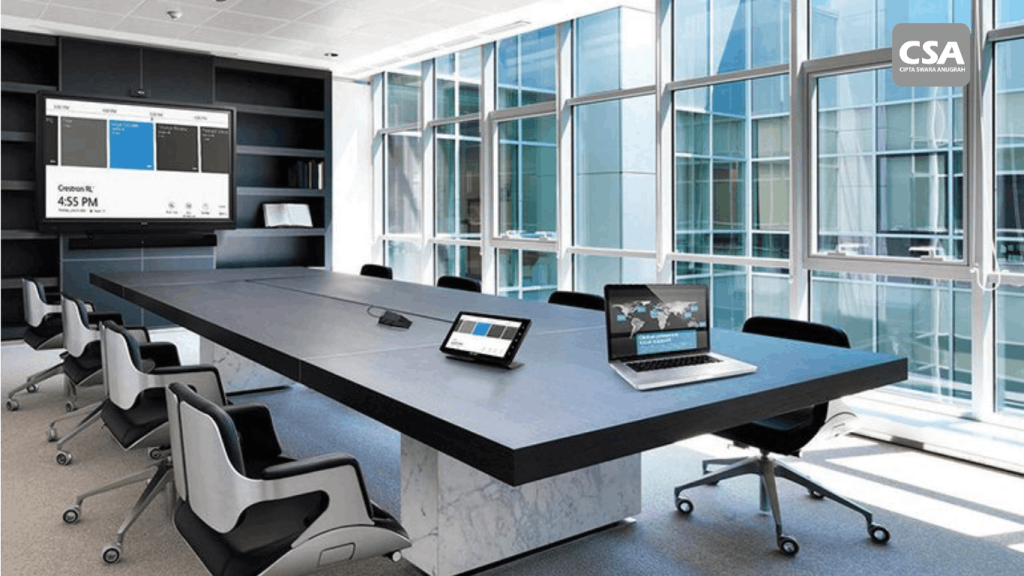
Automation Systems Improve Workplace Efficiency
Automation systems are one of the main foundations of smart office rooms.
This technology allows multiple devices to operate automatically based on specific scenarios.
For example:
- displays automatically turn on
- lighting adjusts to meeting modes
- audio systems activate instantly
- video conferencing platforms connect automatically
Automation helps companies reduce inefficient manual processes.
Besides improving productivity, automation also creates more comfortable user experiences.
Centralized Control Simplifies System Operation
One of the biggest challenges in modern workplaces is managing too many devices with separate controls.
Smart office rooms solve this problem through centralized control systems.
Users can control:
- displays
- audio systems
- lighting
- camera systems
- video conferencing platforms
through a single touch panel.
This approach makes workplaces more user-friendly and more efficient.
Smart Office Rooms Support Hybrid Working
Hybrid working has become the new standard for many modern companies.
That is why smart office rooms are designed to support communication across multiple locations effectively.
These systems help businesses create:
- hybrid meetings
- remote collaboration
- digital presentations
- cloud communication
- intelligent workflows
All communication processes can operate more smoothly and more reliably.
Smart Office Rooms for Various Industries
Smart office rooms are now used across many industries.
Each industry has different workplace requirements.
As a result, smart office systems are typically customized according to operational needs.
Common smart office room implementations include:
Corporate Offices
Supporting executive meetings, hybrid collaboration, and digital workspaces.
Educational Facilities
Enhancing interactive learning and digital collaboration.
Hospitality Industry
Used for conference rooms, ballrooms, and presentation environments.
Command Centers
Supporting real-time monitoring through integrated communication systems.
Training Centers
Improving workshops, presentations, and digital learning environments.
This flexibility makes smart office rooms suitable for many modern business environments.
Smart Office Rooms Improve User Experience
User experience has become a critical factor in modern workplaces.
Technology that feels too complicated can actually reduce productivity.
That is why smart office rooms are designed to be:
- easy to use
- intuitive
- practical
- comfortable
Users do not need to understand complex technical systems.
All technologies work automatically and seamlessly.
AI and Smart Workplaces Will Continue to Evolve
Technological development toward 2026 is pushing workplaces toward intelligent automation.
Many smart office rooms now adopt:
- AI camera tracking
- occupancy analytics
- smart scheduling
- voice automation
- intelligent sensor technology
These technologies help workplaces become:
- more adaptive
- more automated
- more efficient
- more future-ready
Companies that adopt smart workplace technologies usually achieve more modern workflows than conventional office environments.
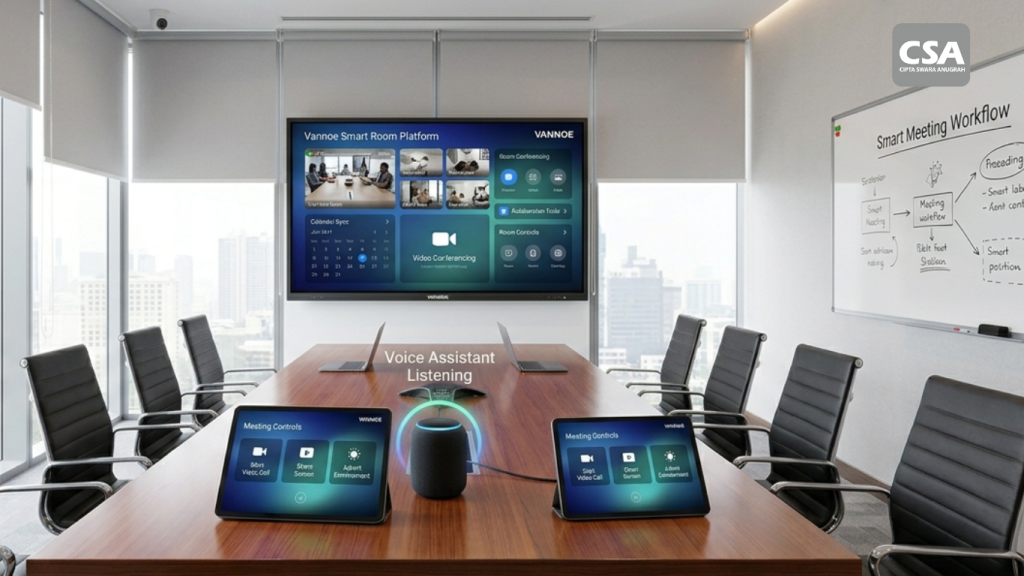
Read Also: How Smart Meeting Rooms Work at CSA Indonesia to Support More Efficient Modern Hybrid Meetings
Why Smart Office Rooms Are Long-Term Investments
Many companies now view smart office rooms as long-term investments.
Modern workplace technologies help businesses:
- improve productivity
- accelerate communication
- enhance meeting quality
- support hybrid collaboration
- create modern workplaces
In addition, smart office rooms also improve corporate professionalism in the eyes of clients and business partners.
The Future of Workplaces Will Become More Digital
Workplace trends show that the future of offices will increasingly rely on automation and intelligent collaboration.
Modern companies need systems that are:
- more flexible
- faster
- more efficient
- more integrated
That is why smart office rooms are no longer simply technology trends.
They have become essential parts of modern workplace transformation.
CSA Indonesia Supports Smart Office Room Transformation
In today’s digital workplace era, companies need more than modern technology devices. They also need integration partners capable of building comprehensive and fully connected workplace systems.
That is why many businesses collaborate with CSA Indonesia to create smarter, more efficient, and more future-ready office environments.
As a company specializing in Audio, Visual, Lighting, and Automation solutions, CSA Indonesia helps businesses implement modern workplace technology through professional system integration approaches.
CSA Indonesia supports solutions such as:
- smart meeting rooms
- integrated AV systems
- hybrid collaboration
- automation control
- interactive workspaces
- intelligent communication systems
All systems are designed to work seamlessly within one integrated ecosystem.
This approach helps companies achieve workplaces that are:
- more flexible
- more efficient
- more user-friendly
- more reliable for long-term operations
CSA Indonesia also supports:
- system design
- deployment
- programming
- commissioning
- after-sales support
to ensure workplace technology implementations operate optimally according to business needs.
Through the combination of modern technology and proper system integration, CSA Indonesia helps businesses create smart office rooms that support productivity, hybrid communication, and digital workplace transformation in 2026.
Conclusion
A Smart Office Room is a modern workplace solution that combines automation systems, audiovisual technology, intelligent collaboration, and centralized control into one integrated ecosystem.
Through technologies such as interactive displays, PTZ cameras, intelligent microphones, wireless presentation systems, and automation workflows, smart office rooms help companies create workplaces that are more efficient, more modern, and more future-ready.
In the era of hybrid working and digital collaboration, smart office rooms have become essential foundations for building productive, flexible, and professional work environments.
FAQ About Smart Office Rooms
1. What is a smart office room?
A smart office room is a modern workspace that uses integrated technology to improve efficiency and workplace collaboration.
2. What are the benefits of smart office rooms?
Smart office rooms help improve productivity, communication, and operational efficiency.
3. What technologies are commonly used in smart office rooms?
Common technologies include:
- interactive displays
- PTZ cameras
- intelligent microphones
- wireless presentation systems
- automation systems
4. Why are smart office rooms important in 2026?
Because modern workplaces require flexible, automated systems that support hybrid collaboration.
5. What is the function of centralized control systems?
Centralized control systems allow users to manage multiple devices through one simple interface.
6. What are the benefits of PTZ cameras in smart office rooms?
PTZ cameras provide professional meeting visuals through automatic speaker tracking.
7. What is an intelligent microphone?
An intelligent microphone is a smart audio device capable of capturing voices automatically without requiring handheld microphones.
8. Why are automation systems important in smart office rooms?
Automation systems help devices operate automatically, making workflows more efficient.
9. Are smart office rooms only suitable for large companies?
No. Smart office rooms can be customized for businesses of all sizes according to operational needs.
10. What is the difference between a smart office room and a traditional office?
Smart office rooms use integrated technology to create workplaces that are more modern, automated, and efficient.