
The rise of hybrid work environments has transformed the way companies communicate and collaborate. Today, Optimizing Meeting Rooms with Video Conferencing and Sound System Integration has become a critical factor in ensuring effective business communication. Meeting rooms are no longer just spaces for internal discussions. They have evolved into digital collaboration hubs that connect employees, clients, business partners, and stakeholders across multiple locations.
Many organizations have adopted video conferencing platforms to support remote collaboration. However, technical challenges still occur frequently during meetings. Participants may struggle with unclear audio, poor camera coverage, distracting echoes, or presentation systems that fail to operate seamlessly due to a lack of integration.
These issues can disrupt discussions and reduce overall productivity. As a result, integrating video conferencing and sound systems has become a fundamental requirement for creating modern meeting rooms that support business operations efficiently.
Why Modern Meeting Rooms Require Integrated Systems
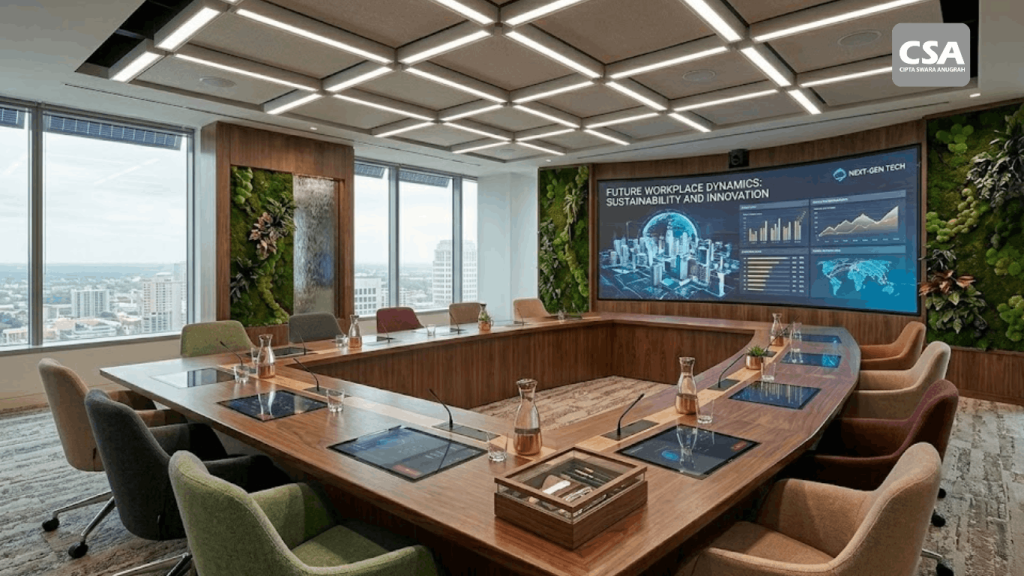
Modern meeting rooms consist of various technologies working together, including cameras, microphones, speakers, displays, and video conferencing platforms.
When these devices operate independently, users often experience technical difficulties that interrupt the flow of meetings.
An integrated system allows all devices to function as a unified ecosystem.
The primary benefits of system integration include:
- smoother communication
- faster meeting setup
- simplified operation
- improved user experience
- enhanced audio and visual performance
With an integrated solution, users can focus on collaboration rather than troubleshooting technical issues.
Read Also: How to Set Up a Smart Meeting Room for Optimal Results
The Challenges of Hybrid Meetings
Hybrid meetings have become the new standard across industries.
Some participants attend in person, while others join remotely through video conferencing platforms.
Although this approach offers flexibility, it also introduces unique challenges.
Common issues include:
- inconsistent audio quality
- remote participants struggling to hear discussions
- poor video visibility
- audio echo and feedback
- synchronization delays between audio and video
- difficulties sharing presentation materials
Without the right technology infrastructure, these challenges can significantly reduce meeting effectiveness.
The Role of Video Conferencing in Modern Meeting Rooms
Video conferencing has become the backbone of modern business communication.
Platforms such as Microsoft Teams, Zoom, Google Meet, and Cisco Webex are now widely used by organizations worldwide.
However, successful video conferencing depends on more than software alone.
An optimized meeting room also requires:
- high-quality cameras
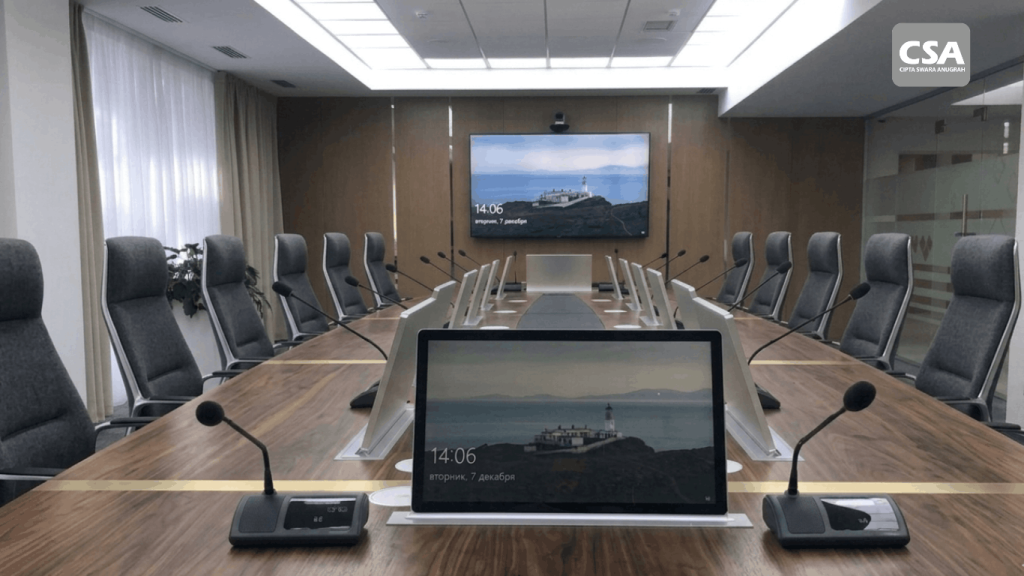
- professional microphones
- reliable speakers
- stable network connectivity
- appropriate display solutions
When these components work together seamlessly, organizations can create a more professional and engaging meeting experience.
Why Sound Systems Are Critical
In modern meetings, audio quality often has a greater impact than video quality.
Participants can still follow a discussion when video quality decreases slightly.
However, communication becomes ineffective when audio is unclear.
For this reason, investing in a professional sound system is essential.
A high-quality audio solution provides:
- clear speech reproduction
- even sound distribution
- minimal interference
- natural communication
- greater participant comfort
Excellent audio quality helps participants understand information accurately and efficiently.
Essential Audio Components for Modern Meeting Rooms
Intelligent Microphones
Intelligent microphones automatically capture voices from multiple directions.
This technology allows participants to speak naturally without staying close to a microphone.
DSP Audio Processors
Digital Signal Processors (DSPs) process audio signals in real time.
They improve voice clarity and reduce unwanted noise and interference.
Echo Cancellation
Echo is one of the most common challenges in video conferencing.
Echo cancellation technology eliminates audio reflections, creating a smoother communication experience.
Professional Speakers
Professional speakers distribute sound evenly throughout the room.
Every participant can hear discussions clearly regardless of seating position.
The Importance of Proper Camera Placement
Camera quality alone does not guarantee a successful video conferencing experience.
Camera positioning is equally important.
Ideally, cameras should be installed close to the primary display.
This setup creates a more natural communication experience by simulating direct eye contact.
Many organizations now utilize PTZ cameras with AI tracking capabilities.
These cameras automatically follow active speakers, resulting in a more dynamic and professional meeting environment.
Audio and Video Integration Enhances Meeting Experiences
When audio and video systems operate separately, several issues can occur.
Examples include:
- delayed audio
- unsynchronized video
- communication confusion
- unnatural interactions
Integrated audiovisual systems synchronize all components in real time.
As a result, both in-room and remote participants enjoy a more consistent meeting experience.
Wireless Presentation Improves Collaboration
Presentations are a key part of most business meetings.
However, many organizations still rely on traditional HDMI cables and adapters.
Wireless presentation systems eliminate these limitations.
Users can easily:
- share screens
- deliver presentations
- collaborate on documents
- switch presenters
without requiring additional cables.
This approach allows meetings to start faster and run more efficiently.
Baca Juga: How to Set Up a Smart Meeting Room for Optimal Results
Automation Makes Meeting Rooms Smarter
Modern meeting rooms increasingly incorporate automation technologies to improve user convenience.
Automation enables devices to operate automatically based on predefined scenarios.
Examples include:
- displays turning on automatically
- cameras activating when meetings begin
- audio systems connecting instantly
- lighting adjusting to meeting modes
These capabilities reduce manual tasks and improve operational efficiency.
The Impact of Integration on Business Productivity
Efficient meetings directly contribute to higher productivity.
Organizations can:
- accelerate decision-making
- improve collaboration
- reduce meeting duration
- enhance communication quality
- complete projects faster
Integrated meeting room technologies help businesses remain competitive in a rapidly evolving marketplace.
How Poorly Designed Meeting Rooms Can Hurt Business Performance
Many organizations underestimate the impact of meeting room inefficiencies.
Poor audio quality, unreliable video conferencing, and complicated presentation processes can waste valuable working hours.
A technical issue may only consume a few minutes during a meeting.
However, recurring disruptions can result in significant productivity losses over time.
Common consequences include:
- delayed business decisions
- communication breakdowns
- reduced employee productivity
- ineffective meetings
- less professional client experiences
Optimizing meeting rooms is therefore not only a technology initiative but also a business efficiency strategy.
Common Mistakes When Building Hybrid Meeting Rooms
Many organizations invest in advanced technologies but fail to achieve optimal results due to poor planning.
Common mistakes include:
Choosing the Wrong Camera
A camera with an inappropriate viewing angle may prevent some participants from being visible during meetings.
Neglecting Audio Quality
Many companies focus heavily on visual presentation while overlooking audio performance.
However, audio remains the foundation of effective communication.
Not Using DSP Audio Processing
Without DSP technology, audio quality often becomes inconsistent and prone to interference.
Poor Microphone Placement
Improper microphone positioning can make participants difficult to hear.
Inadequate Network Infrastructure
Video conferencing requires reliable and stable network connectivity to function properly.
Video Conferencing and Sound System Integration Delivers Long-Term ROI
Some organizations view audiovisual integration as an additional expense.
In reality, it provides substantial long-term value.
Integrated meeting rooms help companies:
- reduce unproductive meeting time
- accelerate decision-making
- improve collaboration
- reduce travel expenses
- strengthen client communication
Return on investment is not always measured through direct cost savings.
Many benefits emerge through improved productivity and operational efficiency.
Video Conferencing and Sound System Trends in 2026
Meeting room technology continues to evolve rapidly.
Several innovations are becoming standard in 2026.
AI Camera Tracking
Cameras automatically identify and follow speakers.
Intelligent Audio Processing
Advanced audio systems eliminate noise and enhance voice clarity.
Cloud-Based Device Management
Administrators can monitor and manage meeting room devices remotely.
Occupancy Analytics
Smart sensors provide insights into room utilization.
Smart Automation Platforms
Meeting room devices operate automatically based on user requirements and schedules.
These trends indicate that future meeting rooms will become increasingly intelligent, automated, and interconnected.
CSA Indonesia Supports Modern Meeting Room Integration
Successful meeting room implementation requires more than selecting the right equipment.
System design, integration, configuration, and commissioning all play essential roles.
For this reason, many organizations choose to work with CSA Indonesia to develop professional and fully integrated meeting room environments.
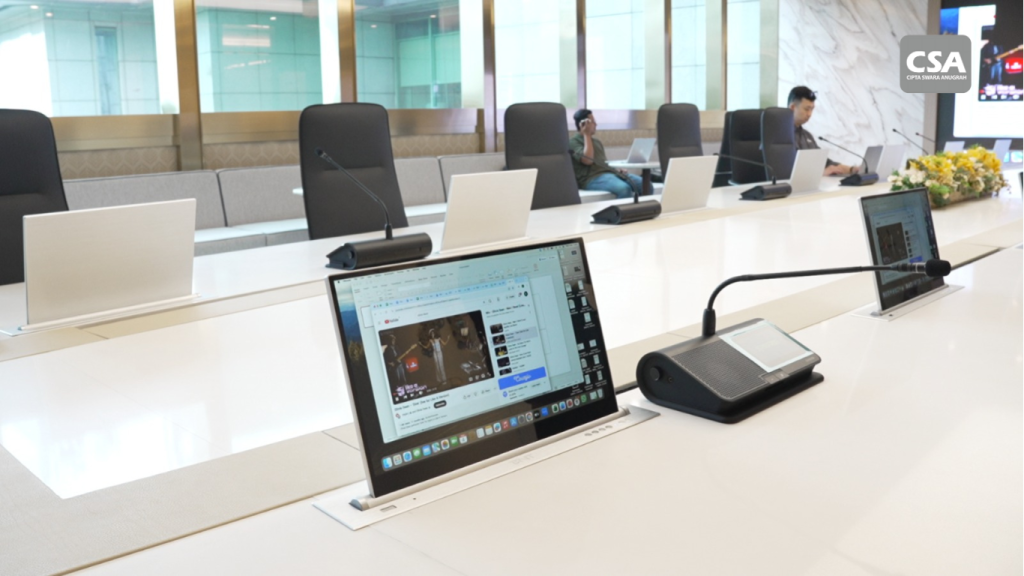
As a company specializing in Audio, Visual, Lighting, and Automation solutions, CSA Indonesia helps organizations implement:
- smart meeting rooms
- integrated AV systems
- video conferencing solutions
- professional sound systems
- automation control systems
- centralized management platforms
A well-integrated approach ensures greater reliability, scalability, and ease of use.
The Future of Meeting Rooms Will Be More Connected
Technology trends indicate that meeting rooms will continue evolving toward greater integration.
Organizations are increasingly adopting:
- AI collaboration tools
- intelligent microphone arrays
- smart occupancy sensors
- cloud-based meeting management
- automation platforms
Future meeting rooms will become strategic communication centers that support business growth and digital transformation.
Conclusion
Optimizing Meeting Rooms with Video Conferencing and Sound System Integration is an essential step for organizations seeking to improve communication and collaboration in the hybrid work era.
By combining professional cameras, high-quality audio systems, wireless presentation solutions, automation technologies, and integrated video conferencing platforms, businesses can create more productive and efficient meeting environments.
With the right design and implementation, organizations can reduce technical obstacles, accelerate decision-making, improve professionalism, and support long-term business success.
Frequently Asked Questions (FAQ)
1. Why is video conferencing and sound system integration important?
Integration ensures clear, stable, and efficient communication for all meeting participants.
2. What problems occur when audio and video systems are not integrated?
Common issues include echo, synchronization delays, poor communication quality, and presentation disruptions.
3. What is the purpose of a DSP audio processor?
A DSP improves audio clarity and minimizes unwanted interference.
4. Why is audio quality often more important than video quality?
Because communication becomes ineffective when participants cannot hear each other clearly.
5. What are the benefits of PTZ cameras?
PTZ cameras provide professional meeting experiences through automatic speaker tracking and flexible viewing angles.
6. What is a wireless presentation system?
It allows users to share screens and presentations without relying on physical cables.
7. How can echo be reduced during video conferences?
By implementing echo cancellation technology and proper audio system design.
8. Do small meeting rooms need professional sound systems?
Yes. Clear audio remains essential regardless of room size.
9. What are the benefits of meeting room automation?
Automation simplifies operations and improves efficiency by allowing devices to function automatically.
10. Why should organizations work with professional integrators?
Professional integrators ensure all technologies work together seamlessly and align with business objectives.