
In today’s digital era, What Is Audio Visual Integration? has become an increasingly common question among organizations seeking to improve communication, collaboration, and operational efficiency. As technology continues to evolve, audio and visual equipment is no longer used as standalone devices. Modern businesses require integrated systems that connect multiple technologies into a single ecosystem that is easy to manage, highly efficient, and capable of supporting a wide range of business activities.
From meeting rooms and boardrooms to auditoriums, command centers, and training facilities, Audio Visual Integration has become a fundamental element in creating a smarter workplace. With proper integration, users no longer need to operate each device individually. Instead, the entire system works together seamlessly through a centralized control interface.
So, what exactly is Audio Visual Integration, how does it work, and why has it become an essential investment for modern businesses? Let’s explore the answers in detail.
What Is Audio Visual Integration?
Audio Visual Integration is the process of combining multiple audio, video, control, networking, and supporting technologies into a unified system that allows every component to communicate and function together seamlessly.
Unlike installing individual devices independently, an integrated AV system is carefully designed from the beginning so that every component operates as part of a single ecosystem. The goal is to create a user-friendly, efficient, and reliable environment that simplifies daily operations.
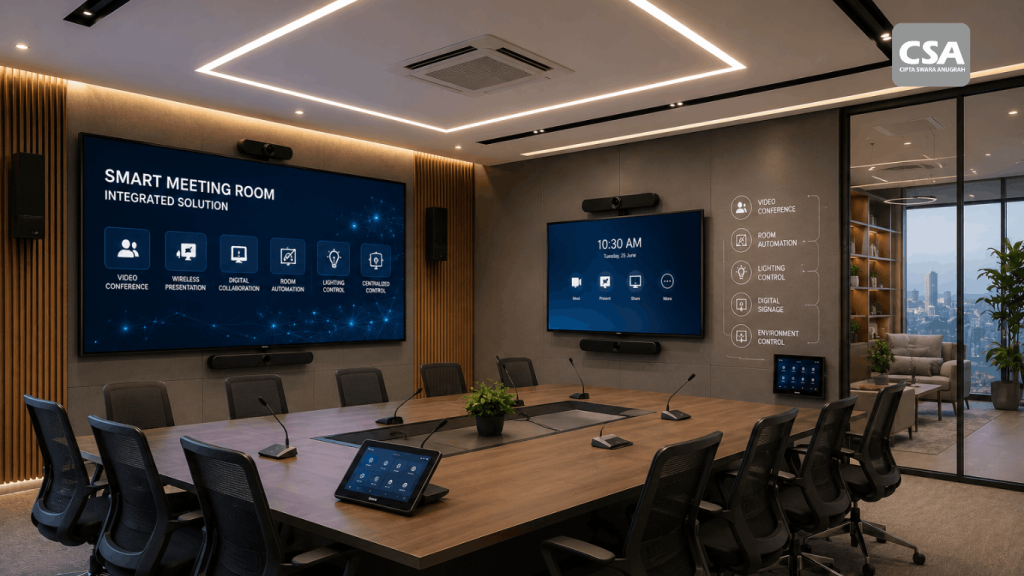
For example, a modern meeting room typically includes presentation displays, conferencing cameras, microphones, speakers, control systems, and network infrastructure. Without integration, users must operate each device separately. With Audio Visual Integration, however, all devices can be activated simultaneously through a single touch panel or mobile application.
This streamlined approach makes the technology an ideal solution for organizations that prioritize productivity, collaboration, and operational efficiency.
Why Is Audio Visual Integration Becoming More Important?
The evolution of today’s workplace is one of the primary reasons why integrated AV systems have become increasingly important.
Many organizations now embrace hybrid working environments where in-person meetings and virtual collaboration occur simultaneously. These new workflows demand systems capable of connecting multiple technologies quickly, reliably, and effortlessly.
Businesses are also expected to provide modern workspaces that encourage collaboration while remaining simple enough for anyone to operate.
Without a properly integrated system, organizations often experience problems such as:
- Difficulty connecting presentation devices
- Microphones failing to communicate with conferencing platforms
- Audio and video synchronization issues
- Complicated system operation
- Valuable meeting time lost due to technical difficulties
Audio Visual Integration solves these challenges by creating a centralized, well-designed technology ecosystem.
How Does Audio Visual Integration Work?
An Audio Visual Integration system connects all devices through networking infrastructure, intelligent control systems, and specialized software.
When users perform a simple action, such as pressing a “Start Meeting” button, the system automatically executes multiple tasks at once.
For example, it can:
- Turn on presentation displays
- Activate conferencing cameras
- Power up the audio system
- Connect microphones
- Adjust speaker volume
- Set room lighting
- Launch video conferencing software
All of these processes happen within seconds, eliminating the need to manually configure each individual device.
This automation significantly improves efficiency while reducing user errors.
Core Components of an Audio Visual Integration System
To ensure optimal performance, every integrated AV system consists of several key components working together.
Audio System
The audio system delivers clear and evenly distributed sound throughout the room.
Common components include:
- Professional loudspeakers
- Power amplifiers
- Digital Signal Processors (DSP)
- Wired and wireless microphones
- Audio mixers
A properly designed audio system ensures every participant can hear and communicate clearly without distortion or feedback.
Visual System
The visual system presents information to meeting participants and audiences.
Typical display technologies include:
- Interactive Flat Panels
- LED Displays
- Video Walls
- Projectors
- Professional monitors
Selecting the appropriate visual solution depends on room size, audience capacity, and presentation requirements.
Control System
The control system serves as the central interface for operating all connected devices.
Using a touchscreen control panel or mobile application, users can manage multiple technologies from one simple interface.
Control systems also enable advanced automation, making daily operation significantly easier.
Network Infrastructure
Network infrastructure forms the backbone of every integrated AV system.
A stable and properly designed network allows all devices to exchange data efficiently and operate in perfect synchronization.
For this reason, network planning is a critical part of every Audio Visual Integration project.
Benefits of Audio Visual Integration for Businesses
Implementing an integrated AV system provides numerous advantages for organizations.
Improves Productivity
Employees no longer waste valuable time connecting equipment before meetings begin.
The system is immediately ready for use, allowing meetings to start on time and operate more efficiently.
Enhances Collaboration
Integrated conferencing technologies enable seamless communication between teams regardless of their physical location.
This improves collaboration across departments, offices, and countries.
Delivers a Better User Experience
An intuitive system allows employees to operate complex technology without requiring technical expertise.
This reduces operational mistakes and increases user confidence.
Increases Operational Efficiency
Automation minimizes repetitive manual tasks.
As a result, organizations save time while improving overall operational performance.
Supports Future Expansion
A properly designed system can accommodate future upgrades without requiring a complete infrastructure replacement.
This flexibility protects long-term technology investments.
Common Applications of Audio Visual Integration
Audio Visual Integration can be implemented across various industries and environments.
Meeting Rooms
Modern meeting rooms integrate conferencing cameras, microphones, professional audio systems, interactive displays, and centralized control systems to support efficient collaboration.
Boardrooms
Executive boardrooms require premium audio and visual quality to facilitate important business discussions and strategic decision-making.
Auditoriums
Auditoriums combine professional sound systems, large-format displays, lighting systems, and video production technologies into one coordinated environment.
Command Centers
Command centers utilize video walls, monitoring systems, communication equipment, and centralized control platforms for real-time operational management.
Training Rooms
Training facilities integrate Interactive Flat Panels, wireless presentation systems, cameras, and professional audio solutions to create engaging learning experiences.

Challenges of Building an Audio Visual Integration System
Although integrated AV systems offer significant advantages, successful implementation requires careful planning.
Several common challenges include:
Poor System Design
Incorrect system design can result in poor sound quality, inadequate visual performance, or compatibility issues between devices.
Improper Equipment Selection
Not every product works efficiently with every system.
Choosing compatible technologies is essential for long-term reliability.
Insufficient Network Infrastructure
Weak network performance negatively impacts the entire AV ecosystem.
Proper network assessment should always be completed before installation.
Lack of Documentation
Incomplete technical documentation complicates future maintenance, troubleshooting, and system expansion.
Tips for Choosing the Right Audio Visual Integrator
The success of an AV project depends not only on the equipment but also on the expertise of the integration partner.
When selecting an AV integrator, consider whether they:
- Have extensive project experience
- Provide consultation and site surveys
- Employ qualified engineering teams
- Deliver comprehensive system designs
- Offer maintenance and after-sales support
- Present a proven project portfolio
- Have experience working with multiple technology brands
Choosing the right partner significantly reduces project risks and ensures optimal system performance.
Why Businesses Should Work with Professionals Like CSA Indonesia
Developing an Audio Visual Integration system requires technical expertise, careful planning, and extensive industry experience. Therefore, organizations should partner with professional system integrators capable of delivering complete solutions rather than simply supplying equipment.
One company specializing in Audio, Visual, Lighting, and Automation solutions is CSA Indonesia (Cipta Swara Anugrah). CSA Indonesia provides comprehensive services that include consultation, site surveys, system design, installation, equipment integration, commissioning, user training, and ongoing maintenance.
This end-to-end approach ensures every project is designed according to operational requirements while delivering systems that remain reliable, scalable, and easy to manage as business needs continue to evolve.
With experience across corporate offices, meeting rooms, auditoriums, training facilities, and command centers, CSA Indonesia has established itself as a trusted partner for organizations seeking professional Audio Visual Integration solutions.
Conclusion
Audio Visual Integration is no longer just a technology trend—it has become an essential requirement for organizations aiming to build modern, efficient, and collaborative work environments.
By integrating audio, video, networking, and control technologies into one unified ecosystem, businesses can improve communication, simplify operations, and significantly enhance workplace productivity.
To maximize return on investment, companies should work with experienced AV system integrators capable of designing reliable, scalable, and future-ready solutions tailored to their operational goals.
FAQ
What is Audio Visual Integration?
Audio Visual Integration is the process of combining audio, video, control, and networking technologies into one centralized system that operates seamlessly.
What are the primary benefits of Audio Visual Integration?
The main benefits include improved productivity, better collaboration, enhanced user experience, greater operational efficiency, and easier system scalability.
Where can Audio Visual Integration be implemented?
It can be deployed in meeting rooms, boardrooms, auditoriums, command centers, training centers, hotels, educational institutions, healthcare facilities, and government offices.
Is Audio Visual Integration only suitable for large enterprises?
No. Organizations of all sizes can implement integrated AV solutions according to their operational requirements and available budget.
How is Audio Visual Integration different from installing standalone equipment?
Standalone installations operate independently, while integrated systems allow every device to communicate and function together through centralized control.
Why should businesses hire a professional Audio Visual Integrator?
Professional integrators design the system, select compatible equipment, perform installation and configuration, and ensure the entire solution operates efficiently and reliably.
How long does an Audio Visual Integration project usually take?
Implementation time depends on project complexity, room size, infrastructure readiness, and the number of integrated devices. Projects may take anywhere from several days to several months.