
Many companies are eager to install an Audio Visual system as quickly as possible so their meeting rooms, training facilities, or collaboration spaces can be used immediately. However, rushing into installation without proper planning often creates more problems than solutions. Understanding Why Is Audio Visual Design an Essential Step Before Installation? is the key to ensuring every investment delivers maximum value and supports long-term business objectives.
An Audio Visual project is more than purchasing displays, conference cameras, speakers, or microphones. Every component must work together as a single integrated system that aligns with the room’s purpose, business activities, and future expansion plans. Without a well-designed system, companies may face unexpected costs, installation delays, inconsistent performance, and expensive modifications after the project has already begun.
This is why professional Audio Visual projects always begin with the design phase. It provides a clear roadmap for installation while minimizing risks and maximizing operational efficiency.
Audio Visual Design is the process of planning how every technology component will be integrated into a workspace before installation begins.
Rather than focusing only on selecting products, this stage evaluates the room itself, how people use it, and how technology can best support communication and collaboration.
During the design process, several important aspects are analyzed, including:
- Room dimensions and layout
- Seating arrangements
- Display positioning
- Camera placement
- Speaker coverage
- Microphone pickup areas
- Network infrastructure
- Cable routing
- Control system requirements
- Future expansion possibilities
The goal is to create a complete system design that ensures every device performs efficiently while providing the best possible user experience.
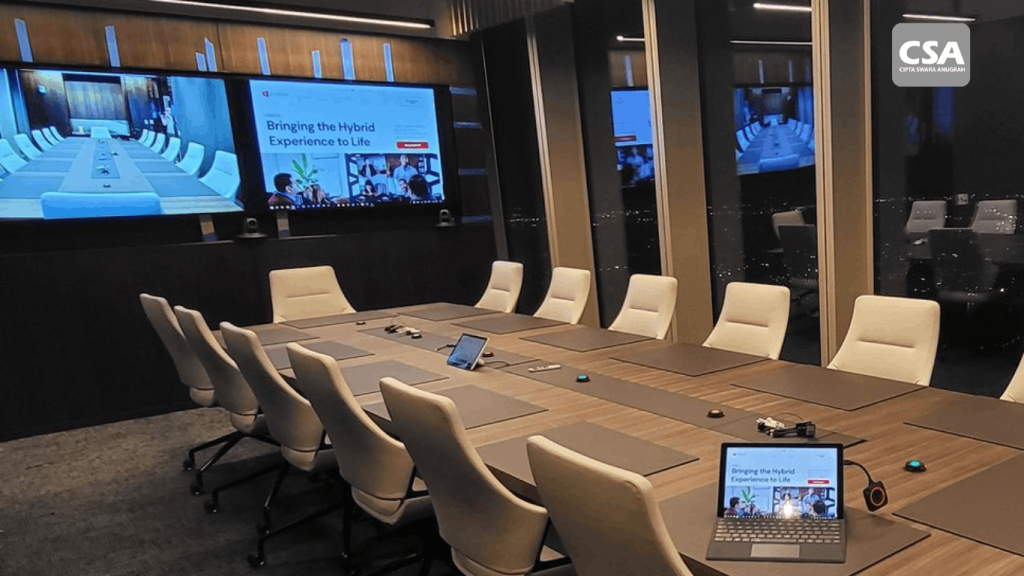
Read Also: How to Determine Audio Visual Requirements for Your Office to Maximize Investment Efficiency
Why Audio Visual Design Should Always Come Before Installation
Installing equipment without a proper design is similar to constructing a building without architectural drawings.
Although the project may appear to progress quickly at first, unexpected problems often arise during implementation.
A professional design process significantly reduces these risks while ensuring every investment contributes to the company’s operational goals.
1. Ensures the System Matches the Room’s Function
Every business environment serves a different purpose.
A small meeting room does not require the same Audio Visual solution as an executive boardroom or a training center.
For example:
- Meeting Room
- Executive Boardroom
- Collaboration Room
- Training Room
- Auditorium
- Command Center
- Reception Area
Each space requires different display sizes, audio coverage, camera capabilities, and control systems.
Without proper planning, companies may purchase equipment that exceeds or falls short of actual operational needs.
A carefully designed system ensures every component supports the intended activities within the space.
2. Prevents Installation Mistakes
Many installation problems can be avoided simply by completing the design phase beforehand.
Without a detailed design, installers often face unexpected challenges such as:
- Incorrect display placement
- Poor camera viewing angles
- Uneven audio coverage
- Insufficient microphone pickup
- Limited cable pathways
- Inadequate electrical capacity
Correcting these issues after installation usually requires additional labor, extra materials, and project delays.
By identifying potential obstacles during the planning stage, companies can complete installation more efficiently while reducing unnecessary costs.
3. Helps Companies Plan Their Investment More Effectively
One of the greatest advantages of Audio Visual Design is accurate budget planning.
Instead of purchasing equipment based on assumptions, companies receive recommendations based on actual operational requirements.
This approach prevents overspending on unnecessary technologies while ensuring critical components are included from the beginning.
A well-designed project also allows businesses to prioritize investments.
Essential technologies can be implemented first, while additional features can be added later without disrupting the overall system architecture.
As a result, companies gain better control over project costs while maintaining flexibility for future growth.
4. Ensures Every Device Works as One Integrated System
Modern workplaces depend on multiple technologies operating together seamlessly.
Displays, conference cameras, microphones, speakers, wireless presentation systems, control panels, and collaboration platforms should function as one complete ecosystem.
Without proper system design, compatibility issues frequently occur.
Different devices may require additional converters, incompatible software, or complex configurations that reduce system reliability.
Professional Audio Visual Design addresses these challenges before installation begins.
Every selected component is evaluated to ensure compatibility, simplify operation, and deliver a consistent user experience across the entire workspace.
5. Accelerates the Installation Process
A complete design provides installers with clear technical documentation before any equipment arrives on site.
This includes equipment layouts, cable routing, mounting locations, network requirements, and installation procedures.
With clear guidance, installation teams can work more efficiently because every task has already been planned.
The result is:
- Faster installation
- Fewer on-site modifications
- Reduced project delays
- Better coordination between contractors
- Higher installation quality
Instead of making decisions during installation, the project follows a structured plan developed during the design phase.
This not only saves time but also minimizes disruptions to daily business operations.
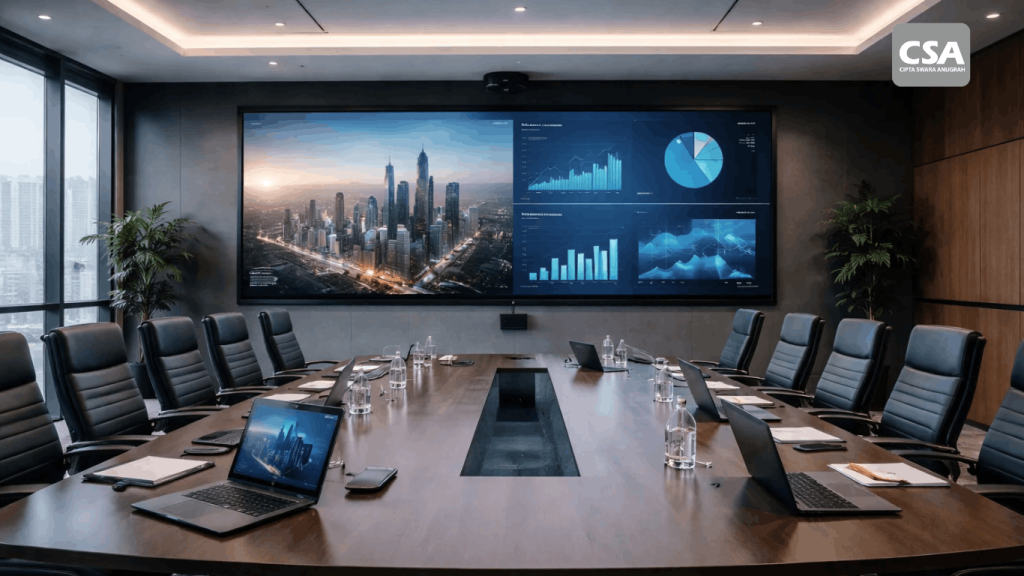
Read Also: How Much Does Audio Visual Integration Cost for a Company? Key Factors That Affect the Investment
6. Simplifies Future Maintenance
An Audio Visual system is not a one-time investment. Like any business technology, it requires regular maintenance to ensure consistent performance and long-term reliability.
A well-designed system makes maintenance significantly easier because every component has been carefully planned and documented.
This includes:
- Equipment locations
- Cable routing
- Network topology
- Device configuration
- Control system architecture
- Expansion points
With complete documentation, technicians can quickly identify potential issues without spending unnecessary time tracing cables or testing every device individually.
As a result, maintenance becomes faster, more efficient, and less disruptive to daily business operations.
7. Supports Future Business Growth
Business requirements continue to evolve.
A meeting room that currently supports ten participants may eventually need to accommodate twenty or more as the company expands.
Without proper planning, businesses often need to replace major parts of the system when new requirements arise.
Professional Audio Visual Design prevents this problem by creating scalable infrastructure from the beginning.
Additional displays, microphones, speakers, cameras, or control systems can be integrated without rebuilding the entire installation.
This scalable approach helps organizations maximize their return on investment while minimizing future upgrade costs.
What Happens During the Audio Visual Design Process?
Audio Visual Design is a structured process that evaluates both technical and operational requirements before installation begins.
Although every project is unique, the process generally includes several key stages.
Consultation
The project begins by understanding the company’s business objectives, collaboration requirements, and operational challenges.
Site Survey
Engineers inspect the room to evaluate dimensions, construction materials, lighting conditions, acoustics, existing infrastructure, and available installation space.
Requirement Analysis
The design team identifies the technologies required based on room function, participant capacity, and daily operational activities.
System Design
Engineers develop a complete system layout that includes equipment positioning, signal flow, cable routing, network integration, and control system architecture.
Budget Planning
Based on the approved design, the project budget can be estimated more accurately, reducing the likelihood of unexpected expenses during implementation.
This structured approach creates a solid foundation before installation begins.
Risks of Skipping the Design Phase
Some organizations attempt to reduce project costs by moving directly to installation.
In reality, this decision often creates more expensive problems later.
Common risks include:
- Display sizes that do not match viewing distances.
- Speakers placed in ineffective locations.
- Microphones failing to capture every participant.
- Camera angles that limit meeting visibility.
- Insufficient cable capacity.
- Poor network integration.
- Unexpected installation delays.
- Costly rework after installation.
Most of these issues can be avoided through proper planning and system design.
Investing time in design is often far less expensive than correcting installation mistakes.
Why CSA Indonesia Begins Every Project with Audio Visual Design
At CSA Indonesia (Cipta Swara Anugrah), every Audio Visual project starts with careful planning rather than immediate installation.
The company believes that successful implementation depends on understanding business requirements before selecting any equipment.
CSA Indonesia provides comprehensive services that include:
- Consultation
- Site survey
- Requirement analysis
- Audio Visual system design
- Technology recommendations
- Installation
- System integration
- Commissioning
- Maintenance
This end-to-end approach ensures every solution is tailored to the client’s operational needs while remaining scalable for future business growth.
Instead of simply installing devices, CSA Indonesia develops integrated Audio Visual solutions that improve collaboration, productivity, and long-term investment value.
Conclusion
Installation is only one stage of an Audio Visual project.
The true foundation of a successful system is the design process that comes before it.
Professional Audio Visual Design ensures every technology component is selected, positioned, and integrated according to room requirements, operational objectives, and future expansion plans.
It reduces project risks, improves installation efficiency, simplifies maintenance, and creates a scalable solution that continues to support business growth.
For organizations planning a new meeting room, boardroom, training facility, or enterprise-wide collaboration system, investing in professional Audio Visual Design is one of the smartest decisions they can make before installation begins.
Frequently Asked Questions (FAQ)
Why is Audio Visual Design important before installation?
Audio Visual Design helps companies plan the entire system before implementation, ensuring that every component supports business objectives while minimizing installation errors and unexpected costs.
Can installation begin without a design phase?
Although it is technically possible, skipping the design phase often leads to compatibility issues, installation delays, increased costs, and reduced system performance.
What is included in an Audio Visual Design process?
The process typically includes consultation, site survey, requirement analysis, room evaluation, equipment planning, system layout, cable routing, network integration, and budget planning.
Does every meeting room require a custom Audio Visual Design?
Yes. Every meeting space has different dimensions, user capacity, operational requirements, and collaboration goals, making customized system design highly recommended.
How does Audio Visual Design reduce project costs?
By identifying technical requirements before installation, companies avoid unnecessary equipment purchases, reduce rework, minimize installation delays, and improve long-term scalability.
Why should businesses work with CSA Indonesia?
CSA Indonesia provides complete Audio Visual solutions, from consultation and system design to installation, integration, commissioning, and maintenance, ensuring every project delivers reliable performance and long-term business value.