
Audio

Modern workplaces rely heavily on technology to support communication, collaboration, and daily operations. Meeting rooms, boardrooms, training centers, command centers, and collaborative workspaces all depend on Audio Visual systems that function reliably and seamlessly. This is one of the main reasons large companies choose AV System Integrators instead of purchasing equipment independently. Their objective is not simply to own the latest technology, but to build an integrated system that supports long-term business performance.

At first glance, purchasing displays, cameras, microphones, speakers, and other Audio Visual devices separately may appear to be a cost-effective solution. However, implementing a professional AV environment involves much more than selecting individual products. Every component must work together as part of a unified system that delivers consistent performance, simplifies operation, and remains scalable as business requirements evolve.

This is where an AV System Integrator provides significant value. Rather than focusing solely on individual devices, an integrator designs, implements, and optimizes a complete Audio Visual ecosystem tailored to an organization’s operational needs.

Why Large Companies Choose AV System Integrators Instead of Purchasing Equipment Independently

Purchasing Audio Visual Equipment Is Not the Same as Building an Integrated System

Many organizations initially assume that creating an Audio Visual environment is simply a matter of purchasing the necessary equipment.

The process often begins with a shopping list consisting of a large display, video conferencing camera, wireless microphones, loudspeakers, and presentation devices. Once the equipment arrives, the expectation is that everything can simply be connected and used immediately.

In reality, professional Audio Visual systems require much more than assembling hardware.

Each device must communicate effectively with the others while delivering a smooth and reliable user experience. A meeting room, for example, should allow users to start presentations, launch video conferences, adjust audio levels, and switch input sources without unnecessary complexity.

Without proper system integration, even premium equipment may fail to deliver the expected performance.

Large companies recognize that their investment extends beyond purchasing technology. They invest in operational efficiency, reliability, and long-term productivity.
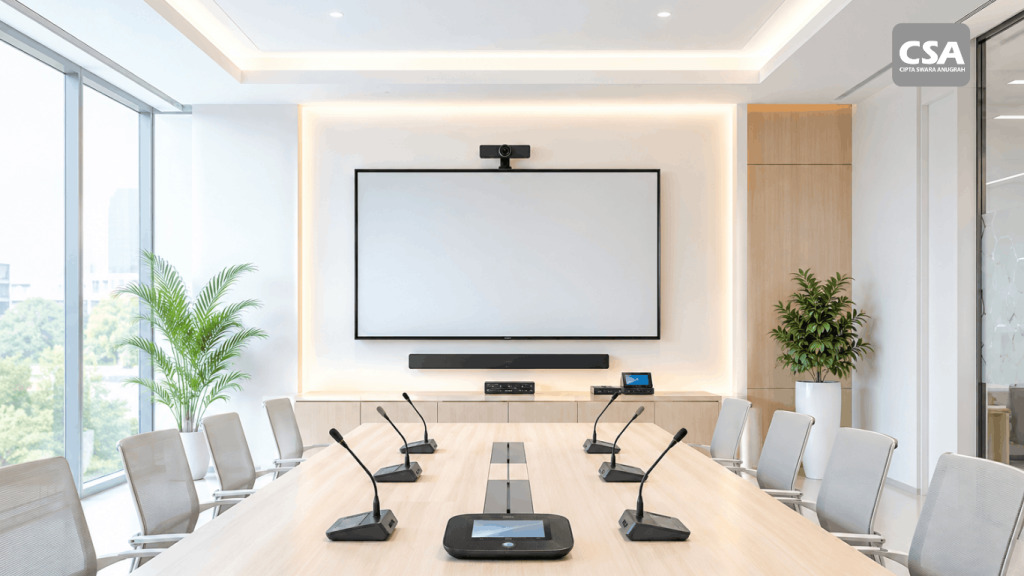
Audio Visual Integration vs. Conventional Audio Visual Installation

Read Also: Audio Visual Integration vs. Conventional Audio Visual Installation: Which One Is Better for Your Business?

System Integration Has Become Increasingly Complex

Today’s corporate Audio Visual environments consist of multiple technologies working simultaneously.

A single meeting room may include:

  • Interactive displays or large-format commercial displays.
  • PTZ video conferencing cameras.
  • Ceiling or wireless microphones.
  • Professional loudspeaker systems.
  • Digital Signal Processors (DSP).
  • Room control systems.
  • Wireless presentation solutions.
  • Video conferencing platforms.
  • Network infrastructure.

Each component performs a different function, but all must operate as one integrated solution.

Compatibility between devices has become increasingly important as businesses adopt hybrid meeting environments. Employees expect every meeting to begin quickly without technical interruptions, regardless of whether participants join from the office or remotely.

Achieving this level of reliability requires careful planning long before installation begins.

Large organizations understand that successful integration involves technical expertise across multiple disciplines, including networking, acoustics, control systems, signal routing, software configuration, and user experience design.

The Risks of Purchasing Equipment Independently

Buying Audio Visual equipment from multiple vendors may initially seem like a practical approach, especially when comparing product prices.

However, many organizations discover unexpected challenges once implementation begins.

One of the most common issues is compatibility. Devices from different manufacturers may support different communication protocols, software platforms, or connection standards, making integration far more complicated than anticipated.

Another challenge involves system design.

Selecting the wrong display size, microphone type, speaker configuration, or camera placement can significantly reduce meeting quality, even when premium equipment is used.

Organizations also face operational challenges after installation.

When multiple suppliers are involved, identifying responsibility during technical issues often becomes complicated. One vendor may point to another supplier, while internal IT teams spend valuable time coordinating troubleshooting instead of focusing on strategic business initiatives.

As organizations continue expanding, independently purchased systems may also become difficult to upgrade or standardize across multiple offices.

These challenges demonstrate that purchasing hardware alone does not guarantee a successful Audio Visual environment.

Why Large Enterprises Prioritize Long-Term Business Value

Large organizations rarely evaluate technology investments based solely on initial purchase costs.

Instead, they consider the total business impact over many years.

An unreliable meeting room can lead to delayed decision-making, interrupted client presentations, reduced employee productivity, and unnecessary operational downtime.

Although purchasing equipment independently may appear less expensive at first, additional costs often arise through repeated troubleshooting, replacement equipment, inconsistent user experiences, and future system modifications.

For this reason, many enterprise organizations focus on building standardized, scalable, and reliable Audio Visual infrastructures rather than assembling individual products based only on short-term budgets.

Their priority is creating technology environments that continue supporting collaboration as the company grows.

An AV System Integrator Delivers More Than Equipment

One of the biggest differences between purchasing products independently and working with an AV System Integrator lies in the overall project approach.

Instead of beginning with product selection, an AV System Integrator starts by understanding how the space will actually be used.

Questions typically include:

  • How many people will use the room?
  • Will the space support hybrid meetings?
  • What collaboration platforms will be used?
  • How should users control the entire system?
  • What future expansion plans should be considered?
  • How can the system remain simple for daily operation?

The answers to these questions shape every design decision.

Rather than recommending equipment based solely on specifications, an AV System Integrator develops a complete solution that aligns with operational objectives, user expectations, and long-term business requirements.

This strategic approach enables organizations to maximize their technology investment while minimizing future operational challenges.
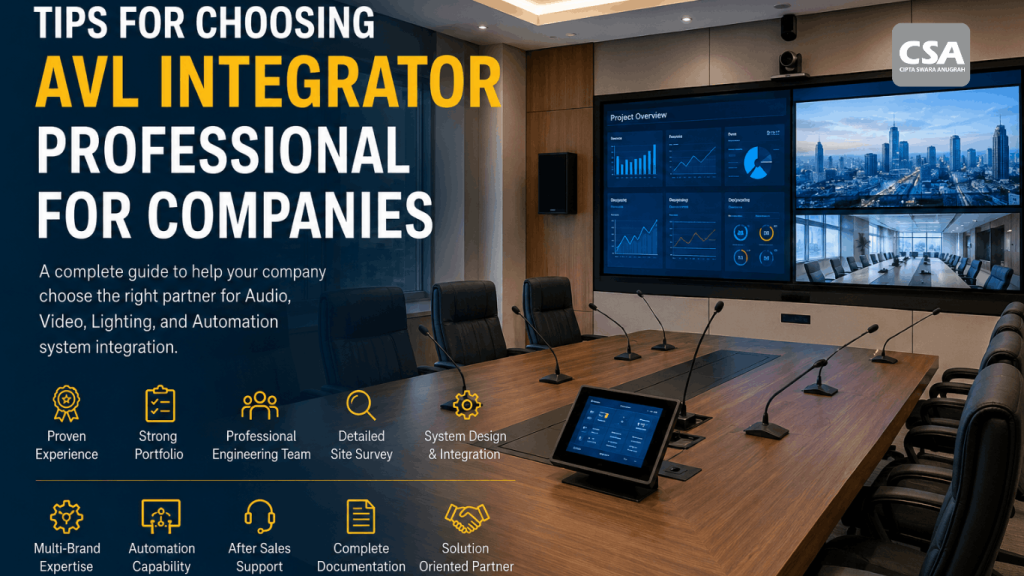
Tips for Choosing a Professional AVL Integrator for Companies

Read Also: Tips for Choosing a Professional AVL Integrator for Companies: A Complete Guide to Avoid Costly Audio Visual Mistakes

The Long-Term Advantages of Working with an AV System Integrator

One of the primary reasons large organizations partner with an AV System Integrator is the long-term value it delivers throughout the entire project lifecycle.

Rather than focusing solely on equipment procurement, an AV System Integrator manages every stage of the project—from consultation and system design to installation, testing, commissioning, and ongoing support.

This comprehensive approach helps ensure that every component operates as a unified system instead of functioning as isolated devices.

As business requirements evolve, the system can also be expanded or upgraded more efficiently without requiring a complete redesign.

For growing organizations, this flexibility becomes a valuable investment that supports future expansion while minimizing operational disruption.

Lower Total Cost of Ownership and Better Return on Investment

Many companies initially compare projects based only on purchase prices.

However, enterprise organizations evaluate technology investments differently.

Instead of asking, “Which option is cheaper today?”, they ask, “Which solution provides greater value over the next five to ten years?”

A professionally integrated Audio Visual system reduces many hidden costs that frequently arise from independently purchased equipment.

These costs may include:

  • Repeated troubleshooting.
  • System downtime.
  • Device compatibility issues.
  • Multiple vendor coordination.
  • Frequent equipment replacement.
  • Additional installation work during future upgrades.

By designing a scalable and reliable infrastructure from the beginning, an AV System Integrator helps organizations reduce operational expenses while maximizing the return on their technology investment.

This long-term perspective explains why enterprise businesses prioritize value rather than simply selecting the lowest purchase price.

A Single Point of Responsibility Simplifies Every Project

One of the most overlooked advantages of working with an AV System Integrator is having a single partner responsible for the entire system.

When equipment is purchased independently from different suppliers, project management often becomes more complicated.

Displays may come from one vendor, conferencing equipment from another, audio systems from a third, and installation services from yet another contractor.

If technical issues occur, determining responsibility can become a lengthy process as multiple vendors investigate separate components.

An AV System Integrator eliminates this complexity by serving as the central coordinator throughout the project.

From system planning and implementation to post-installation support, the client communicates with one experienced partner who understands the complete Audio Visual environment.

This streamlined approach improves communication, accelerates problem resolution, and reduces unnecessary project delays.

Standardization Across Multiple Locations

Large companies often operate across multiple offices, branch locations, manufacturing facilities, or regional headquarters.

Maintaining a consistent Audio Visual experience across these locations becomes increasingly important as organizations expand.

An AV System Integrator helps establish standardized system designs that provide a familiar user experience regardless of location.

Employees can walk into any meeting room within the organization and operate the system using the same workflow.

This consistency reduces training requirements, improves productivity, and simplifies long-term maintenance.

Standardization also makes future upgrades significantly easier because every location follows the same design philosophy and operational standards.

For enterprise organizations, consistency is just as important as performance.

Why Companies Choose CSA Indonesia as Their AV System Integrator

Successfully implementing an Audio Visual project requires more than technical expertise.

It requires a partner capable of understanding business objectives, operational workflows, and future technology requirements.

As an experienced AV System Integrator, CSA Indonesia provides comprehensive services that cover every phase of an Audio Visual project.

The process begins with consultation and site assessment before continuing with system design, equipment selection, installation, programming, testing, commissioning, and ongoing maintenance support.

Rather than recommending products based solely on specifications, CSA Indonesia develops integrated solutions that align with each client’s operational needs and long-term business goals.

This approach enables organizations to build reliable, scalable, and user-friendly Audio Visual environments that continue delivering value for years to come.

Whether supporting corporate offices, smart meeting rooms, boardrooms, hospitality venues, educational institutions, or commercial facilities, CSA Indonesia focuses on delivering complete system integration instead of simply supplying equipment.

Conclusion

As business environments become increasingly dependent on technology, organizations require Audio Visual systems that are reliable, scalable, and easy to operate.

This is why large companies choose AV System Integrators instead of purchasing equipment independently. Their investment is not limited to hardware; it is directed toward creating an integrated system that supports collaboration, communication, and long-term business growth.

While purchasing individual devices may appear to reduce initial costs, it often introduces additional challenges related to compatibility, maintenance, system expansion, and vendor coordination.

An experienced AV System Integrator addresses these challenges by delivering a complete solution—from consultation and design to implementation and long-term support.

For organizations seeking dependable Audio Visual solutions that enhance operational efficiency and maximize technology investments, partnering with CSA Indonesia provides the expertise, integration capabilities, and professional support required for successful long-term deployment.

Frequently Asked Questions

Why do large companies prefer AV System Integrators over purchasing equipment independently?

Because they require fully integrated, reliable, and scalable Audio Visual systems rather than individual products that may not work together efficiently.

What is the biggest advantage of working with an AV System Integrator?

An AV System Integrator manages the complete project lifecycle, ensuring all technologies are properly designed, integrated, tested, and supported.

Does using an AV System Integrator reduce long-term costs?

Yes. Professional system integration minimizes compatibility issues, reduces maintenance expenses, lowers operational downtime, and simplifies future upgrades.

Why is system standardization important for enterprise organizations?

Standardized Audio Visual systems create consistent user experiences across multiple offices, simplify maintenance, and make future expansion more efficient.

What industries can benefit from AV System Integration?

Corporate offices, government institutions, educational facilities, hospitality venues, healthcare organizations, command centers, manufacturing companies, and commercial buildings can all benefit from professionally integrated Audio Visual systems.

What services does CSA Indonesia provide?

CSA Indonesia offers consultation, site assessment, system design, equipment selection, installation, programming, testing, commissioning, system integration, and ongoing maintenance support for professional Audio Visual projects.