
Hotels need more than a sound system that simply produces loud audio. Lobbies, ballrooms, restaurants, lounges, and outdoor areas all have different requirements. That is why a Hotel Sound System for Lobby, Ballroom, and Public Areas should be designed around the function of each space, its acoustic characteristics, daily activities, and operational needs.
Audio plays an important role in the guest experience. Background music can create the right atmosphere in a lobby or restaurant. Meanwhile, presentations, speeches, announcements, music, and entertainment events require clear and controlled audio in ballrooms and function spaces.
The challenge is that one audio configuration may not work equally well across an entire hotel. A system designed for comfortable background music in a lobby may not provide the coverage required for a large ballroom. Outdoor areas also introduce environmental conditions that require a different approach.
For that reason, audio planning should begin with the hotel’s requirements rather than simply selecting equipment with higher specifications..
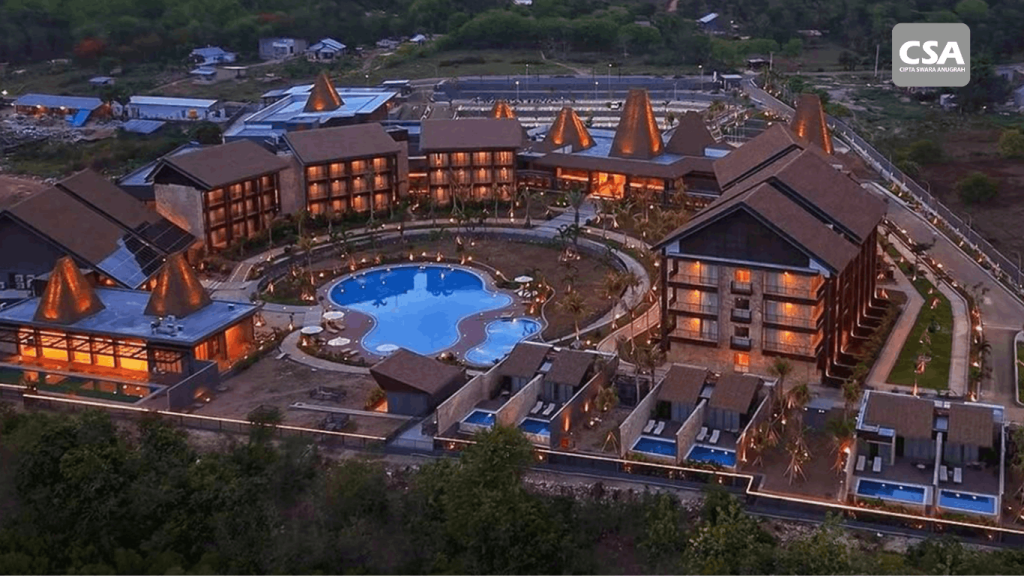
Why Hotel Areas Need Different Audio Solutions
A hotel combines multiple functions within a single property. Guests may check in at the lobby, dine at the restaurant, attend meetings, participate in conferences, or relax by the pool.
Each activity requires a different audio approach. The system needs to support those activities without making daily operation unnecessarily complicated.
Lobby Audio Should Feel Comfortable
The lobby is one of the areas with the highest level of guest interaction. Guests may speak with staff, wait for check-in, or simply spend time in the space before heading to their rooms.
Background music should therefore remain comfortable and evenly distributed. Excessive volume can interfere with conversations. Audio that is too quiet, on the other hand, may fail to create the desired atmosphere.
Speaker distribution is an important consideration. The system should provide consistent coverage without creating areas where the sound becomes unnecessarily dominant.
Speaker design also needs to work with the interior. In a premium hotel environment, audio equipment should support the space without becoming a visual distraction.
Ballrooms Require Greater Flexibility
Ballrooms have considerably more complex requirements. The same space may host conferences, seminars, weddings, gala dinners, performances, and corporate events.
Each format can require a different audio configuration. Presentations require speech clarity. Music events require broader audio reproduction. Conferences may involve multiple microphones and different signal-routing requirements.
A ballroom system must also consider audience positioning. Audio should reach a large audience with consistent clarity throughout the room.
This means planning cannot stop at determining the number of speakers. The design should consider room dimensions, stage position, seating layout, acoustic characteristics, and event requirements.
For larger venues, the same principles discussed in CSA Indonesia’s Sound System Convention Center for Ballrooms and Large-Scale Events can also apply to hotel ballrooms with MICE functions.
Restaurants and Lounges Prioritize Comfort
Restaurants have a different operating environment. Guests come to eat and communicate, so background music should support the atmosphere without becoming the main focus.
Audio distribution should remain consistent throughout the dining area. The objective is not simply to increase volume, but to maintain a comfortable sound level across different seating areas.
Lounges can have more dynamic requirements. During the day, the system may support background music. In the evening, the same area could be used for entertainment or smaller events.
A multi-zone configuration allows hotel staff to adapt audio settings without changing the entire system.
Outdoor Areas Require Additional Considerations
Swimming pools, poolside areas, gardens, and outdoor event spaces present different challenges from indoor environments. The system must account for open spaces, humidity, and wider sound distribution.
Speaker placement becomes particularly important. Concentrating sound in one location can leave other areas with insufficient coverage.
The equipment should also be selected according to the environmental conditions of the installation. The right solution needs to balance performance, durability, and the visual requirements of the property.
CSA Indonesia’s project at MYZE Hotel Waingapu provides a relevant example. The existing audio system had issues with sound quality and uneven coverage around the pool area. CSA reviewed the signal flow, speaker positioning, equipment configuration, cabling, and system tuning. The result was more consistent music distribution with better volume control across the pool area.
What Components Are Needed for a Hotel Audio System?
A professional hotel audio system consists of multiple components that need to operate as one integrated solution. Equipment should not be selected independently without considering the overall system design.
Speakers
Speakers are the final point that delivers audio to guests and users. The type of speaker depends on the function of the space and the required coverage pattern.
Ceiling speakers can work well for background music in selected areas. Ballrooms and event spaces may require different speaker configurations to achieve appropriate coverage and sound pressure.
Amplifiers
Amplifiers provide the power required by the speakers. Their capacity and configuration need to match the requirements of the system.
Proper amplifier selection helps maintain stable performance while also allowing room for future system expansion when hotel requirements change.
Digital Signal Processor
A Digital Signal Processor, or DSP, plays an important role in audio management.
It can be used for equalization, routing, delay, and other signal-processing requirements. In hotels with multiple audio zones, DSP technology allows different areas to be configured according to their individual requirements.
Microphones
Ballrooms, function rooms, and meeting rooms require microphones for different activities. Options can include wireless microphones, handheld microphones, headsets, or tabletop microphones.
The right choice depends on the event format and how presenters or speakers interact with the audience.
Digital Mixer
A digital mixer allows operators to manage multiple audio sources. This becomes useful when a room receives inputs from microphones, presentation systems, media players, or other audio sources.
Digital configuration can also provide greater flexibility when a ballroom hosts different types of events.
Control System
Hotels with multiple audio zones need a practical way to operate the system. A control system can help staff adjust volume, select audio sources, or manage specific zones through a simpler interface.
This becomes increasingly valuable when audio is integrated with visual, lighting, and automation systems.
For a broader look at the devices commonly used in integrated AV environments, see CSA Indonesia’s What Devices Are Included in an Integrated Audio Visual System?

Why Is Audio Zoning Important in Hotels?
Consider a hotel with a lobby, restaurant, lounge, ballroom, and swimming pool. These areas do not need the same music or volume level.
If every space uses an identical configuration, operators may struggle to adapt the system to actual conditions. Audio zoning allows each area to have controls that better match its function.
The lobby can use a specific background music level. The restaurant can have a different setting. The ballroom can switch to an event configuration, while the outdoor area can operate independently.
A multi-zone system provides this flexibility. Operators do not need to modify the entire system simply because the requirements of one area have changed.
This approach also simplifies daily operations. Hotel staff can adjust audio according to activities without rebuilding the configuration from the beginning.
Do Not Focus Only on Equipment Specifications
One common mistake when selecting an audio system is focusing too heavily on equipment specifications.
A high-powered speaker does not automatically provide better sound distribution. Likewise, equipment with more features is not necessarily the right solution for a hotel.
System design is often more important. Speaker positioning, equipment quantity, coverage, room acoustics, signal flow, and DSP configuration all need to be considered together.
CSA Indonesia’s work at MYZE Hotel Waingapu demonstrates this approach. The improvement was not based simply on adding or replacing equipment. The team reviewed signal flow, speaker positions, cabling, configuration, and system tuning based on the hotel’s layout and operational requirements.
In other words, quality equipment still requires proper design and configuration to perform as intended.
When Should a Hotel Upgrade Its Audio System?
Not every hotel needs a completely new system. Some properties may only require an upgrade or redesign of specific areas.
Several conditions can indicate that an evaluation is necessary.
Uneven Sound Coverage
If some areas are excessively loud while others are difficult to hear, the issue may involve speaker distribution, configuration, or system tuning.
Poor Speech Intelligibility
Ballrooms and meeting rooms require clear speech reproduction. If guests frequently struggle to understand presenters, the system should be evaluated.
Difficult Multi-Zone Control
Hotels with multiple areas need practical controls. An overly complicated manual setup can make daily operation slower and more difficult.
Limited Flexibility for Events
If a ballroom frequently hosts different types of events, the system should support multiple operating scenarios.
A seminar may require a different configuration from a wedding, corporate conference, or entertainment event. Flexibility therefore becomes an important part of the design.
Installation Affects the Interior
Unorganized cabling or visually intrusive equipment can reduce the overall quality of a hotel space. Audio should be planned alongside the interior concept whenever possible.
Example: HARRIS Hotel & Convention Serpong
The requirements of hotel audio become clearer when looking at an actual hospitality project.
At HARRIS Hotel & Convention Serpong, CSA Indonesia developed integrated audio visual infrastructure for a property designed to support MICE activities. The hotel has 282 rooms and various meeting and event facilities, including a grand ballroom with capacity for up to 1,500 guests.
CSA’s implementation covered the grand ballroom, meeting rooms, breakout areas, and public spaces. The systems were designed to support different activities, including corporate conferences, hybrid meetings, large-scale conventions, and social events.
This project demonstrates why hotel audio cannot be separated from the function of each space. One property can contain multiple environments with very different technical requirements.
More details are available in CSA Indonesia’s Integrated Audio Visual System for HARRIS Hotel & Convention Serpong.
Integrating Audio with Visual, Lighting, and Automation
Hotel audio systems can become part of a broader technology ecosystem.
In properties with ballrooms and event spaces, audio can work alongside visual systems to support presentations, conferences, and entertainment. Lighting can also be coordinated with event requirements through an integrated control system.
This approach reduces the need for operators to manage every device independently. A single workflow can control multiple functions according to the event scenario.
CSA Indonesia’s work at Mövenpick Resort provides an example of this approach. CSA served as the System Integrator for audio, visual, and entertainment lighting systems. The scope included system design, equipment selection, installation, integration, and commissioning.
The audio system supported background music, live performances, DJ sessions, and special events. The systems were also connected through a unified control platform to help staff manage audio, visual, and lighting functions.
This approach is relevant for hotels that need more than standalone audio equipment and want to develop an integrated technology environment.
The broader concept of combining multiple technologies into one coordinated environment is also explained in CSA Indonesia’s What Is Audio Visual Integration?
How to Choose the Right Audio System for a Hotel
The selection process should begin with requirements mapping. Avoid choosing speakers or amplifiers before understanding how each space will be used.
First, define the function of every area. Separate the requirements of the lobby, restaurant, ballroom, meeting rooms, lounge, and outdoor spaces.
Second, evaluate the physical environment. Room dimensions, interior materials, ceiling structure, audience position, and activity levels can all affect audio design.
Third, identify usage scenarios. A ballroom used for seminars will have different requirements from one frequently used for entertainment events.
Fourth, consider daily operations. The system should provide enough flexibility for hotel staff to operate it without complicated technical procedures.
Finally, consider future integration. If the hotel plans to expand its visual, lighting, automation, or control systems, the audio design should leave room for those technologies.
This approach makes the investment more structured. The hotel is not simply purchasing equipment. It is developing an audio system that can support long-term operational needs.
The Role of a System Integrator in Hotel Audio Projects
Hotel audio projects involve many technical variables. The work therefore goes beyond installing speakers and supporting equipment.
A system integrator needs to understand the function of each space, user requirements, site conditions, and the relationship between individual components. From there, the team can develop a system design that fits the property.
Installation then follows the approved design. After the equipment is installed, the system needs to be configured and tested through commissioning.
This process helps ensure that the components operate as one system. For hotels with multiple zones, it also makes future operation and maintenance more manageable.
CSA Indonesia explains this broader process in What Is an AV System Integrator? Understanding the Role and AV System Integration Process, including system design, installation, configuration, testing, and commissioning.
The importance of system planning also appears in CSA Indonesia’s Audio Visual for Corporate Offices: What Systems Are Needed?, which discusses why individual AV devices need to work as part of a larger system rather than as separate equipment.
CSA Indonesia has more than 30 years of experience in the design, installation, and maintenance of Audio, Visual, Lighting, and Automation systems. Its hospitality projects cover properties with different technical and operational requirements.
Conclusion
A professional hotel audio system is not about making sound as loud as possible. The objective is to deliver clear, balanced, consistent audio that matches the function of each space.
Lobbies need comfortable background music. Ballrooms require flexible systems for different events. Restaurants need a pleasant audio environment, while outdoor areas require solutions suited to their environmental conditions.
For that reason, system design, zoning, equipment configuration, tuning, and integration all play an important role in creating an audio solution that supports both the guest experience and hotel operations.
FAQ
What is the main purpose of a hotel sound system?
A hotel audio system can support background music, announcements, meetings, conferences, entertainment, and events across different areas of the property.
Can one audio system be used throughout an entire hotel?
Yes, but different areas should generally use appropriate zoning and configuration based on their functions and acoustic characteristics.
What should be considered when choosing an audio system for a ballroom?
Consider room size, audience capacity, seating layout, acoustics, event types, microphone requirements, speaker coverage, and system flexibility.
Why is speaker distribution important in hotels?
Proper distribution helps create more consistent sound levels. Guests are less likely to experience areas where the audio is excessively loud or difficult to hear.
Can hotel audio systems be integrated with lighting and visual systems?
Yes. Audio can be integrated with visual, lighting, and automation technologies through a control system to support hotel operations and event requirements.
Does CSA Indonesia have experience with hotel audio projects?
Yes. CSA Indonesia has worked on hospitality projects including HARRIS Hotel & Convention Serpong, MYZE Hotel Waingapu, and Mövenpick Resort.