
What is an AV System Integrator? This question often comes up when businesses begin using multiple audio visual devices in a single room or facility. Microphones, speakers, displays, cameras, video conferencing systems, control systems, and other equipment need to work together properly. Without careful planning, these devices may operate separately and create unnecessary complexity for users.
An AV System Integrator helps connect different audio visual technologies into one coordinated system. The role goes beyond installing equipment. An integrator can handle planning, system design, equipment selection, installation, configuration, testing, commissioning, and user training.
For businesses, this approach creates a more practical and organized AV environment. Users can operate multiple functions through a simpler workflow while the company gets a system designed around its actual requirements.
What Is an AV System Integrator?
An AV System Integrator is a professional company or specialist that designs, combines, and configures different audio visual technologies so they can operate as an integrated system.
The integrator looks at the entire system rather than focusing on individual equipment. This approach helps ensure that each component has a clear purpose and can communicate properly with other components.
For example, a corporate meeting room may require displays, microphones, speakers, cameras, digital signal processors, video conferencing equipment, and a control system.
Each component must work together to support the way people use the room. A user should not have to manage several disconnected devices just to start a meeting.
This is why an integrator often becomes involved during the early planning stage. The team translates business and operational requirements into a practical AV system design.
Businesses looking for a broader understanding of the concept can also explore this guide on What Is Audio Visual System Integration?, which explains how integrated AV systems support modern business environments.
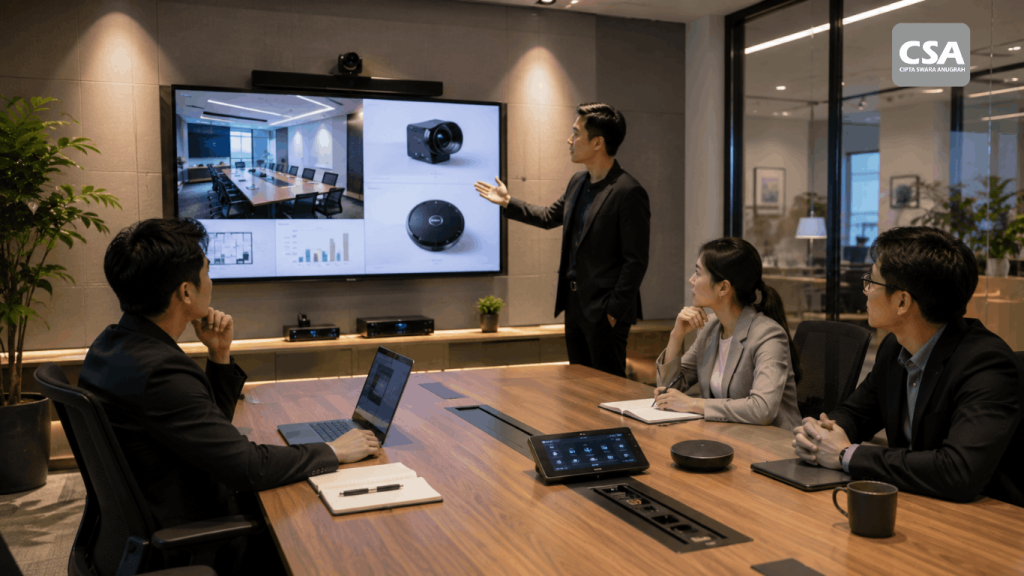
What Does an AV System Integrator Do?
The responsibilities of an integrator cover several connected stages. Each stage contributes to the performance and usability of the final system.
Analyzing User Requirements
A project usually starts by understanding how the space will be used. The integrator needs to identify the room’s function, number of users, meeting format, communication requirements, and operational expectations.
A boardroom, training room, auditorium, hotel ballroom, and small meeting room can have very different requirements.
This initial analysis helps prevent businesses from purchasing equipment that does not match the actual needs of the space.
Conducting a Site Survey
A site survey allows the integrator to understand the physical conditions of the location.
The team may examine room dimensions, seating arrangements, cable routes, power availability, ceiling structures, existing infrastructure, and potential equipment positions.
Acoustic conditions are also important for audio projects. Speaker and microphone placement can directly influence speech intelligibility and overall sound quality.
The information collected during the survey becomes an important reference for the system design.
Businesses can learn more about the importance of this stage through Why Is Audio Visual Design an Essential Step Before Installation?.
Designing the AV System
After understanding the requirements and site conditions, the integrator develops the system design.
The design determines how the different components will connect and interact. It also considers user experience, operational requirements, scalability, and future expansion.
A good design does not simply focus on the number of devices. It focuses on how the entire system will support the purpose of the room.
Selecting the Right Equipment
An integrator helps determine which devices are appropriate for the project.
The equipment may include speakers, microphones, displays, cameras, amplifiers, DSPs, video conferencing systems, control processors, and other supporting components.
Price should not become the only consideration. Compatibility, performance, room conditions, integration capabilities, and future requirements also matter.
This approach can help businesses avoid spending their budget on equipment that does not contribute meaningfully to the overall system.
For a broader overview of the equipment involved, see What Devices Are Included in an Integrated Audio Visual System?.
Installing and Integrating the System
Once the design and equipment are ready, the project moves into the installation stage.
The team installs the equipment and connects each component according to the system design. Cable management, equipment positioning, safety, and installation quality all need attention.
The objective is not simply to make the equipment work individually. The components must work together as one system.
Companies can also explore Audio Visual Installation for Companies: Process, Benefits, and What You Need to Prepare for a more detailed look at the installation process.
Configuring and Programming the System
Some AV systems require configuration or programming before users can operate them.
A meeting room, for example, may allow users to turn on the display, select an input source, activate video conferencing, adjust audio, and control other room functions from a single interface.
This simplifies the user experience and reduces the need to operate multiple devices separately.
Testing and Commissioning
The completed system needs to undergo testing before the business starts using it.
The integrator checks individual devices and verifies communication between different components.
Testing can identify problems such as audio interference, unstable connections, incorrect input sources, camera issues, or control functions that do not operate as intended.
Commissioning provides an important final check before the system is handed over to the users.
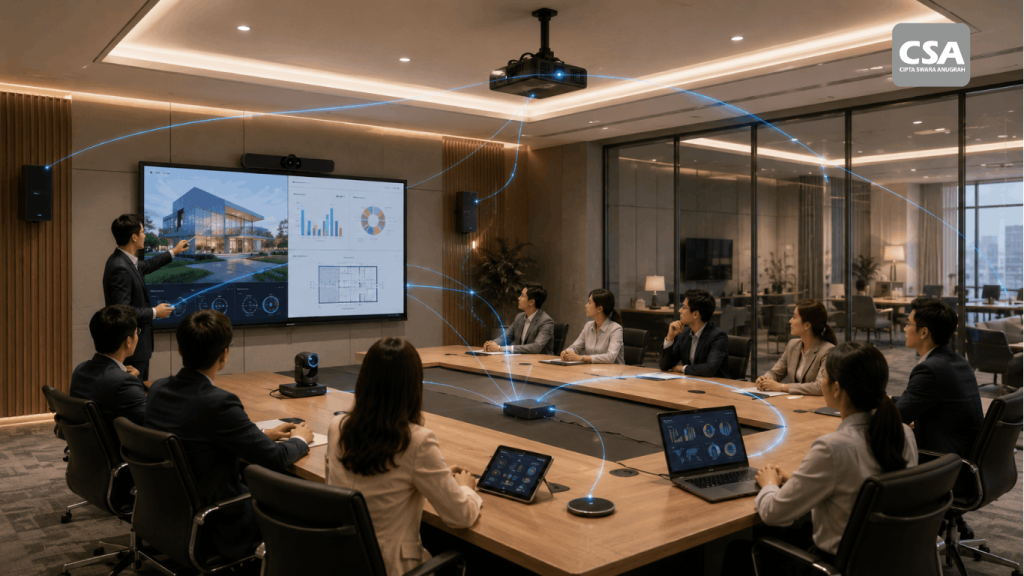
Read Also: Why Should Audio Visual Systems Be Designed as One Integrated System?
What Systems Can an AV Integrator Integrate?
An integrated AV project can include a wide range of technologies. The exact configuration depends on the room, application, and business requirements.
Audio Systems
Audio systems can include microphones, speakers, amplifiers, mixers, and digital signal processors.
These components work together to deliver clear and consistent sound.
In meeting rooms, audio quality is particularly important. Participants need to hear speakers clearly, including people joining remotely.
CSA Indonesia also discusses the role of DSP technology in What Is a Digital Signal Processor (DSP)?.
Displays and Visual Systems
Visual components may include professional displays, interactive displays, projectors, LED displays, or video walls.
The right solution depends on factors such as room size, viewing distance, content type, brightness requirements, and presentation needs.
A small meeting room may require a professional display, while an auditorium or large venue may require a larger visual system.
Video Conferencing Systems
Video conferencing has become an important part of modern collaboration spaces.
A video conferencing system can combine cameras, microphones, speakers, displays, and conferencing platforms into a coordinated environment.
When these technologies work together properly, users can start and manage meetings with fewer manual steps.
This concept is particularly relevant to businesses developing Audio Visual Systems for Meeting Rooms.
Control Systems
A control system allows users to manage multiple room functions through a centralized interface.
Depending on the project, users may control displays, audio, cameras, input sources, lighting, or other connected systems.
Centralized control becomes especially useful when a room contains many different technologies.
Companies can also explore What Is a Room Control System? to understand how room control supports modern meeting spaces.
Network and Supporting Infrastructure
Modern AV systems can also depend on network infrastructure.
Network connectivity allows certain devices and systems to communicate and exchange data. Therefore, AV design should consider the infrastructure already available at the site.
An integrator needs to look beyond the visible equipment and consider the complete technical environment.
What Is the AV System Integration Process?
The implementation process can vary from one project to another. However, most professional projects involve several core stages.
1. Requirement Identification
The integrator identifies the purpose of the room and the expectations of its users.
2. Site Survey
The team examines the physical space and existing infrastructure.
3. System Design
The integrator develops a technical design based on the requirements and site conditions.
4. Equipment Selection
The appropriate devices are selected based on performance, compatibility, integration, and project requirements.
5. Installation
The team installs and connects the equipment according to the approved design.
6. Configuration and Programming
The system is configured so that each component performs its intended function.
7. Testing and Commissioning
The integrator tests the complete system and resolves technical issues before handover.
8. User Training and Handover
Users receive guidance on operating the system before the project is formally handed over.
This structured process demonstrates why professional Audio Visual System Integration involves much more than simply installing equipment.
What Is the Difference Between an AV System Integrator and an AV Vendor?
An AV vendor generally focuses on supplying products or equipment. An AV System Integrator focuses on how different technologies can work together as one complete solution.
This distinction becomes increasingly important as project complexity grows.
A company can purchase a display, microphone, speaker, or camera individually. However, the challenge becomes greater when all of those devices need to communicate and operate through a coordinated workflow.
The integrator designs the relationships between the different components. The team also considers how users will operate the system and whether the solution can accommodate future expansion.
This is why an integrator should not be viewed simply as an equipment supplier. The focus is on solving the technical and operational requirements of the entire AV environment.
When Does a Business Need an AV System Integrator?
Not every AV requirement needs a complex integration project. However, professional integration becomes increasingly useful when a business needs multiple technologies to work together.
Typical applications include:
- Smart meeting rooms
- Executive meeting rooms
- Boardrooms
- Hybrid meeting rooms
- Auditoriums
- Training rooms
- Hotel ballrooms
- Convention centers
- Corporate offices
- Hospitality venues
- Commercial buildings
The more complex the room’s functions, the more important proper system planning becomes.
An integrator can also help when a company wants to upgrade an existing AV system.
An upgrade does not always mean replacing every device. The integrator can evaluate the existing infrastructure and determine which components can remain and which ones require replacement.
This approach can help businesses improve system performance while making better use of their existing investment.
What Are the Benefits of Using an AV System Integrator?
One major benefit is the ability to build a system around actual business requirements.
Instead of selecting equipment individually, the company receives a coordinated solution where each component has a defined role.
Integration can also simplify daily operation. A centralized control interface can reduce the number of manual steps required to start a meeting or presentation.
Another benefit involves compatibility. Selecting equipment based on the complete system can reduce the risk of technical conflicts between different components.
A professionally designed system can also accommodate future changes. Businesses may need additional displays, cameras, microphones, rooms, or collaboration technologies as their operations grow.
Maintenance can become easier as well because the system follows a defined architecture and documentation structure.
For businesses evaluating the strategic value of integrated technology, Why Large Companies Choose AV System Integrators Instead of Purchasing Equipment Independently provides another useful perspective.
What Should Businesses Consider When Choosing an AV System Integrator?
Experience is one of the factors businesses should evaluate. Look at the types of projects the integrator has handled and whether those projects resemble the requirements of the current project.
Design capability also matters. A professional integrator should be able to translate business requirements into a clear technical solution.
Integration expertise is equally important. Installing equipment is only one part of an AV project. The integrator must also understand how different systems interact.
After-sales support should receive attention as well. AV technology often becomes part of daily business operations, so technical support and maintenance can become important after installation.
Businesses should also consider whether the integrator understands the specific characteristics of the space.
A corporate meeting room, hotel ballroom, auditorium, and hospitality venue can require very different approaches.
Companies looking for additional guidance can refer to Tips for Choosing a Professional Audio Visual Vendor for a Successful Business Project.
Why Is System Design More Important Than Simply Choosing Equipment?
High-end equipment does not automatically create a high-performing AV system.
The final result depends on how the equipment is selected, positioned, connected, configured, and integrated.
Consider an audio system. A high-quality speaker may still produce poor results if its placement does not match the room’s acoustic characteristics.
The same principle applies to cameras, microphones, displays, and control systems.
This is why businesses should define the room’s requirements before choosing equipment.
A system-based approach also helps companies allocate their budget more effectively. Investment can focus on components that directly support the intended use of the space.
Conclusion
An AV System Integrator helps businesses transform individual audio visual technologies into a coordinated system that supports real-world operational needs. The work can cover requirement analysis, site surveys, system design, equipment selection, installation, configuration, testing, commissioning, and user training.
Professional integration becomes especially valuable when a project involves multiple technologies or requires a simple and consistent user experience.
Ultimately, the success of an AV project does not depend solely on the equipment selected. System design, integration, configuration, and alignment with user requirements are equally important factors in creating a reliable AV environment.
FAQ
What does an AV System Integrator do?
An AV System Integrator designs, connects, configures, and tests multiple audio visual technologies so they can operate as one coordinated system.
What equipment can an AV System Integrator integrate?
Common components include microphones, speakers, displays, projectors, cameras, DSPs, video conferencing systems, control systems, and supporting network infrastructure.
What is the difference between an AV integrator and an AV vendor?
An AV vendor generally focuses on supplying equipment, while an integrator focuses on designing and connecting multiple technologies into a complete solution.
When should a company hire an AV System Integrator?
Businesses should consider an integrator when multiple AV devices need to work together or when a project involves complex meeting rooms, auditoriums, hotels, convention centers, or other professional spaces.
Does an AV System Integrator only handle installation?
No. Professional integration can include requirement analysis, site surveys, system design, equipment selection, installation, programming, testing, commissioning, training, and support.
Why is AV system design important?
Good system design ensures that equipment, infrastructure, room conditions, and user requirements work together as one solution rather than as disconnected devices.