
Audio Visual Systems for Meeting Rooms: The Key to Creating a More Interactive Meeting Experience with CSA Indonesia have become an essential requirement for modern organizations seeking to improve communication and collaboration within the workplace. As digital transformation accelerates and hybrid working models become the norm, meeting rooms are no longer simply spaces for discussions. Today, they must support real-time communication, engaging presentations, high-quality video conferencing, and seamless collaboration among participants regardless of their location.
Many companies have invested in displays, conferencing cameras, and digital communication platforms. However, without a properly integrated audio visual system, meetings often continue to face technical challenges. Common issues include unclear audio, poor presentation visibility, and difficulties managing multiple devices during meetings.
As a result, implementing the right audio visual solution has become a critical factor in creating professional, productive, and future-ready meeting spaces.
What Is an Audio Visual System for a Meeting Room?
An audio visual system for a meeting room is a combination of technologies designed to support communication, presentations, collaboration, and information sharing within a meeting environment.
The system integrates audio equipment, video solutions, displays, control systems, and communication platforms into a single connected ecosystem.
Its primary purpose is to ensure that every participant can hear, see, and interact clearly without technical disruptions.
A modern meeting room audio visual system typically includes:
- Professional sound system
- Conference microphones
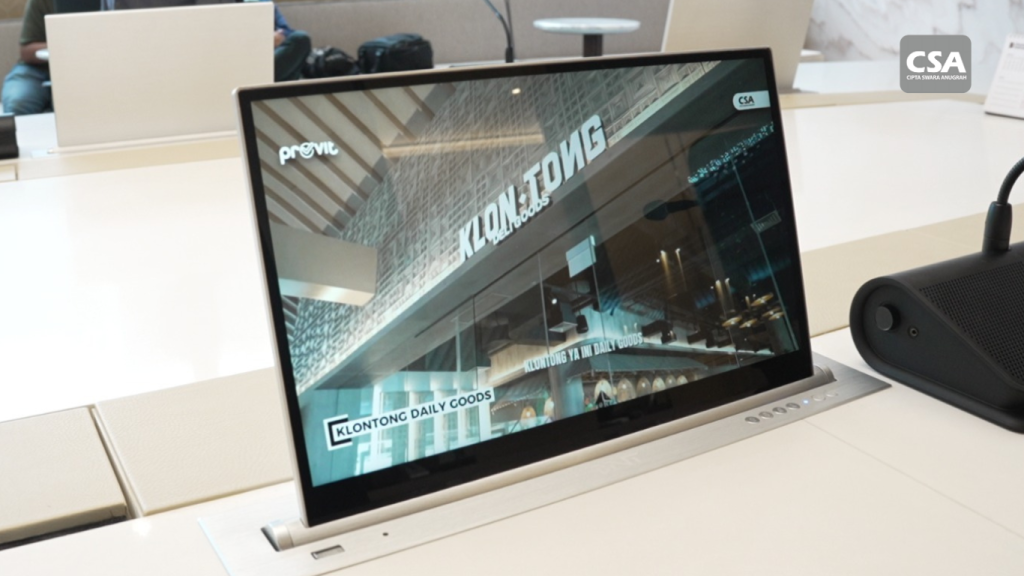
- Interactive displays
- Projectors or LED displays
- Video conferencing cameras
- Wireless presentation systems
- Automation control systems
- Video conferencing platforms
All of these components work together to deliver a more effective and interactive meeting experience.
Read Also: Best Smart Meeting Room Vendor CSA Indonesia for Modern and Intelligent Meeting Solutions
Why Do Modern Meeting Rooms Need Audio Visual Systems?
Business communication requirements have evolved significantly in recent years.
Meetings no longer involve only participants physically present in a room.
Organizations now need to accommodate employees, clients, and partners joining from branch offices, homes, or even different countries.
Without the support of advanced audio visual technology, communication can become inefficient and negatively impact meeting outcomes.
Several key reasons why businesses require audio visual systems include:
Supporting Hybrid Work Environments
Employees can participate effectively regardless of their location.
Improving Presentation Quality
Content can be displayed with superior visual clarity, making information easier to understand.
Accelerating Decision-Making
Clear communication helps teams exchange information more efficiently.
Enhancing Corporate Professionalism
Smooth and well-organized meetings create a positive impression on clients and business partners.
Key Components of an Audio Visual System for Meeting Rooms
The success of a modern meeting room depends heavily on the quality and integration of its technology components.
Professional Sound System
Audio is one of the most critical elements of any meeting.
A professional sound system ensures that sound is distributed evenly throughout the room.
Typical audio components include:
- Speakers
- Amplifiers
- DSP Processors
- Audio Mixers
DSP technology helps eliminate noise, echo, and other audio disturbances.
Conference Microphone System
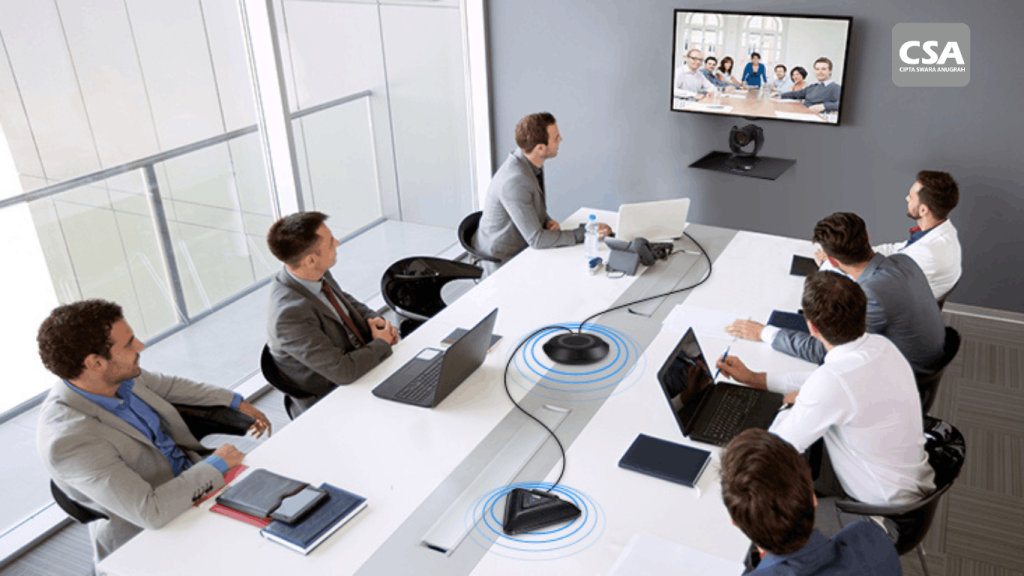
Microphones capture participants’ voices during discussions.
Common options include:
- Tabletop microphones
- Wireless microphones
- Ceiling microphones
- Microphone arrays
Modern microphone technologies can automatically capture speech without requiring participants to speak directly into the microphone.
Interactive Display
Interactive displays have become one of the most popular technologies in modern meeting spaces.
Their functionality extends beyond displaying presentations by enabling real-time collaboration through touch-screen capabilities.
Users can:
- Write directly on the screen
- Add annotations
- Conduct brainstorming sessions
- Display multiple content sources simultaneously
Video Conferencing System
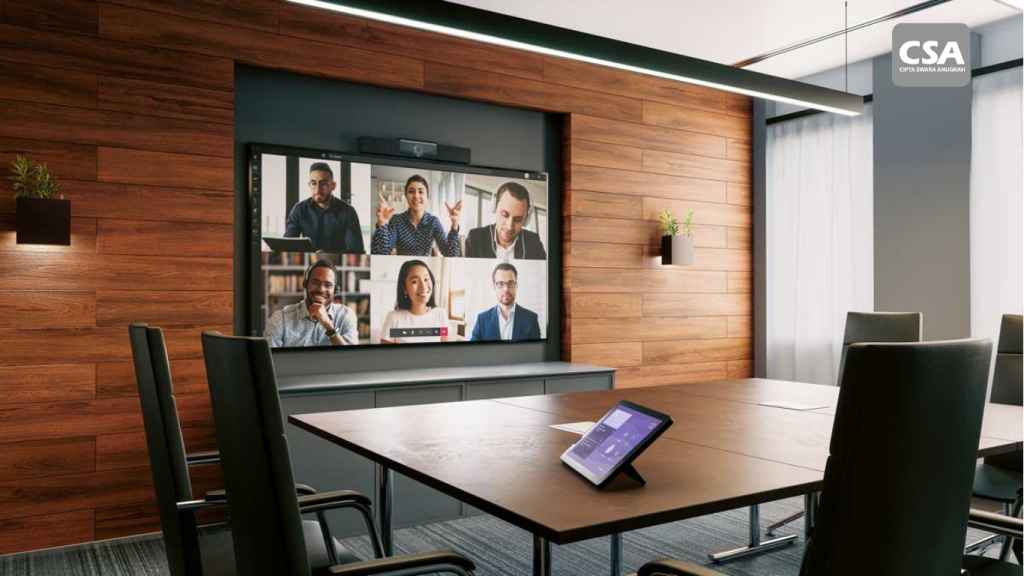
Video conferencing has become a standard requirement for modern meeting rooms.
A complete video conferencing solution typically includes:
- PTZ Cameras
- Auto Tracking Cameras
- Speakerphones
- Video Processing Units
These technologies ensure professional and engaging virtual meetings.
Wireless Presentation System
Wireless presentation solutions allow users to share content from laptops, tablets, or smartphones without cables.
Benefits include:
- Faster presentations
- Cleaner meeting room environments
- Easier presenter switching
- Improved collaboration flexibility
Automation Control System
Automation systems simplify the management of meeting room technologies through a centralized interface.
Users can control:
- Displays
- Audio systems
- Cameras
- Lighting
- Motorized blinds
with a single touch.
How Does an Audio Visual System Work in a Meeting Room?
Many users enjoy the benefits of modern meeting technology without understanding how the system operates.
At its core, every device is connected within a unified network.
The process begins when microphones capture participants’ voices.
The audio signal is then processed through a DSP to remove noise and echo.
After processing, the signal is sent to amplifiers and speakers.
For video conferencing, cameras capture participant images and transmit them to platforms such as Zoom, Microsoft Teams, Google Meet, or Cisco Webex.
At the same time, displays show presentation materials and remote participants.
The entire system is managed through a centralized control processor, allowing users to operate the room efficiently and intuitively.
Benefits of Audio Visual Systems for Meeting Rooms
Investing in an integrated audio visual system provides substantial long-term value for organizations.
Clearer Communication
Participants can hear and see information more effectively.
Better Collaboration
Teams can work together efficiently regardless of their physical location.
Increased Productivity
Meetings become faster and more focused.
Reduced Technical Issues
Integrated systems minimize disruptions during discussions.
Stronger Digital Transformation Support
Meeting room technology becomes a key component of broader digital workplace strategies.
Common Mistakes When Implementing Audio Visual Systems
Many organizations invest significantly in meeting room technology but fail to achieve optimal results.
Common mistakes include:
Ignoring Room Acoustics
Poor acoustics can significantly reduce audio quality.
Choosing the Wrong Equipment
Technology should always match room size and usage requirements.
Not Using DSP Technology
Without DSP processing, audio quality becomes more vulnerable to noise and echo.
Lack of System Integration
Standalone devices often create operational inefficiencies.
Failing to Work with Professional Integrators
Poor planning can result in unnecessary costs and underperforming systems.
Audio Visual System Trends for Meeting Rooms in 2026
Meeting room technology continues to evolve rapidly.
Several key trends are expected to dominate in 2026.
Artificial Intelligence Meeting Rooms
AI technologies automatically optimize audio, video, and user experiences.
Smart Meeting Rooms
Devices operate within a fully connected and intelligent ecosystem.
Cloud-Based AV Management
Organizations can monitor and manage systems remotely.
Touchless Control
Users can operate room technology without physically touching control panels.
Advanced Collaboration Platforms
Teams can collaborate faster and more effectively across locations.
CSA Indonesia as a Trusted Partner for Meeting Room Audio Visual Solutions
The success of an audio visual implementation depends on more than selecting high-quality equipment.
System planning, room design, technology integration, and user experience all play equally important roles.
CSA Indonesia specializes in Audio, Visual, Lighting, and Automation solutions, helping organizations create modern meeting spaces tailored to their business requirements.
Through a consultative approach, CSA Indonesia supports clients throughout the entire process, including needs analysis, system design, equipment selection, installation, integration, commissioning, and maintenance.
Available solutions include:
- Integrated AV Systems
- Professional Sound Systems
- Interactive Displays
- Smart Meeting Rooms
- Video Conferencing Solutions
- Automation Control Systems
- Wireless Presentation Solutions
With extensive experience across multiple industries, CSA Indonesia helps organizations build meeting spaces that are more interactive, productive, and prepared for future collaboration needs.
Read Also: How Video Conference Systems Work in CSA Indonesia Smart Meeting Rooms
The Future of Meeting Rooms Will Be More Interactive
Technology advancements indicate that meeting rooms will continue to evolve.
Digital interactions will become increasingly natural and seamless.
The gap between remote participants and in-room attendees will continue to shrink.
Organizations that invest in modern audio visual systems today will gain a competitive advantage by creating more productive and collaborative work environments.
Meeting rooms are no longer simply office facilities.
They have become strategic collaboration hubs that drive innovation and business growth.
Conclusion
Audio visual systems for meeting rooms serve as the foundation for effective communication and collaboration in modern workplaces. The integration of audio, video, displays, conferencing technologies, and automation systems creates a more professional and engaging meeting experience while improving organizational productivity.
As hybrid work and digital transformation continue to reshape business operations, organizations must ensure that their meeting spaces are equipped with the right technology. With proper planning and the support of experienced partners such as CSA Indonesia, meeting rooms can evolve into powerful collaboration centers that support long-term business success.
Frequently Asked Questions (FAQ)
What is an audio visual system for a meeting room?
An audio visual system is a combination of audio, video, display, and control technologies designed to support communication and collaboration within meeting spaces.
What are the main benefits of an audio visual system?
The primary benefits include improved communication, better collaboration, enhanced presentations, and increased productivity.
What are the key components of an audio visual system?
Key components include sound systems, microphones, displays, conferencing cameras, wireless presentation solutions, and automation control systems.
Why is DSP technology important?
DSP technology improves audio quality by reducing noise, echo, and other sound disturbances.
Can audio visual systems support hybrid meetings?
Yes. Modern audio visual systems are specifically designed to facilitate seamless communication between in-person and remote participants.
What is the role of an interactive display in a meeting room?
Interactive displays enable real-time collaboration through touch-screen functionality, allowing users to annotate, brainstorm, and share content.
Why should companies work with an AV integrator?
Professional integrators ensure that all technologies are properly designed, installed, and optimized within a unified system.
How do organizations choose the right audio visual system?
Selection should be based on room size, participant capacity, business objectives, and future expansion plans.
What is a smart meeting room?
A smart meeting room uses integrated and automated technologies to simplify operations and improve meeting efficiency.
Why choose CSA Indonesia for meeting room technology solutions?
CSA Indonesia provides integrated Audio, Visual, Lighting, and Automation solutions designed to support modern business communication and collaboration needs.