
Room Automation System: Smart Meeting Room Integration Technology for Modern Businesses has become one of the most widely adopted technologies among companies across various industries. Changes in work patterns, increasing demand for digital collaboration, and the need for operational efficiency have encouraged organizations to move beyond conventional meeting rooms. Businesses now require meeting spaces that are smarter, faster, and easier to use.
In today’s digital transformation era, meeting rooms play a far more critical role than they did in the past. They serve as hubs for communication, collaboration, business presentations, and strategic decision-making. When a meeting room fails to support these activities effectively, overall productivity can suffer.
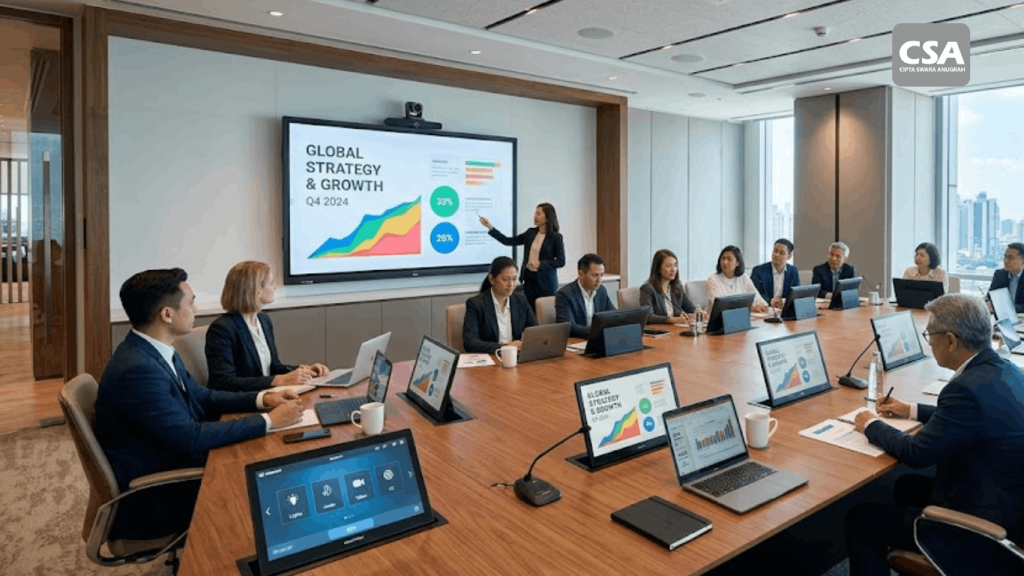
As a result, many organizations are investing in Room Automation Systems. This technology enables multiple devices within a meeting room to operate seamlessly through a centralized control platform. The outcome is a more efficient, professional, and productive meeting experience that supports modern business requirements.
Changing Work Environments Are Driving the Need for Meeting Room Automation
The workplace has undergone significant changes in recent years. Whereas meetings were once conducted entirely in person, many companies now embrace more flexible work models.
Hybrid working has become an essential part of modern workplace culture. Employees frequently work from the office, home, or other remote locations simultaneously. This shift requires meeting rooms to connect participants effectively without compromising communication quality.
Unfortunately, many meeting spaces still rely on standalone systems. Users must manually operate displays, cameras, audio equipment, lighting, and presentation devices. This process often consumes valuable time and increases the likelihood of technical issues.
Room Automation Systems address these challenges through intelligent integration and automation.
Read Also: Smart Meeting Rooms for Businesses: A Technology Investment That Delivers High ROI
What Is a Room Automation System?
A Room Automation System is a technology platform that integrates various meeting room devices into a centralized control system.
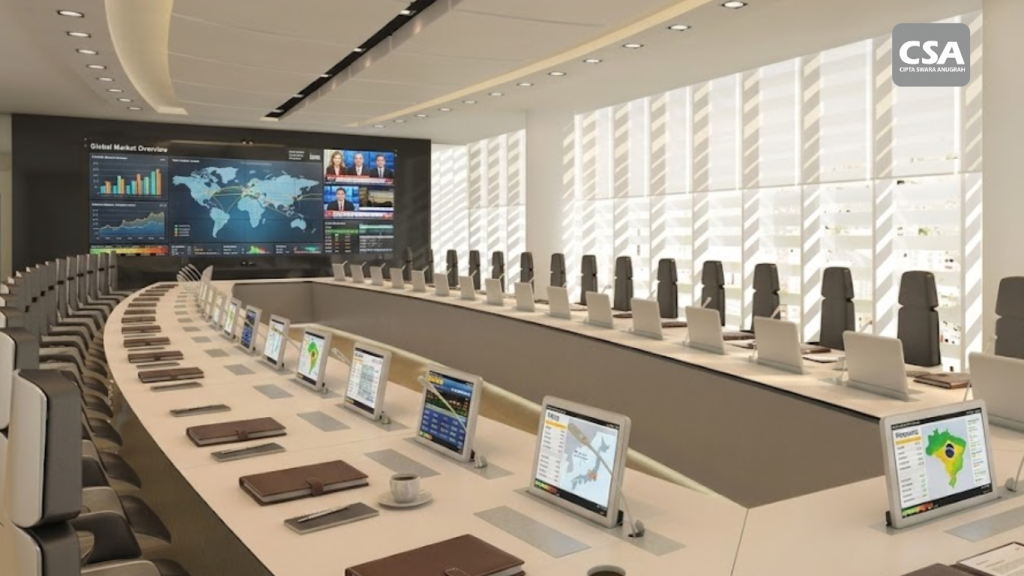
Rather than operating each device separately, users can manage all room functions through a single touchscreen interface, mobile application, or automated control system.
Commonly integrated devices include:
- Professional displays
- Projectors
- Video conferencing systems
- Professional sound systems
- Conference microphones
- Conference cameras
- Smart lighting systems
- Motorized projection screens
- Automated blinds and curtains
- Air conditioning systems
- Occupancy sensors
- Smart control systems
This level of integration creates a simpler and more efficient meeting experience.
Why Do Modern Businesses Need a Room Automation System?
Modern organizations are not simply looking for advanced technology. They are seeking solutions that improve efficiency and deliver measurable business value.
Meeting rooms that lack integration often create challenges such as:
- Delayed meeting start times
- Poor audio performance
- Camera connection issues
- Difficult presentation sharing
- Dependence on IT support teams
- Technical disruptions during meetings
Although these issues may seem minor, they can significantly impact productivity when they occur repeatedly.
A Room Automation System eliminates these obstacles through intelligent automation and streamlined workflows.
The Cost of Operating Meeting Rooms Without Automation
Many companies underestimate the operational costs associated with inefficient meeting rooms.
When employees spend valuable time setting up equipment before every meeting, productivity is lost.
Common consequences include:
Wasted Meeting Time
Participants often wait while equipment is configured and prepared.
Reduced Productivity
Technical problems interrupt discussions and distract participants from meeting objectives.
Increased Dependence on IT Teams
Every technical issue requires IT assistance, slowing down operations.
Unprofessional Meeting Experiences
Clients and business partners may develop negative impressions when technology fails during important meetings.
Automation helps organizations minimize these risks while creating a more professional environment.
How a Room Automation System Works
A Room Automation System connects all room technologies through a centralized control platform.
When a user selects a predefined scenario, the system automatically executes multiple commands.
For example, pressing a “Start Meeting” button can trigger the following actions:
- Turn on the main display
- Activate the conference camera
- Enable microphones
- Adjust audio volume levels
- Set lighting conditions
- Lower the projection screen
- Close automated blinds
Tasks that previously required multiple manual steps can now be completed within seconds.
Key Benefits of a Room Automation System
Implementing a Room Automation System provides immediate and long-term advantages.
Increased Productivity
Meetings begin faster, allowing participants to focus on discussion and decision-making rather than technology.
Improved Operational Efficiency
Setup times are dramatically reduced compared to traditional meeting room environments.
Reduced Human Error
Automation minimizes mistakes caused by manual operation.
Easier Technology Adoption
Users do not require advanced technical skills to operate the system effectively.
Enhanced User Experience
Meetings become smoother, more professional, and more enjoyable for all participants.
Audio Visual Integration Is the Foundation of Success
The effectiveness of a Room Automation System depends heavily on the quality of its audio visual integration.
Even the most advanced devices cannot perform optimally if they are not properly connected and managed.
Key integrated components often include:
Professional Sound Systems
Clear audio ensures that all participants can hear and communicate effectively.
Video Conferencing Solutions
These systems facilitate seamless communication with remote participants.
Interactive Displays
Interactive technology encourages engagement during presentations and collaborative sessions.
Smart Control Systems
The control platform serves as the central hub for managing all room technologies.
Supporting Hybrid Work Environments
Hybrid working has become a necessity for many organizations.
To support this model successfully, businesses require meeting rooms capable of connecting in-person and remote participants equally.
Room Automation Systems help create a consistent experience for everyone involved.
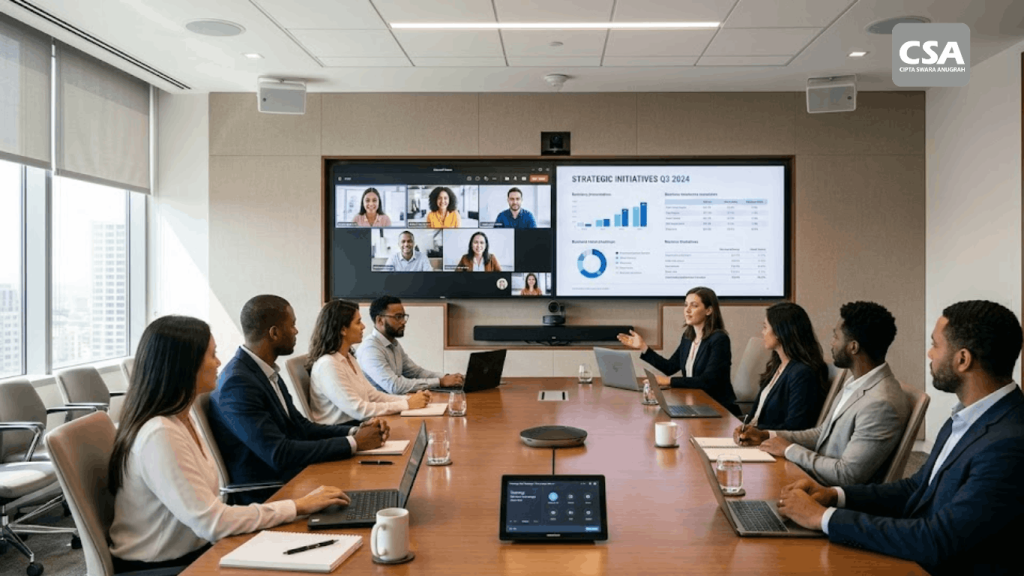
Integrated cameras, microphones, speakers, and conferencing platforms ensure smooth communication regardless of location.
As a result, geography no longer limits collaboration.
The Relationship Between Room Automation Systems and Smart Meeting Rooms
Many people view Room Automation Systems and Smart Meeting Rooms as separate concepts. In reality, they are closely connected.
A Smart Meeting Room is a modern meeting environment that uses advanced technology to improve collaboration and productivity.
A Room Automation System serves as the foundation that enables all these technologies to work together seamlessly.
Without automation, the full potential of a Smart Meeting Room cannot be realized.
Organizations planning to build modern meeting spaces should therefore consider automation from the earliest stages of project development.
The Role of Room Automation Systems in Smart Offices
The Smart Office concept continues to gain popularity across industries.
Its objective is to create a more efficient workplace through intelligent technology.
Room Automation Systems play a critical role within this ecosystem.
They can be integrated with:
- Smart lighting systems
- Occupancy monitoring solutions
- Building management systems
- Energy management platforms
- Room scheduling systems
These integrations help businesses maximize facility utilization while improving operational efficiency.
How Room Automation Systems Deliver Business ROI
Many organizations view technology as a long-term investment.
Room Automation Systems generate measurable business value by improving efficiency and reducing operational friction.
Key benefits that contribute to return on investment include:
Reduced Meeting Downtime
Meetings run more smoothly with fewer technical interruptions.
Time Savings for Employees
Time previously spent troubleshooting technology can be redirected toward productive work.
Better Meeting Room Utilization
Organizations can maximize the value of their meeting spaces.
Improved Collaboration
Enhanced communication leads to faster decision-making and better business outcomes.
Collectively, these advantages create meaningful benefits across the organization.
Room Automation System Trends in 2026
Technology continues to drive innovation in meeting room automation.
Several trends are expected to gain momentum in 2026:
Artificial Intelligence Integration
AI will help optimize user experiences and automate room management tasks.
Voice-Controlled Meeting Rooms
Users will control devices using voice commands.
Cloud-Based Monitoring
Administrators will manage and monitor systems remotely.
Smart Analytics
Usage data will provide insights for improving efficiency and resource allocation.
Touchless Control Technology
Contactless interaction will offer a more modern and hygienic user experience.
Why Choose CSA Indonesia for Room Automation System Implementation?
Successful Room Automation System deployment requires more than high-quality equipment. Organizations need proper planning, system design, integration expertise, and long-term support.
CSA Indonesia specializes in Audio, Visual, Lighting, and Automation solutions, helping businesses create fully integrated modern meeting environments.
CSA Indonesia supports a wide range of solutions, including:
- Smart Meeting Rooms
- Conference Room Automation
- Integrated AV Systems
- Smart Control Systems
- Video Conferencing Solutions
- Professional Sound Systems
- Interactive Display Solutions
- Building Automation Integration
With a comprehensive approach, CSA Indonesia helps businesses develop meeting spaces that are efficient, professional, and ready for future growth.
Conclusion
A Room Automation System is no longer just an optional technology for modern meeting rooms. It has become an essential solution for organizations seeking greater productivity, operational efficiency, and improved collaboration.
By integrating multiple technologies into a centralized platform, businesses can reduce technical obstacles, streamline meetings, and create a better workplace experience. As Smart Offices and Smart Meeting Rooms continue to evolve, the demand for Room Automation Systems is expected to grow significantly in the years ahead.
Frequently Asked Questions (FAQ)
What is a Room Automation System?
A Room Automation System is a technology platform that integrates multiple meeting room devices into a centralized control system.
What are the primary benefits of a Room Automation System?
Key benefits include improved productivity, operational efficiency, ease of use, and a better meeting experience.
Is a Room Automation System only used in meeting rooms?
No. It can also be implemented in conference rooms, boardrooms, auditoriums, training rooms, and other corporate facilities.
How does a Room Automation System support hybrid working?
It integrates audio visual and video conferencing technologies to enable effective collaboration between in-person and remote participants.
What is the relationship between a Room Automation System and a Smart Meeting Room?
A Room Automation System provides the foundation that allows Smart Meeting Room technologies to operate seamlessly and automatically.
Can a Room Automation System improve business ROI?
Yes. It helps save time, reduce downtime, improve productivity, and optimize meeting room utilization.
What are the key Room Automation System trends for 2026?
Major trends include AI integration, voice control, cloud monitoring, smart analytics, and touchless technology.
Why should companies invest in a Room Automation System?
Because it creates a more efficient, professional, and technology-driven meeting environment that supports digital transformation.
What devices can be integrated into a Room Automation System?
Displays, projectors, sound systems, video conferencing platforms, lighting systems, HVAC systems, automated blinds, occupancy sensors, and more.
Why choose CSA Indonesia?
CSA Indonesia provides integrated Audio, Visual, Lighting, and Automation solutions designed to support modern meeting spaces and corporate digital transformation initiatives.