
Modern workplaces are evolving rapidly. Collaboration is no longer limited to face-to-face meetings, and communication increasingly relies on hybrid meetings, video conferencing, employee training sessions, and company-wide presentations. In this environment, Sound System for Offices: Professional Audio Solutions to Improve Productivity in Modern Companies has become more than just an Audio Visual investment. It is now an essential component that supports effective communication, seamless collaboration, and daily business operations.
Many companies still assume that installing a few speakers is enough to meet their communication needs. In reality, an office sound system should be carefully designed based on room functions, user capacity, acoustic conditions, and business objectives. A well-designed audio system ensures that every participant can hear clearly, communicate confidently, and stay focused throughout meetings and presentations.
For organizations aiming to create efficient and productive workplaces, investing in a professionally designed office sound system is no longer optional. It is a strategic decision that enhances communication quality while supporting long-term business growth.
Why Modern Companies Need a Professional Office Sound System
The workplace has changed dramatically over the past decade.
Traditional meeting rooms have transformed into collaborative spaces equipped with video conferencing systems, wireless presentation technology, and integrated Audio Visual solutions. Employees now communicate with colleagues, clients, and business partners from different cities and even different countries.
As communication methods evolve, audio quality becomes increasingly important.
Poor sound can interrupt discussions, reduce engagement, and create misunderstandings that affect decision-making. Participants may struggle to hear important information, repeatedly ask speakers to repeat themselves, or lose focus during meetings.
A professional office sound system eliminates these issues by delivering clear and consistent audio throughout the room.
Instead of becoming a source of distraction, technology supports smoother communication and allows employees to concentrate on the discussion rather than the equipment.
For modern businesses, this translates directly into improved efficiency and better collaboration.
Read Also: Why Sound System Design Matters More Than Choosing Expensive Speakers
How an Office Sound System Improves Workplace Productivity
Many organizations associate productivity with software, workflow automation, or employee performance.
However, communication infrastructure also plays a significant role in determining how efficiently people work together.
A professionally designed office sound system contributes to productivity in several ways.
Clear Communication During Meetings
Meetings are where important decisions are made.
When every participant can hear presentations, discussions, and questions clearly, meetings become more efficient.
There is less repetition, fewer misunderstandings, and faster decision-making.
This creates a more productive working environment where employees can focus on solving problems instead of overcoming communication barriers.
Better Collaboration in Hybrid Meetings
Hybrid work has become part of modern business operations.
Employees often join meetings from different locations using platforms such as Microsoft Teams, Zoom, or Google Meet.
Without reliable audio, remote participants may experience delays, unclear voices, or inconsistent sound levels.
A properly designed office sound system ensures that both in-room and remote participants enjoy the same communication experience.
Everyone can contribute equally, regardless of where they are located.
More Effective Employee Training
Training sessions require every participant to hear the instructor clearly.
Poor audio quality reduces concentration and limits knowledge transfer.
Professional sound systems distribute audio evenly across the training room, ensuring every attendee receives the same listening experience.
This improves engagement while helping organizations maximize the value of internal training programs.
Professional Client Presentations
First impressions matter.
When companies host presentations for clients, investors, or business partners, clear audio reflects professionalism and attention to detail.
Poor sound quality can reduce confidence in the presentation and negatively influence the overall experience.
A professional office sound system helps organizations deliver presentations with greater confidence and credibility.
Different Office Spaces Require Different Audio Solutions
One of the biggest misconceptions is that every office can use the same sound system configuration.
In reality, each workspace has unique communication requirements.
A professional Audio Visual design considers how every room will be used before selecting equipment.
Small Meeting Room
Small meeting rooms are commonly used for daily discussions involving a limited number of participants.
The primary objective is speech clarity.
The system should deliver natural voice reproduction while remaining simple to operate.
Because the room size is relatively compact, the design focuses on eliminating unnecessary echoes and maintaining balanced sound throughout the space.
Medium Meeting Room
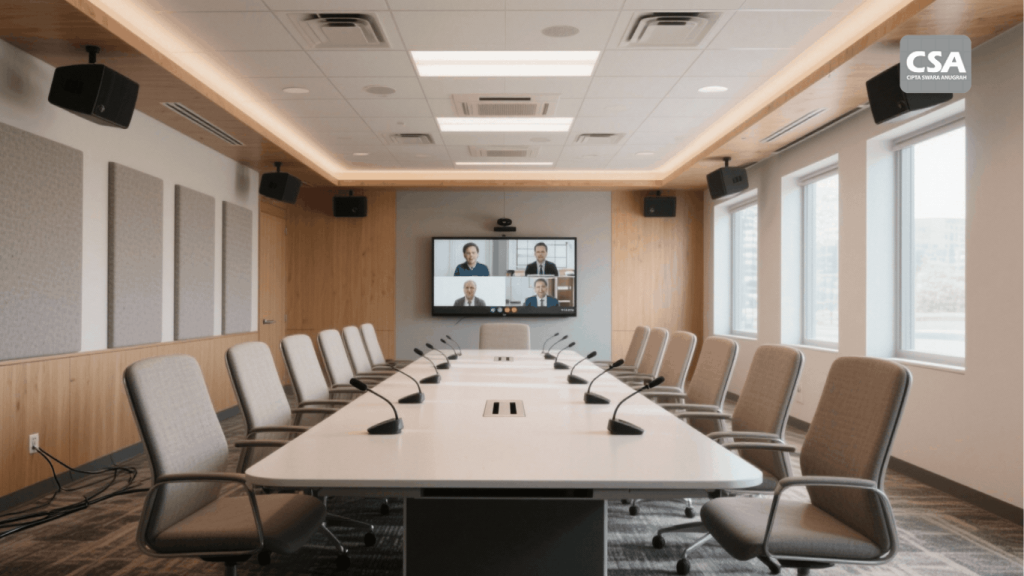
Medium-sized meeting rooms accommodate larger teams and often support hybrid meetings.
These spaces require wider audio coverage to ensure everyone can hear and participate comfortably.
Microphone placement, speaker positioning, and system integration become more important as room capacity increases.
A carefully designed solution ensures consistent audio quality for both local and remote participants.
Board Room
Board rooms host executive meetings where strategic decisions are made.
Every conversation must be captured and reproduced accurately.
Speech intelligibility becomes the highest priority.
The sound system should integrate seamlessly with video conferencing technology while maintaining a clean and professional appearance that complements the room’s interior design.
Training Room
Training rooms require flexible audio systems capable of supporting presentations, workshops, and interactive learning sessions.
Participants should hear instructors clearly regardless of where they are seated.
Reliable wireless microphones, evenly distributed speakers, and simple control interfaces help create productive learning environments that encourage participation.
Auditorium
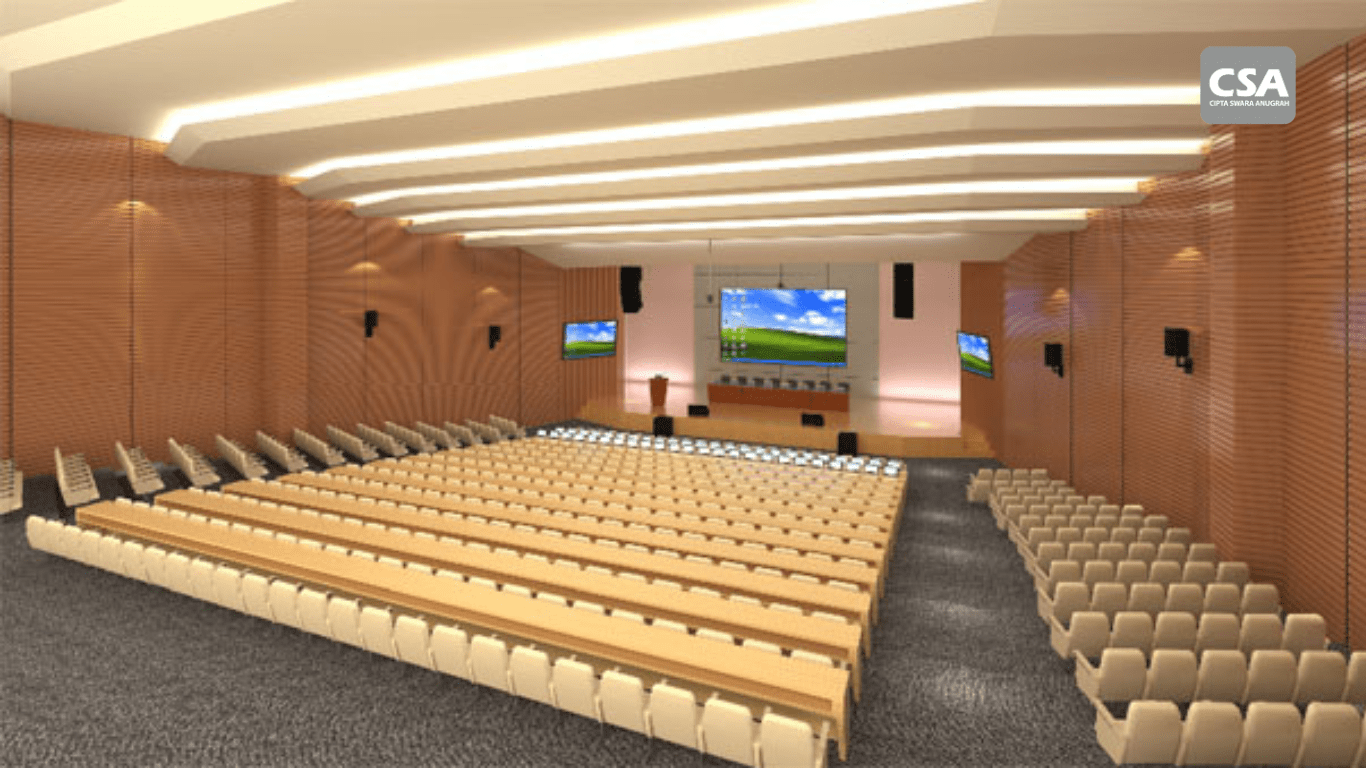
Auditoriums present the greatest Audio Visual challenges because of their larger capacity.
The sound system must deliver consistent audio coverage from the front row to the back of the room.
Proper speaker placement, Digital Signal Processing (DSP), and acoustic planning are essential to maintain speech clarity while preventing echoes and uneven sound distribution.
Without proper system design, even high-end equipment may struggle to provide satisfactory performance.
Read Also: Sound System for Hall Room with CSA Indonesia