
Modern meeting spaces are evolving into more automated, integrated, and efficient environments. In its implementation, the Technologies Used in CSA Indonesia Smart Meeting Room are designed to create a faster, more seamless, and user-friendly meeting experience for every participant.
This system goes beyond standard audio visual equipment. Every technology component is connected within a unified ecosystem. From automatic camera tracking and intelligent ceiling microphones to centralized control systems and multi-platform meeting integration, every element is built to support modern collaboration.
Technologies Used in CSA Indonesia Smart Meeting Room
Integrated System Powered by Q-SYS Platform
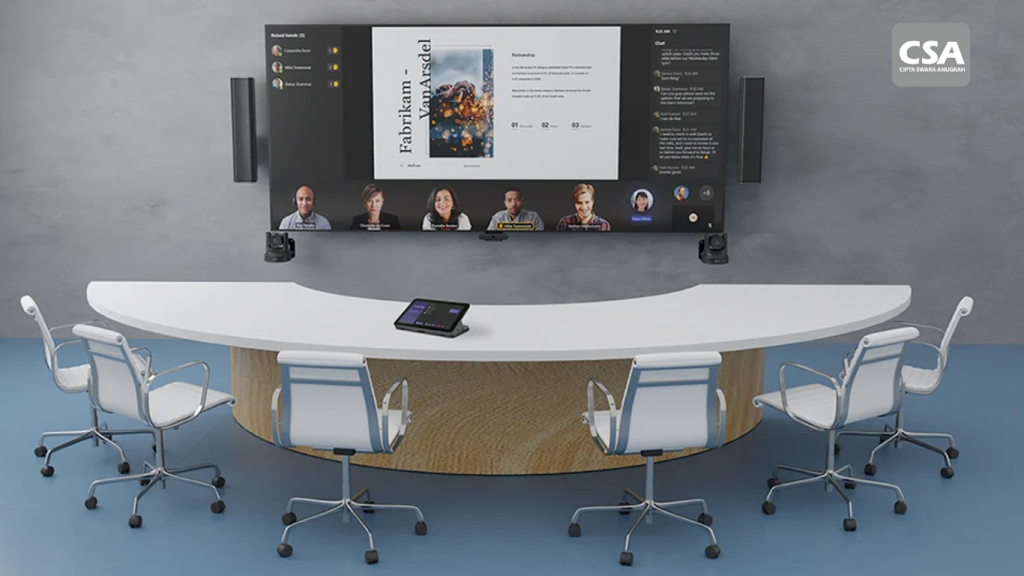
One of the core technologies used is the Q-SYS Platform. This platform serves as the central integration system for all audio, video, and control devices inside the meeting room.
Q-SYS allows every component to operate in sync. Audio systems, cameras, displays, and room controls work together through one centralized interface.
This technology helps companies reduce operational complexity inside meeting rooms. Users no longer need to manage multiple devices separately.
The system also supports various communication platforms such as Zoom, Microsoft Teams, and Google Meet without requiring additional configuration.
PTZ Camera with Auto Tracking System
CSA Indonesia smart meeting rooms utilize PTZ cameras to improve the visual experience during meetings.
PTZ stands for pan, tilt, and zoom. These cameras can automatically follow the active speaker inside the room.
The auto tracking technology creates a more natural and professional framing experience. When someone speaks, the camera automatically adjusts its position in real time.
This creates a far more dynamic visual experience compared to traditional static cameras.
PTZ cameras are especially beneficial for hybrid meetings because remote participants can clearly see the speaker throughout the discussion.
Ceiling Microphones with Intelligent Pickup Technology
Audio quality is one of the most critical aspects of a modern meeting room. CSA Indonesia uses ceiling microphones with intelligent pickup technology to ensure clear voice capture across the entire room.
The microphones are installed on the ceiling, eliminating the need for handheld microphones.
The intelligent pickup system automatically detects and captures voices based on the speaker’s location.
Users can speak naturally without standing close to a microphone. The system ensures consistent and evenly distributed audio quality.
This approach creates a more comfortable and natural meeting experience.
Additional Cameras Near the Display Area
In addition to the main PTZ camera, the smart meeting room also uses additional cameras positioned near the display or TV area.
This placement helps maintain natural eye contact during video conferences.
Remote participants can better see facial expressions and speaking directions during meetings.
This setup significantly improves the quality of visual communication in hybrid collaboration environments.
Centralized Control Panel
One of the most important technologies in the smart meeting room is the centralized control panel.
All room settings can be controlled through a single interface. Users no longer need multiple remotes or separate control devices.
Audio settings, camera controls, displays, lighting systems, and meeting platform switching are all accessible from one control panel.
This approach makes the meeting room easier to operate without requiring IT assistance.
Meeting Room Automation System
CSA Indonesia also implements room automation systems to improve operational efficiency.
As soon as users enter the room, the system automatically activates the required devices.
Displays power on automatically. Cameras become active instantly. Audio systems connect directly to the meeting platform.
This automation reduces setup time significantly and allows meetings to begin immediately.
Relay and Layer Switching Technology
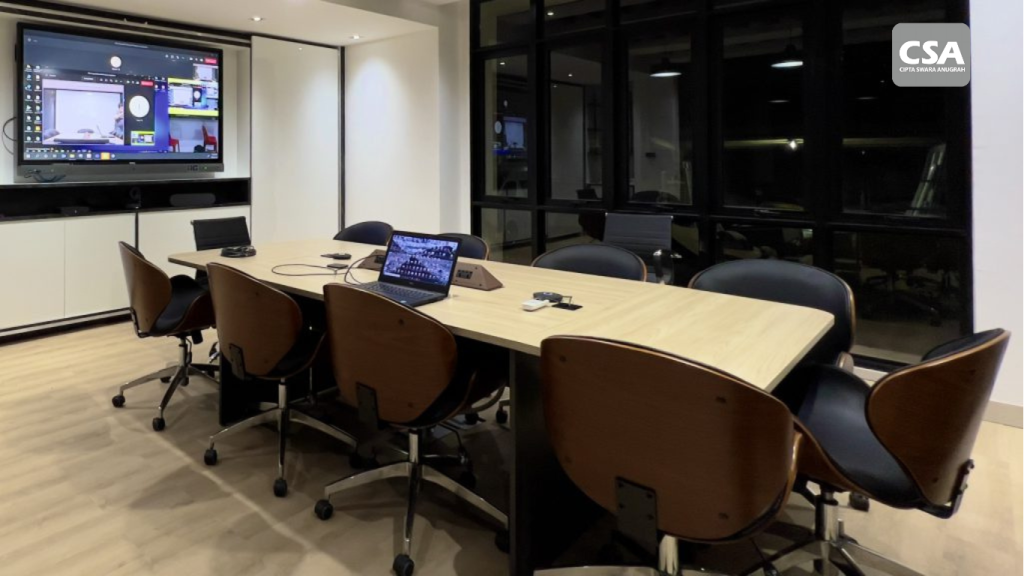
Certain implementations also include relay and layer switching technology.
This system enables automatic visual switching based on meeting requirements.
When presentations begin or speakers change, the display layout can automatically adjust without manual intervention.
This technology provides greater flexibility for modern conference room environments.
Multi-Platform Meeting Integration
Modern companies rarely rely on a single communication platform. For this reason, CSA Indonesia smart meeting rooms are designed to support multiple meeting platforms simultaneously.
Users can switch between Zoom, Microsoft Teams, and Google Meet quickly and efficiently.
All integrations operate within one ecosystem without additional cables or complicated configurations.
This flexibility is especially useful for organizations collaborating across multiple locations or countries.
Fully Integrated System Deployment
All technologies inside the smart meeting room are deployed through a structured integration process.
Every device is configured to operate within a stable ecosystem.
This approach minimizes technical errors during meetings and ensures system reliability.
System stability plays a major role in maintaining smooth communication and collaboration.
Audio Visual System Designed for Hybrid Meetings
The rise of hybrid work environments has become one of the primary reasons companies adopt smart meeting rooms.
The audio visual technologies used are specifically designed to deliver a balanced experience for both onsite and remote participants.
Audio remains clear throughout the room. Cameras move dynamically. Visual presentations appear more professional.
These improvements help companies enhance communication quality across different locations.
Simpler and More Intuitive User Experience
The technologies used are not only focused on performance but also on simplicity.
Smart meeting rooms are designed so users never feel overwhelmed by complicated systems.
Most technologies operate automatically in the background.
Users simply enter the room and start the meeting without complicated setup procedures.
Improving Company Efficiency and Productivity
Implementing smart meeting room technology has a direct impact on operational efficiency.
Meetings start faster. Technical disruptions are minimized. Teams can focus entirely on discussions and decision-making.
Over time, this improves overall workplace productivity.
A New Standard for Modern Meeting Rooms
Companies today need more than comfortable meeting spaces. They require systems that are automated, integrated, and future-ready.
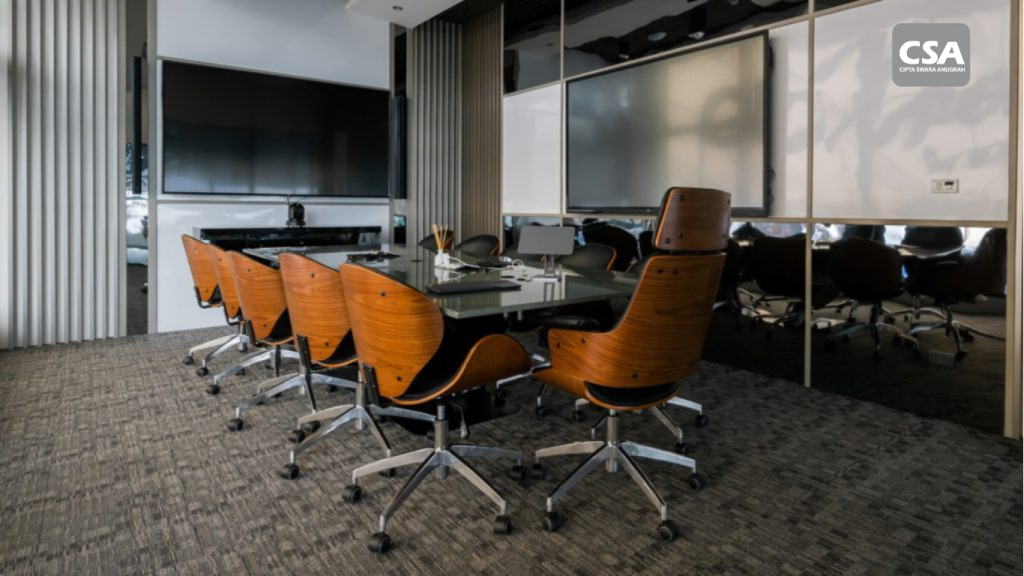
The technologies used in CSA Indonesia smart meeting rooms demonstrate how modern meeting environments can operate more efficiently and professionally.
From Q-SYS integration and PTZ cameras to intelligent ceiling microphones and centralized control panels, every technology is designed to create a seamless collaboration experience.
FAQ About Smart Meeting Room Technologies
1. What is the main function of Q-SYS in a smart meeting room?
Q-SYS integrates all audio visual and control systems into one centralized platform.
2. What are the advantages of PTZ cameras compared to regular cameras?
PTZ cameras automatically follow speakers, creating a more dynamic visual experience.
3. Why use ceiling microphones?
Ceiling microphones capture voices across the room without requiring handheld microphones.
4. What is the benefit of a centralized control panel?
All meeting room systems can be controlled from one simple interface.
5. Does the smart meeting room support hybrid meetings?
Yes, the system is specifically designed for both onsite and remote collaboration.
6. Do users need technical training to operate the system?
No. The system is designed to be intuitive and easy to use.
7. What is the purpose of room automation?
Automation speeds up meeting setup and reduces technical disruptions.
8. Why are companies adopting smart meeting rooms?
Because they improve efficiency, professionalism, and collaboration quality.