
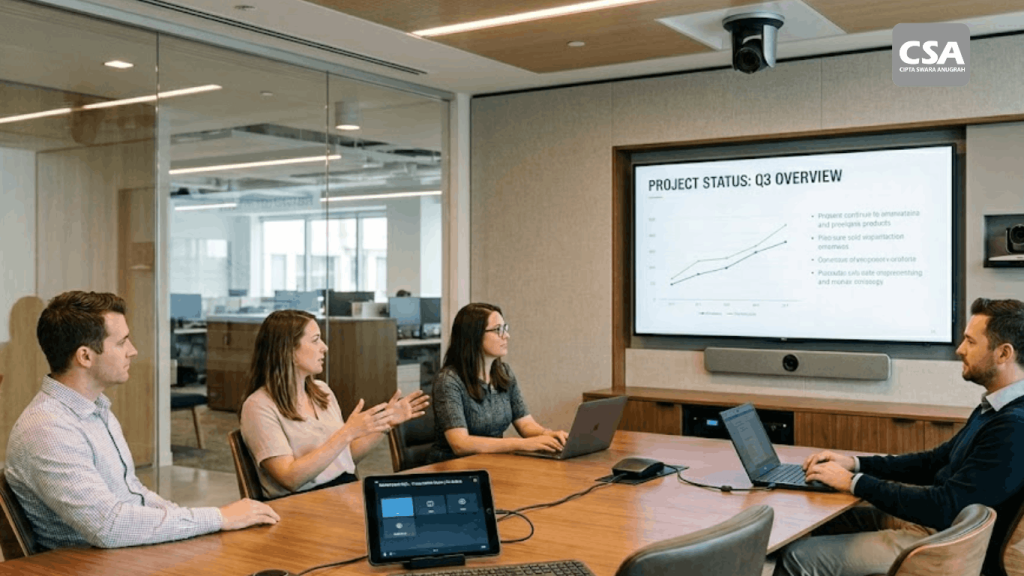
Audio Visual System Integration for Effective Hybrid Meetings with CSA Indonesia has become an increasingly important requirement as businesses embrace modern workplace transformation. Hybrid meetings are no longer just a temporary trend; they have become an essential part of daily business operations. Organizations today frequently conduct meetings where some participants attend in person while others join remotely from different locations.
However, successful hybrid meetings require more than simply connecting a webcam and launching a video conferencing platform. They demand a fully integrated ecosystem where audio, video, display technology, room controls, and collaboration tools work together seamlessly.
Without proper integration, companies often face communication challenges. Audio may be unclear, cameras may fail to capture the entire room, presentations may be difficult to share, and remote participants may feel disconnected from the discussion. This is why businesses are increasingly investing in Audio Visual System Integration to create more productive, professional, and engaging hybrid meeting experiences.
Why Hybrid Meetings Require Audio Visual System Integration
Many organizations assume that a laptop, webcam, and standard speaker are enough to support hybrid meetings.
While this setup may work for small informal discussions, it quickly becomes insufficient for executive meetings, corporate presentations, training sessions, and large-scale collaboration.
In a hybrid environment, remote participants should enjoy the same experience as those physically present in the meeting room. They need to hear conversations clearly, view presentations without limitations, and participate actively in discussions.
Audio Visual System Integration makes this possible by ensuring that all technologies function together as a unified solution rather than as disconnected devices.
Baca Juga: What Is AV System Integration? A Complete Guide for Modern Businesses
What Is Audio Visual System Integration?
Audio Visual System Integration is the process of connecting audio, visual, conferencing, and room control technologies into a single unified system.
The objective is not merely to connect devices but to create a seamless and intuitive user experience.
A fully integrated system typically includes:
- Professional microphones
- Meeting room speakers
- Video conferencing cameras
- Interactive displays
- LED displays
- Wireless presentation systems
- Centralized control panels
- Room automation solutions
- Video conferencing platforms
When properly integrated, these components communicate with one another and operate as a cohesive system designed to support efficient collaboration.
The Role of Audio Visual System Integration in Modern Hybrid Meetings
Successful hybrid meetings depend on more than high-quality equipment. The real value comes from ensuring that all technologies work together seamlessly.
Audio Visual System Integration serves as the central framework that connects every communication element within the meeting environment.
When users enter the meeting room, the system can automatically activate displays, prepare conferencing equipment, connect cameras, and launch collaboration tools.
This level of automation minimizes technical disruptions and allows participants to focus on productive discussions instead of troubleshooting technology.
As a result, meetings become more efficient, engaging, and professional.
Key Components of an Integrated Audio Visual System
Professional Audio Systems
Audio is arguably the most critical component of any hybrid meeting.
Participants may tolerate minor visual imperfections, but poor audio quality can completely disrupt communication.
Professional audio systems typically include:
- Ceiling microphones
- Wireless microphones
- Digital Signal Processors (DSP)
- Professional-grade speakers
These technologies help eliminate noise, reduce echo, and deliver clear speech throughout the room.
Video Conferencing Systems
Video conferencing technology bridges the gap between in-room and remote participants.
Modern conferencing solutions offer advanced features such as:
- Auto framing
- Speaker tracking
- AI-powered camera technology
- High-definition video
These capabilities create a more natural and immersive meeting experience.
Visual Display Systems
Displays play a vital role in presenting information effectively.
Clear visuals help participants better understand presentations, reports, dashboards, and collaborative content.
Common display solutions include:
- Interactive Flat Panels
- Professional Displays
- LED Walls
- Projection Systems
Centralized Control Systems
Control systems simplify the management of multiple technologies.
With a single interface, users can control:
- Audio settings
- Cameras
- Displays
- Video conferencing platforms
- Room lighting
This centralized approach significantly improves usability.
Room Automation
Room automation is becoming a standard feature in modern meeting environments.
Automated functions may include:
- Turning lights on when a meeting begins
- Activating displays automatically
- Connecting conferencing devices instantly
- Powering down systems when rooms are not in use
Automation improves both efficiency and user experience.

Baca Juga: Smart Meeting Rooms for Businesses: A Technology Investment That Delivers High ROI
Challenges of Hybrid Meetings Without Audio Visual Integration
Organizations that rely on disconnected technologies often experience several recurring issues.
Poor Audio Quality
Unclear audio remains one of the most common reasons for ineffective communication during meetings.
Echo and Feedback
Improperly configured devices can create distracting audio feedback and echo.
Limited Camera Coverage
Remote participants may struggle to follow discussions if cameras cannot adequately capture the room.
Delayed Meeting Start Times
Users often spend valuable time connecting and configuring multiple devices manually.
Inconsistent Participant Experience
Remote attendees frequently feel less engaged than participants who are physically present.
These challenges can significantly reduce meeting effectiveness and productivity.
How Audio Visual System Integration Creates Effective Hybrid Meetings
Integrated systems allow all technologies to work together seamlessly.
When a meeting begins, audio systems, cameras, displays, and conferencing platforms can automatically synchronize and operate as a unified environment.
This integration helps organizations achieve:
- Clearer communication
- Better collaboration
- Enhanced user experiences
- Faster meeting setup
- Greater operational efficiency
Technology becomes an enabler of productivity rather than an obstacle.
Business Benefits of Audio Visual System Integration
Improved Communication Quality
Participants can communicate clearly without technical interruptions.
Enhanced Hybrid Collaboration
Employees can contribute effectively regardless of their location.
Reduced Operational Delays
Integrated systems minimize setup time and simplify meeting workflows.
Increased Productivity
Teams can focus on discussions, decision-making, and strategic objectives.
More Professional Meeting Experiences
Organizations can create a modern and professional impression for clients, partners, and stakeholders.
The Role of an AV System Integrator in Hybrid Meeting Implementation
The success of any Audio Visual System Integration project depends heavily on proper planning, design, and execution.
This is where an AV System Integrator becomes essential.
Their responsibilities typically include:
- Assessing business requirements
- Designing integrated solutions
- Selecting suitable technologies
- Integrating multiple systems
- Conducting performance testing
- Providing user training
Professional integration ensures that technology investments deliver maximum value.
Why Businesses Need an Experienced Integration Partner
Every organization has unique requirements.
Room size, user capacity, meeting formats, and existing infrastructure all influence system design.
For this reason, businesses need an experienced integration partner that understands both technology and operational objectives.
The right partner does more than install equipment. They design solutions that align technology with business goals.
Read Also: Best Smart Meeting Room Vendor CSA Indonesia for Modern and Intelligent Meeting Solutions
Audio Visual System Integration with CSA Indonesia
As a company specializing in Audio, Visual, Lighting, and Automation solutions, CSA Indonesia helps organizations build modern and highly effective hybrid meeting environments.
CSA Indonesia understands that every meeting room presents unique challenges and requirements. Therefore, each solution is designed based on room characteristics, user needs, and business objectives.
Available solutions include:
- Hybrid Meeting Solutions
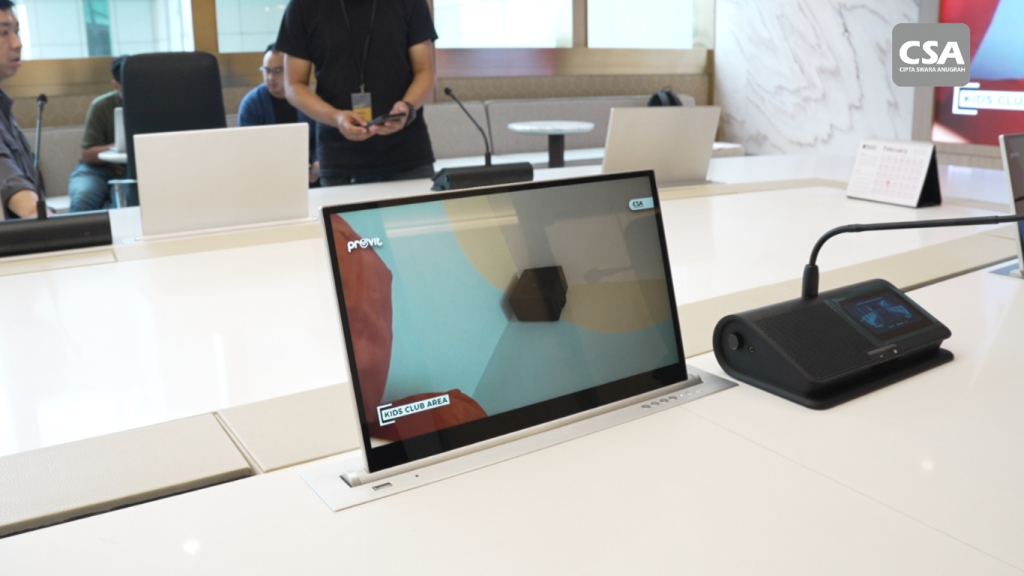
- Smart Meeting Rooms
- Integrated AV Systems
- Video Conferencing Systems
- Professional Audio Systems
- Conference Room Automation
- Smart Control Systems
- Digital Collaboration Solutions
Through a comprehensive integration approach, CSA Indonesia helps businesses create productive workplaces that are prepared for future communication needs.
Why Choose CSA Indonesia for Hybrid Meeting Solutions?
Selecting the right integration partner is one of the most important factors in the success of any AV project.
CSA Indonesia provides a complete approach that covers every stage of implementation.
Key advantages include:
- Comprehensive needs assessment
- Customized system design
- Professional technology integration
- Ongoing technical support
- Extensive experience in Audio, Visual, Lighting, and Automation projects
This approach helps ensure that every technology investment delivers long-term value and measurable business benefits.
Conclusion
Audio Visual System Integration for Effective Hybrid Meetings is not simply about deploying advanced audio and visual equipment. It is about creating a connected communication ecosystem that is intuitive, reliable, and designed to support modern collaboration.
In today’s hybrid work environment, organizations need technology that enables seamless interaction between in-person and remote participants. Proper integration improves communication quality, accelerates decision-making, and enhances overall team productivity.
With CSA Indonesia, businesses can implement professionally designed hybrid meeting solutions that support both current operational needs and future workplace transformation.
Frequently Asked Questions (FAQ)
What is Audio Visual System Integration?
Audio Visual System Integration is the process of connecting audio, visual, conferencing, and room control technologies into a unified system.
Why do hybrid meetings require integrated AV systems?
Integrated systems ensure smoother communication, clearer audio, and a better experience for all participants.
What are the main components of an integrated AV system?
Key components include microphones, speakers, video conferencing cameras, displays, control systems, and room automation technologies.
What are the benefits of AV integration for businesses?
Benefits include improved productivity, operational efficiency, communication quality, and professional meeting experiences.
What is the difference between a standard AV setup and an integrated AV system?
A standard setup uses separate devices, while an integrated system connects all technologies into a seamless ecosystem.
Why is audio quality critical in hybrid meetings?
Poor audio can disrupt communication and significantly reduce meeting effectiveness.
What does an AV System Integrator do?
An AV System Integrator designs, integrates, tests, and optimizes audio visual systems to ensure optimal performance.
How does AV integration support Smart Meeting Rooms?
AV integration serves as the foundation of Smart Meeting Rooms by connecting technologies into an automated and intelligent environment.
How does CSA Indonesia support hybrid meeting implementation?
CSA Indonesia provides consultation, design, integration, installation, commissioning, and maintenance services for Audio, Visual, Lighting, and Automation solutions.
Can integrated AV systems be upgraded in the future?
Yes. Properly designed AV systems are scalable and can be upgraded as technology and business requirements evolve.