
Modern businesses rely on technology to improve communication, collaboration, and operational efficiency. Meeting rooms need reliable video conferencing, corporate offices require flexible presentation systems, and hotels and commercial buildings depend on technology to support daily operations and enhance the visitor experience. These requirements make proper technology planning an essential part of modern facility development.
Installing speakers, displays, cameras, and lighting equipment separately does not always produce the best results. Each component must work with the others, suit the room’s function, and remain easy for employees and facility operators to use.
An Audio Visual System Integrator helps businesses address these requirements through coordinated system planning, equipment integration, configuration, and testing. CSA Indonesia provides solutions across Audio, Visual, Lighting, and Automation for corporate environments, hospitality facilities, and commercial buildings.
By considering user requirements, infrastructure, system compatibility, and future expansion, businesses can develop technology environments that support their operational objectives. Companies can explore CSA Indonesia to learn more about its solutions and project experience.
What Is Audio Visual System Integration?
Audio visual system integration involves connecting different technologies so they operate as a coordinated system. These technologies may include professional audio equipment, displays, video conferencing devices, lighting controls, and centralized room control systems.
The objective is not simply to install individual devices. It is to make sure the complete system supports the intended activities and provides a practical experience for its users.
For example, a corporate meeting room may include microphones, speakers, conferencing cameras, displays, and wireless presentation equipment. When these components are properly integrated, employees can present content and communicate with remote participants without managing every device separately.
The same principle applies to auditoriums, training facilities, ballrooms, command centers, and public areas. Each environment has different technical requirements, so its system design must reflect its intended use.
Businesses can learn more about the fundamentals in this guide to what audio visual integration is, how it works, and its benefits for modern businesses.
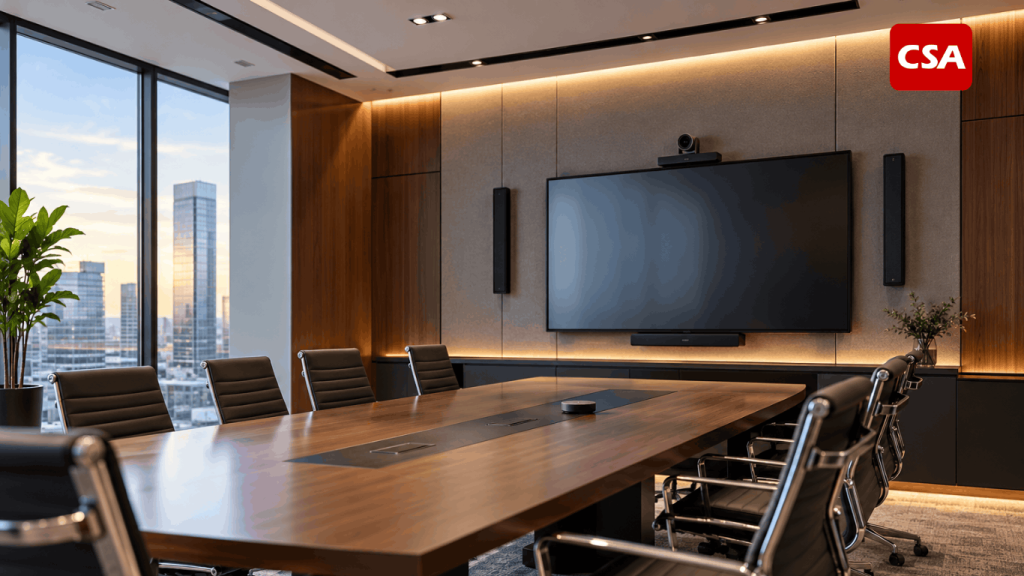
Why Do Businesses Need Integrated Audio Visual Systems?
Technology becomes more useful when the devices, infrastructure, and controls work together. Without proper planning, businesses may experience complicated operation, inconsistent performance, or compatibility issues between different components.
An integrated approach helps address these challenges from the beginning.
1. Improving Communication and Collaboration
Clear communication is essential for meetings, presentations, training sessions, and discussions with business partners. A properly designed system helps ensure that participants can hear conversations clearly, view presentation materials, and communicate with remote colleagues.
These requirements are particularly important for organizations that use hybrid meetings. Cameras, microphones, speakers, displays, and conferencing platforms must be selected according to room dimensions, seating arrangements, and the number of participants.
Companies planning these facilities can explore Audio Visual System Integration for Effective Hybrid Meetings.
2. Simplifying Equipment Operation
Rooms with multiple devices can become difficult to manage when every component requires separate operation. Employees may need to select input sources, adjust settings, and activate devices before a meeting can begin.
A well-planned control system can simplify these processes. Depending on the configuration, users may be able to activate presentation equipment, adjust audio levels, select meeting modes, or manage compatible lighting functions through a centralized interface.
This approach can also reduce the need for repeated technical assistance during routine meetings.
3. Supporting Consistent System Performance
A room’s physical characteristics affect the performance of its technology. Poor speaker placement can create uneven sound coverage, while unsuitable display positioning may make presentations difficult to see.
Integration considers equipment specifications alongside room acoustics, viewing distances, connectivity, and operational requirements. This helps ensure that the system is designed around the actual environment rather than relying solely on individual product specifications.
4. Preparing for Future Expansion
Business requirements can change as organizations grow. A company may add meeting rooms, upgrade conferencing technology, expand its office, or introduce additional control functions.
Considering these possibilities during the design stage can help businesses make more informed infrastructure decisions. For a closer look at the equipment involved, read What Devices Are Included in an Integrated Audio Visual System?.
Audio, Visual, Lighting, and Automation Solutions
Different facilities require different combinations of technology. A boardroom may prioritize conferencing and presentation quality, while a hotel ballroom may need systems that support events, speeches, and entertainment.
CSA Indonesia’s solutions cover several technology categories that can be planned according to the requirements of each project.
1. Professional Audio Systems
Professional audio systems support speech, presentations, announcements, and entertainment. They are used in meeting rooms, auditoriums, hotels, restaurants, ballrooms, and other commercial environments.
Depending on the application, components may include speakers, microphones, mixers, amplifiers, digital signal processors (DSPs), and audio distribution equipment.
System design should consider room dimensions, background noise, audience size, speaker coverage, and the intended activities. These factors influence both equipment selection and configuration.
For office environments, businesses can also read 7 Signs Your Office Needs Audio Visual Integration to Improve Business Productivity.
2. Visual and Presentation Systems
Visual technology helps businesses communicate information through displays, projectors, video walls, and digital signage.
Meeting rooms may require displays for presentations and video conferencing. Control rooms may need video walls that show multiple information sources, while commercial facilities may use digital signage to communicate with visitors.
The appropriate solution depends on screen size, viewing distance, ambient lighting, content requirements, and available infrastructure.
For businesses evaluating an integrated solution, the key consideration is how visual equipment will work with the room’s audio, connectivity, and control systems.
3. Lighting Systems
Lighting influences visibility, comfort, atmosphere, and how a space supports different activities. Meeting rooms, auditoriums, ballrooms, and hospitality facilities may require different lighting configurations.
A properly planned system can support the intended use of each space. Where compatible technology is available, lighting controls can also be coordinated with audio visual equipment and room automation.
This can help users prepare a room for different activities without adjusting every function independently.
4. Automation and Room Control
Automation allows compatible equipment and selected room functions to be managed through a centralized control system.
For example, a meeting room may have presentation, video conferencing, and discussion modes. Depending on the design, each mode can activate the appropriate devices and settings.
The system should be planned around device compatibility, user requirements, security, and maintenance needs. Businesses can learn more in Automation System Integrator for Corporate and Hospitality: Integrating Lighting, Audio Visual, and Control Systems.
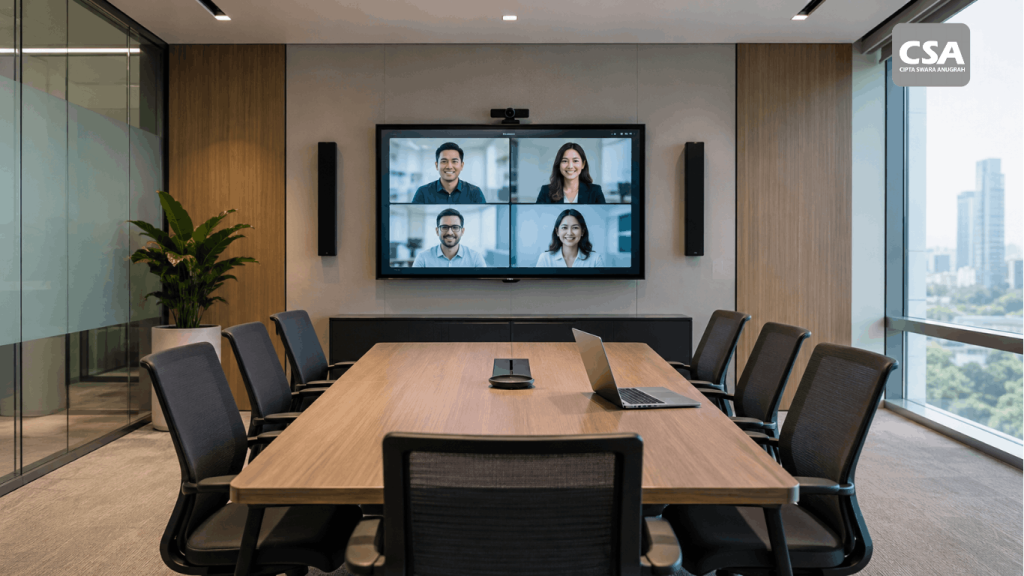
Read Also: How to Design an Audio Visual System for a Corporate Meeting Room
CSA Indonesia Project Portfolio: Technology Across Different Industries
Project experience is an important consideration when selecting a technology integration partner. Corporate offices, hotels, and commercial facilities have different operational priorities, room layouts, and technical challenges.
CSA Indonesia’s portfolio includes projects across corporate and hospitality environments. These examples illustrate why each installation requires an approach tailored to the facility.
1. Danantara Indonesia — Nusantara Meeting Room
The Nusantara Meeting Room project at Danantara Indonesia demonstrates the role of integrated technology in executive meeting environments.
The project includes Crestron AV over IP infrastructure, AI auto-tracking cameras, and wireless delegate microphones. These technologies support audio and video distribution and help facilitate communication among meeting participants.
Such an environment requires more than individual devices with suitable specifications. The system must support effective communication, practical operation, and the requirements of modern meetings.
For organizations developing executive meeting facilities, this project provides a useful reference when evaluating conferencing technology and integrated room controls.
2. HARRIS Hotel & Convention Serpong
Hotels and convention facilities need technology that can support different types of events and room configurations.
The HARRIS Hotel & Convention Serpong project includes integrated audio visual infrastructure for the ballroom, meeting rooms, breakout areas, and public spaces. These facilities support activities ranging from corporate conferences and hybrid meetings to large-scale conventions and social events.
Because each area serves a different purpose, the system must accommodate varied operational requirements. A ballroom, for example, has different needs from a smaller meeting room or a public area.
This project is relevant to hotel operators, convention center managers, and commercial property owners planning technology for multi-purpose facilities.
3. MYZE Hotel Waingapu
The MYZE Hotel Waingapu project focused on improving audio performance around the hotel’s swimming pool area.
The work addressed sound quality and uneven audio coverage. The evaluation considered signal flow, speaker positioning, equipment configuration, cabling, and system tuning.
This example highlights an important aspect of professional audio design: equipment selection alone does not determine the final result. Placement, configuration, and adjustments based on the physical environment also influence sound performance.
For hospitality businesses, these factors are particularly important when designing audio for outdoor spaces where sound must support the intended atmosphere and guest experience.
4. Mövenpick Resort and Other Hospitality Projects
CSA Indonesia’s portfolio also includes the Mövenpick Resort project and other hospitality environments. These facilities may require combinations of audio, visual technology, entertainment lighting, and control systems.
The appropriate configuration depends on the function of each space, the property’s operational requirements, and the experience it aims to provide for guests.
Reviewing previous projects can help prospective clients understand the types of environments an integrator has worked with. However, each new project still requires its own assessment to determine the most suitable technical solution.
Explore the CSA Indonesia project portfolio for additional project references.
The Implementation Process for Integrated Systems
A successful project involves more than choosing the right equipment. Planning, installation, configuration, testing, and handover all contribute to the final outcome.
1. Requirement Analysis
The process begins by identifying the purpose of each room, the number of users, the activities taking place, and the required system functions.
This assessment helps define the project scope and establish the technical priorities.
2. System Planning and Design
The next stage involves developing a design that considers equipment selection, signal flow, connectivity, room controls, and infrastructure requirements.
Compatibility between components is essential. The design should account for how devices will communicate and function together.
3. Equipment Selection and Infrastructure Preparation
Equipment should be selected according to its intended application, performance requirements, compatibility, and ease of operation.
Infrastructure preparation must also account for the building’s existing conditions and the project’s installation requirements.
4. Installation and Integration
The selected equipment is installed and connected according to the system design. Depending on the project scope, this may include device installation, cable management, network configuration, control programming, and system integration.
Coordination during this stage helps ensure that the completed installation follows the intended design.
5. Testing and Handover
Before the system enters operation, testing should verify that its main functions work as intended. This may include audio performance, visual output, connectivity, control responses, and typical usage scenarios.
Users should also receive appropriate guidance on operating the system. Documentation and technical support can help simplify ongoing management.
For a comparison of different implementation approaches, read Audio Visual Integration vs. Conventional Audio Visual Installation: Which One Is Better for Your Business?.
How to Choose the Right Integration Partner
Selecting a partner requires more than comparing equipment prices. Businesses should evaluate the provider’s technical capabilities, project experience, planning approach, and support arrangements.
Consider these factors before making a decision:
- Understanding business requirements: The proposed solution should reflect the facility’s purpose and daily activities.
- System integration capabilities: Equipment should be designed to work together as a coordinated system.
- Relevant project experience: A portfolio can help demonstrate experience with similar industries or facilities.
- Clearly defined scope: Equipment specifications, installation work, testing, and handover requirements should be established from the beginning.
- Future scalability: The design should consider potential changes in business and technology requirements.
- Technical support: Assistance after implementation is an important consideration for ongoing system management.
For more guidance, see 7 Things to Consider Before Choosing an AV System Integrator.
Why Consider CSA Indonesia for Your Integration Project?
CSA Indonesia provides Audio, Visual, Lighting, and Automation solutions for business and commercial environments. Its integrated approach considers the relationship between equipment, room functions, user experience, and operational requirements.
Projects involving Danantara Indonesia, HARRIS Hotel & Convention Serpong, and MYZE Hotel Waingapu illustrate how technology requirements can vary across corporate and hospitality facilities.
The right solution depends on each project’s objectives, infrastructure, budget, and operational priorities. An initial discussion can help establish these requirements before determining the appropriate system design and equipment.
Companies can visit CSA Indonesia to learn more about its capabilities or explore the CSA Indonesia project portfolio for project references.
Conclusion
Integrated audio visual, lighting, and automation technologies can help businesses create spaces that are easier to operate and better suited to communication, collaboration, and daily operations. Achieving these outcomes requires careful planning, suitable equipment, effective integration, and thorough testing.
Through its solutions and project experience across corporate and hospitality environments, CSA Indonesia can be considered as a technology integration partner for meeting rooms, offices, hotels, and commercial facilities.
Before starting a project, businesses should identify their primary requirements and define the project scope. This helps ensure that the proposed system reflects the facility’s needs rather than focusing solely on individual equipment specifications.
FAQ
1. What does an audio visual system integrator do?
An audio visual system integrator plans, connects, configures, and tests audio visual equipment so that the components work together as a coordinated system suited to the user’s requirements.
2. What services are included in an audio visual integration project?
Depending on the project, services may include professional audio systems, displays, video walls, video conferencing, presentation systems, lighting, and room automation or control.
3. Are integrated audio visual systems only used in meeting rooms?
No. They can also be implemented in auditoriums, ballrooms, hotels, convention centers, educational facilities, command centers, restaurants, and other commercial buildings.
4. What are the benefits of an integrated audio visual system?
An integrated system can simplify equipment operation, support communication, improve consistency, and make technology easier to manage. The actual benefits depend on the system design and the facility’s requirements.
5. Where can businesses view CSA Indonesia’s project experience?
Businesses can explore the CSA Indonesia project portfolio to review examples of its work across corporate and hospitality environments.
6. How can a company start an integration project with CSA Indonesia?
The first step is to prepare information about the facility, room functions, number of users, technology requirements, existing infrastructure, and estimated budget. These details provide a useful starting point for discussing the project scope and suitable solutions.