
Smart Meeting Rooms for Businesses: A Technology Investment That Delivers High ROI has become an increasingly relevant topic in today’s modern workplace. Companies are no longer looking for meeting spaces that are merely comfortable. They need collaborative environments that improve productivity, accelerate decision-making, and support seamless communication across teams.
Many organizations have invested heavily in digital technologies. However, a significant number still rely on conventional meeting rooms with disconnected systems and manual operations. As a result, meetings often experience technical issues, lengthy setup times, and reduced effectiveness.
This is where Smart Meeting Rooms provide a compelling solution. Beyond creating a modern meeting experience, they generate tangible business value. When designed and implemented correctly, Smart Meeting Rooms can deliver a high return on investment (ROI) through improved operational efficiency, increased employee productivity, and better utilization of workplace resources.
Why Smart Meeting Rooms Are No Longer Just a Technology Trend
Over the past few years, the way organizations collaborate has changed dramatically. The rise of hybrid work, the growing need for communication across multiple locations, and rapid digital transformation have made meeting spaces more strategic than ever before.
Meeting rooms are no longer simply places where employees gather. They have evolved into collaboration hubs where teams conduct presentations, training sessions, strategic discussions, and critical decision-making activities.
As a result, businesses increasingly view Smart Meeting Rooms as long-term investments that support productivity and business growth rather than as simple technology purchases.
What Is a Smart Meeting Room?
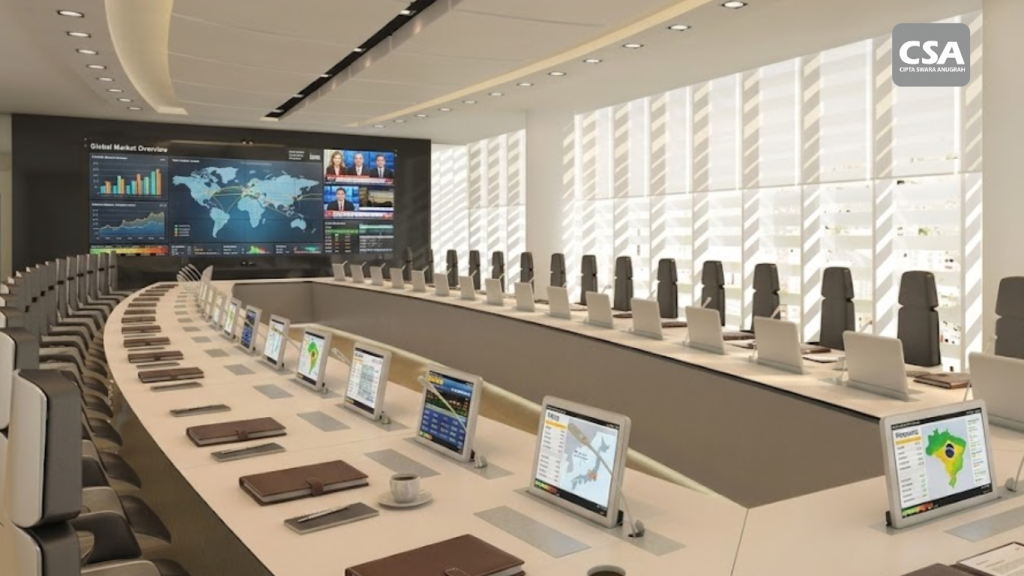
A Smart Meeting Room is a meeting space that integrates audio-visual technologies, video conferencing solutions, automation systems, and centralized control platforms into a single connected ecosystem.
Within a Smart Meeting Room, multiple technologies work together seamlessly, reducing the need for manual setup and simplifying the overall user experience.
Common technologies found in Smart Meeting Rooms include:
- Video conferencing systems
- Professional sound systems
- Interactive displays
- Wireless presentation systems
- Smart control systems
- Conference room automation
- Digital room scheduling solutions
- Occupancy sensors
- Intelligent lighting control
The primary goal is to create a meeting environment that is more efficient, productive, and user-friendly.
Why Many Companies Fail to Maximize the Value of Traditional Meeting Rooms
Many organizations spend significant budgets on meeting room infrastructure. However, not all of these investments generate meaningful results.
The problem often lies not in the quality of the equipment but in the lack of integration between systems.
Common challenges include:
- Meetings starting late
- Poor audio quality
- Video conferencing connection issues
- Difficult device operation
- Heavy dependence on IT support
- Excessive time spent preparing meeting spaces
When these issues occur daily, they can significantly impact overall organizational productivity.
Factors That Make Smart Meeting Rooms Deliver High ROI
ROI in Smart Meeting Rooms goes far beyond direct cost savings. The greatest value often comes from long-term gains in efficiency and productivity.
Saving Meeting Preparation Time
In traditional meeting spaces, users often spend valuable time turning on devices, connecting equipment, and configuring systems.
Smart Meeting Rooms automate many of these processes, allowing meetings to start faster and more efficiently.
Over time, these small time savings create substantial organizational benefits.
Increasing Employee Productivity
Productivity is influenced not only by employee skills but also by the work environment.
When technology functions seamlessly, participants can focus on discussions, strategy development, and decision-making instead of troubleshooting technical issues.
Reducing Technical Disruptions
Technical problems are among the leading causes of meeting delays.
Integrated systems help minimize disruptions, ensuring smoother and more productive meetings.
Reducing Dependence on IT Teams
Many organizations still rely heavily on IT staff to support meeting room operations.
Smart Meeting Rooms are designed to be intuitive and user-friendly, allowing employees to operate systems independently.
Maximizing Meeting Room Utilization
Efficient technology enables organizations to make better use of their meeting spaces throughout the day.
This maximizes the value of existing workplace assets.
ROI Is Not Always About Cost Savings
One of the most common misconceptions is that ROI should only be measured in financial terms.
In reality, many Smart Meeting Room benefits generate significant business value that cannot always be directly quantified.
Faster Decision-Making
Effective meetings allow organizations to make decisions more quickly.
In competitive business environments, speed often creates a significant advantage.
Improved Collaboration
Clear communication leads to stronger teamwork and better project outcomes.
It also reduces the risk of misunderstandings that can impact business performance.
Better Employee Experience
Employees are generally more engaged and satisfied when they work in technology-enabled environments.
A positive workplace experience contributes to higher morale and improved performance.
Enhanced Professional Image
When companies host clients, partners, or stakeholders in modern meeting environments, they create a stronger professional impression and build greater confidence.
How Smart Meeting Rooms Improve Operational Efficiency
Operational efficiency is one of the primary reasons businesses invest in intelligent meeting spaces.
Through integrated technologies, organizations can eliminate many non-value-added activities.
Examples include:
- Reducing meeting setup time
- Minimizing troubleshooting efforts
- Improving equipment utilization
- Reducing energy waste
- Limiting manual intervention
Together, these improvements contribute to greater operational effectiveness across the organization.

The Connection Between Smart Meeting Rooms and Hybrid Work
Hybrid work has fundamentally changed how organizations operate.
Employees now participate in meetings from offices, homes, and remote locations around the world.
This shift requires meeting spaces capable of supporting seamless communication regardless of participant location.
Smart Meeting Rooms provide a consistent and engaging experience through integrated video conferencing, high-quality audio, and advanced presentation technologies.
As a result, both in-person and remote participants can collaborate more effectively.
Smart Meeting Rooms as a Long-Term Investment
The best technology investments continue to provide value for years.
Smart Meeting Rooms fall into this category.
When implemented properly, they support both current operational needs and future business requirements.
They also prepare organizations for emerging workplace technologies such as:
- Artificial Intelligence
- Smart Office solutions
- Automation platforms
- Cloud-based management systems
- Data analytics
- Advanced hybrid collaboration tools
This makes Smart Meeting Rooms a future-ready investment that supports long-term business growth.
Smart Meeting Room Trends in 2026
Meeting room technologies continue to evolve toward greater intelligence and automation.
Several trends are expected to dominate in 2026:
Conference Room Automation
Systems automatically manage room functions based on predefined scenarios.
AI-Powered Meeting Rooms
Artificial Intelligence enhances user experiences and optimizes room performance.
Voice Control Systems
Users can control meeting room technologies using simple voice commands.
Smart Occupancy Analytics
Organizations gain real-time insights into meeting room usage and utilization.
Cloud-Based Management
Administrators can monitor and manage room technologies from virtually anywhere.
How CSA Indonesia Helps Businesses Maximize Smart Meeting Room Investments
Successful Smart Meeting Room implementation requires more than selecting the right equipment.
Planning, system design, technology integration, and ongoing support are equally important.
CSA Indonesia specializes in Audio, Visual, Lighting, and Automation solutions that help organizations create modern meeting environments capable of delivering measurable business value.
Using a consultative approach, CSA Indonesia supports clients through every stage of the project lifecycle, from planning and design to implementation and optimization.
Available solutions include:
- Smart Meeting Rooms
- Integrated AV Systems
- Video Conferencing Solutions
- Professional Sound Systems
- Conference Room Automation
- Smart Control Systems
- Interactive Displays
- Automation Solutions
By delivering fully integrated systems, CSA Indonesia helps businesses maximize the return on every technology investment.
Read Also: How to Set Up a Smart Meeting Room for Optimal Results
Conclusion
Smart Meeting Rooms are far more than technology-enhanced meeting spaces. They represent strategic investments that help organizations improve productivity, strengthen collaboration, and drive long-term operational efficiency.
The ROI generated by Smart Meeting Rooms extends beyond cost savings. It comes from better communication, faster decision-making, enhanced user experiences, and more effective use of workplace resources. As businesses continue to embrace digital transformation and hybrid work, Smart Meeting Rooms have become one of the most valuable technology investments available to modern organizations.
Frequently Asked Questions (FAQ)
What is a Smart Meeting Room?
A Smart Meeting Room is a meeting space that integrates audio-visual technologies, video conferencing, automation, and control systems to improve meeting effectiveness.
Why are Smart Meeting Rooms considered a high-ROI investment?
They improve productivity, reduce wasted time, minimize technical issues, and enhance overall operational efficiency.
Is ROI only measured through cost savings?
No. ROI also comes from improved collaboration, faster decision-making, better user experiences, and increased workplace efficiency.
What are the main benefits of Smart Meeting Rooms?
They improve meeting efficiency, support hybrid work, enhance collaboration, and optimize meeting room utilization.
Are Smart Meeting Rooms suitable for all business sizes?
Yes. Solutions can be customized for small businesses, medium-sized organizations, and large enterprises.
How do Smart Meeting Rooms differ from traditional meeting rooms?
Smart Meeting Rooms feature integrated technologies and automation that make meetings easier, faster, and more productive.
How do Smart Meeting Rooms improve employee productivity?
By eliminating technical barriers and reducing meeting setup time, employees can focus on more important business activities.
How do Smart Meeting Rooms support hybrid work?
They provide seamless collaboration between in-office and remote participants through integrated communication technologies.
Why should companies invest in Smart Meeting Rooms now?
As digital collaboration continues to grow, Smart Meeting Rooms provide long-term value and help organizations remain competitive.
Why choose CSA Indonesia?
CSA Indonesia delivers integrated Audio, Visual, Lighting, and Automation solutions designed to meet the evolving needs of modern businesses.