
Beach clubs offer an atmosphere that is difficult to replicate in indoor venues. The sound of the waves, open-air environment, and coastal setting all contribute to the guest experience. However, these same characteristics create unique challenges when a venue requires a professional audio and lighting system.
CSA Indonesia delivers an Audio and Lighting solution for Sonada Beach Club Bintan through an approach that adapts the system to the venue’s specific environment. Located in a coastal area, Sonada faces conditions such as humid air, wind, and relatively high salt exposure. These factors require careful consideration when planning and adapting the system.
For CSA, the project is not simply about delivering clear sound or attractive lighting. The system needs to support Sonada’s identity as a hospitality venue. Audio should provide consistent coverage across the relevant areas, while lighting should enhance the atmosphere without becoming overwhelming.
Sonada Beach Club Bintan and the Character of a Coastal Venue
Location plays an important role in designing an Audio and Lighting system. A venue located on the beach has different requirements from a restaurant, ballroom, or enclosed meeting room.
An open-air environment allows sound to interact directly with its surroundings. Wind can also affect how guests perceive music coming from the audio system.
Humidity and salt exposure add another consideration for equipment operating in a coastal environment. These conditions need to become part of the planning process from the beginning.
Sonada also has requirements that go beyond technical performance. As a beach club, the venue needs an atmosphere that can support different activities and events.
For this reason, CSA approaches the Sonada project as a complete venue solution. The system needs to respond to the site conditions while supporting the experience that Sonada wants to create.
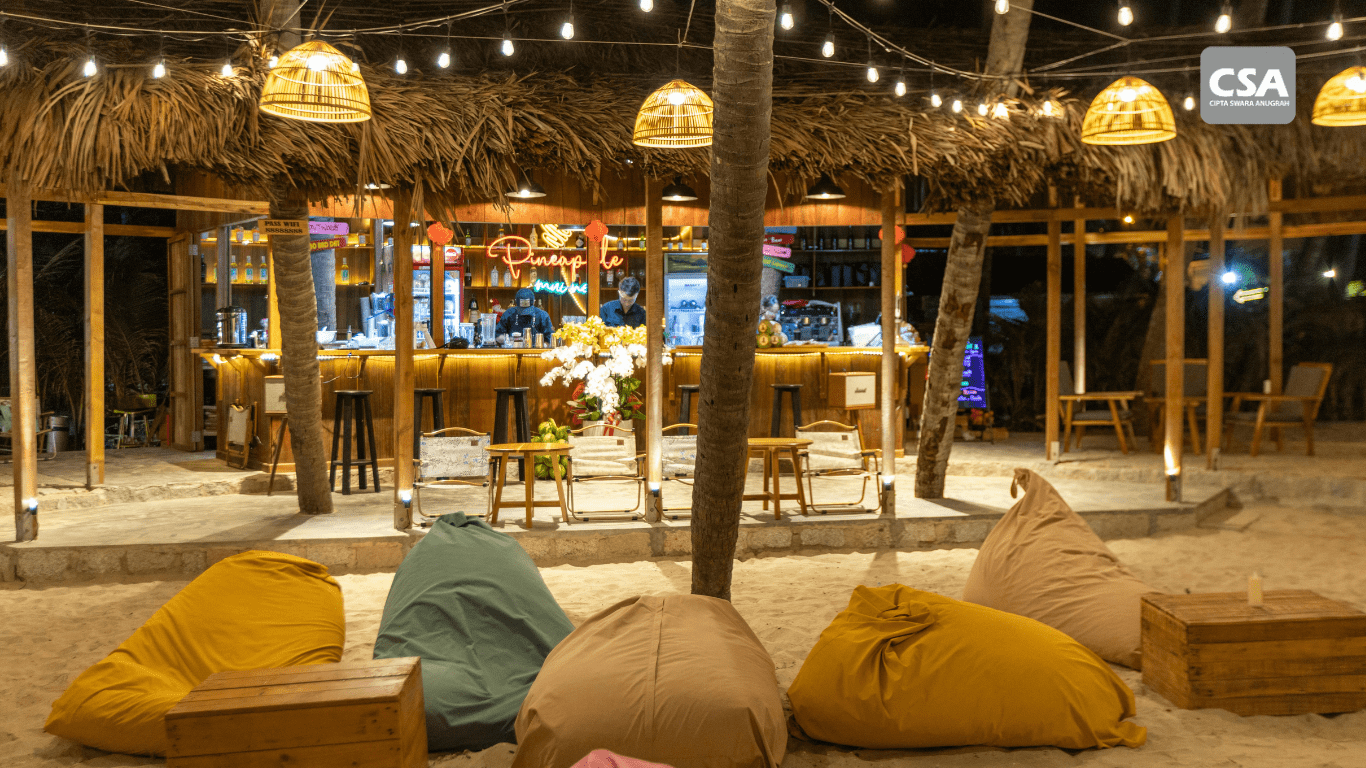
The Challenges of Designing an Audio System for an Open-Air Venue
Outdoor audio requires a different approach from indoor sound reinforcement. An open space does not provide the same acoustic boundaries as walls and ceilings.
This makes sound distribution an important consideration. Guests in different areas should still receive a comfortable listening experience.
Audio that becomes too loud in one location can affect the comfort of another area. On the other hand, insufficient sound coverage can reduce the overall atmosphere of the venue.
For this reason, system planning needs to consider activity areas and the characteristics of the space. Equipment placement should also follow the requirements of each zone.
At Sonada, CSA adapted the system to help distribute music more evenly. This approach allows audio to become part of the atmosphere without dominating the overall guest experience.
Why Sound Distribution Matters in a Beach Club
Beach clubs often contain several areas with different functions. Guests may dine, relax, socialize, or attend an event within the same venue.
Each area can have different audio requirements. A well-designed system should maintain a comfortable listening experience without forcing guests to stay in one specific location.
Consistent sound distribution also creates a more cohesive atmosphere. Guests can move between areas without experiencing dramatic differences in audio levels.
This becomes even more important during events. Music can become a central part of the atmosphere, but the system still needs to consider guests in surrounding areas.
As a result, audio design is not simply about volume. It also involves understanding how sound reaches guests throughout the areas used by the venue.
The Coastal Environment as an Important Design Consideration
A coastal environment creates conditions that should be considered from the early planning stage. Humidity and salt exposure can create additional challenges for equipment operating outdoors.
Wind is another factor that can influence the venue environment. These conditions mean that system planning cannot rely solely on the size of the area.
The team needs to understand how the venue operates and how equipment will be positioned. Each decision should consider the environment as well as the venue’s operational requirements.
This is one reason why Audio and Lighting solutions for coastal venues require careful planning.
Selecting suitable equipment is only one part of the process. Proper placement and system planning also contribute to achieving an effective installation.
Lighting That Shapes the Atmosphere at Sonada Beach Club
If audio shapes the experience through sound, lighting contributes through visual atmosphere. Both elements serve different purposes but can work together to create a more cohesive venue experience.
Lighting in a beach club does not always need to be highly visible. Excessive brightness can reduce the relaxed atmosphere that makes a coastal venue appealing.
On the other hand, carefully planned lighting can strengthen the character of the space. Certain areas can feel more vibrant, while other zones can maintain a calmer atmosphere.
CSA adapted the lighting approach to Sonada’s character so that illumination could support the venue without becoming excessive.
This approach is particularly important in hospitality environments. Guests do not visit a beach club simply to use its facilities. They also come for the atmosphere and experience.
Lighting therefore becomes part of that experience. It supports the environment rather than competing with it.
Combining Audio and Lighting for Events
Events can require a different atmosphere from normal daily operations. Music, guest activities, and lighting may change depending on the type of event taking place.
Audio and lighting should therefore support the venue’s flexibility. The systems need to complement different experiences without taking away from the identity of the location.
Sonada has a strong coastal identity. Its systems need to complement that character rather than make the venue feel like an indoor environment.
CSA adapted the solution to these requirements. Audio supports a more consistent music experience across the venue, while lighting helps create the desired atmosphere for different activities.
Together, these elements create a more complete experience. Guests can enjoy the music while the lighting reinforces the visual character of the venue.
View this post on Instagram
CSA Indonesia’s Project at Sonada Beach Club Bintan
The Sonada project represents an engaging experience for the CSA Indonesia team. The venue’s environment required careful consideration of both technical requirements and the guest experience.
CSA understands that a beach club cannot use exactly the same approach as other hospitality venues. Coastal conditions create their own challenges, while the venue concept determines how the system should perform.
The team therefore adapted the solution to Sonada’s characteristics. Audio was designed to support more consistent music distribution, while lighting was planned to create an atmosphere without becoming overwhelming.
This approach highlights the importance of understanding a venue before determining its system. Equipment alone does not define the final result.
The way a system is positioned and adapted to the venue also plays an important role. This becomes part of the integration process carried out by CSA.
Why Hospitality AV Solutions Cannot Follow a One-Size-Fits-All Approach
Hotels, resorts, restaurants, and beach clubs all operate within the hospitality industry. However, their Audio, Visual, and Lighting requirements can be very different.
A hotel may require systems for its lobby, ballroom, restaurant, and meeting rooms. A restaurant may focus more on background music and audio zoning.
A beach club, meanwhile, often has more complex requirements because many activities take place in open-air environments.
Environmental conditions can also vary significantly from one location to another. For this reason, systems should be planned according to actual requirements rather than simply copying configurations used by other venues.
This approach helps businesses obtain a solution that is more relevant to their operations. Each component can serve a clear purpose and support the venue’s objectives.
The Role of an Integrator in Audio and Lighting Design
An integrator plays an important role in connecting these different requirements. The process does not stop at selecting equipment.
The team needs to understand the site conditions, venue activities, user requirements, and the experience that the business wants to create.
For a project such as Sonada, environmental factors become an important part of the planning process. A coastal venue presents different challenges from an enclosed indoor space.
CSA combines technical considerations with the venue’s operational needs. The goal is to create a system that works naturally with Sonada’s identity.
This approach also helps businesses avoid decisions based solely on equipment specifications. Even high-quality equipment still requires proper design, placement, and integration.
Audio and Lighting as Part of the Guest Experience
When technology works well, guests often do not notice the technology itself. They simply enjoy the music, atmosphere, and activities happening around them.
This is one of the key objectives of hospitality system design. Audio and lighting should enhance the experience without disrupting comfort.
At Sonada, CSA adapted the system to the venue’s character. Music becomes part of the atmosphere, while lighting reinforces the visual experience.
Both elements work as part of the overall environment rather than functioning as isolated systems.
This approach allows technology to support the venue’s identity instead of competing with it.
CSA Indonesia for Hospitality Audio, Visual, and Lighting Solutions
The Sonada Beach Club Bintan project demonstrates why every venue requires a different approach. Environmental conditions, concept, activities, and guest expectations should all become part of the planning process.
CSA Indonesia provides Audio, Visual, and Lighting solutions based on these considerations. An integrated approach allows technology to support the actual needs of the venue.
The Sonada project also shows why system planning needs to consider the bigger picture. Audio is not only about sound, while lighting is not simply about illumination.
Both elements can become an important part of the experience a hospitality venue wants to deliver.
For hotel, resort, restaurant, or beach club owners planning a professional Audio, Visual, and Lighting system, early consultation can help define the right approach from the beginning.
CSA Indonesia is ready to discuss your requirements and develop a solution based on the venue’s characteristics, environment, and operational needs.
Conclusion
Designing an Audio and Lighting system for a beach club requires an understanding of both the environment and the venue itself. Coastal locations present challenges such as humidity, wind, and salt exposure that should be considered during the planning process.
The Sonada Beach Club Bintan project demonstrates how a system can be adapted to the needs of a hospitality venue. CSA Indonesia considered not only audio and lighting performance but also how both systems could support the guest experience.
Consistent music coverage and carefully planned lighting can help a venue create a stronger atmosphere. When technology follows the character of the location, the system can work naturally without becoming excessive.
FAQ
1. Why is a beach club audio system different from an indoor audio system?
Beach clubs typically operate in open-air environments, creating different acoustic conditions. Wind, open spaces, and the size of the venue can affect sound distribution. The system therefore needs to match the venue’s characteristics.
2. What are the main challenges of installing Audio and Lighting systems near the beach?
Humidity, wind, and salt exposure are among the factors that need consideration. Equipment placement and the activities taking place within the venue also influence the system design.
3. Why is sound distribution important in a beach club?
Beach clubs usually have several activity areas. Good sound distribution helps provide a more consistent listening experience without requiring guests to remain in a specific location.
4. What role does lighting play in a beach club?
Lighting helps establish the atmosphere and strengthen the venue’s visual character. Properly planned lighting can support events while maintaining a comfortable environment.
5. Can Audio and Lighting systems be integrated for events?
Yes. Both systems can be planned to support different event requirements and venue conditions. Integration can create a more consistent overall experience.
6. Does CSA Indonesia provide solutions for hospitality projects?
CSA Indonesia provides Audio, Visual, and Lighting solutions for hotels, resorts, restaurants, beach clubs, and other hospitality venues based on their specific requirements.