
Choosing the right Hotel Audio Visual Equipment requires more than selecting displays, speakers, or presentation devices. Hotels need different technologies to support guest entertainment, business meetings, conferences, and daily operations. Each device serves a specific purpose, depending on the room, its users, and the activities taking place.
A business hotel, for example, may prioritize video conferencing and presentation equipment. A resort may focus more on in-room entertainment and guest information displays. Meanwhile, hotels with large event facilities often require professional presentation and signal distribution equipment.
Understanding these differences helps hotel operators make better purchasing decisions. A device with impressive specifications may not necessarily suit the intended application. Room dimensions, lighting conditions, connectivity, ease of use, and long-term maintenance all deserve attention.
This article explores the main categories of audio visual equipment used in hospitality environments. It explains their functions, technical characteristics, and key considerations when selecting them. The goal is to help hotel owners, operators, and project planners identify equipment that supports their actual operational requirements.
Why Hotels Need the Right Audio Visual Equipment
Audio visual technology supports many activities throughout a hotel. It helps deliver information, provide entertainment, and facilitate business communication. Properly selected equipment can also improve the experience of guests and event participants.
Hospitality televisions, for example, allow guests to access entertainment and hotel information from their rooms. In meeting spaces, cameras and presentation systems help participants communicate and share content more effectively.
Equipment selection also affects operational efficiency. Staff can manage facilities more easily when devices match the intended applications. In contrast, unsuitable equipment may create technical problems, increase maintenance requirements, and disrupt scheduled activities.
Several factors should guide the selection process:
- User requirements: Equipment should support the needs of guests, employees, and event organizers.
- Room characteristics: Dimensions, lighting, layout, and acoustic conditions influence device selection.
- Ease of operation: Users should be able to operate the system without extensive technical assistance.
- Compatibility: Devices must support the required connections, signal formats, and communication protocols.
- Maintenance: Hotels should consider technical support, spare parts, and long-term service availability.
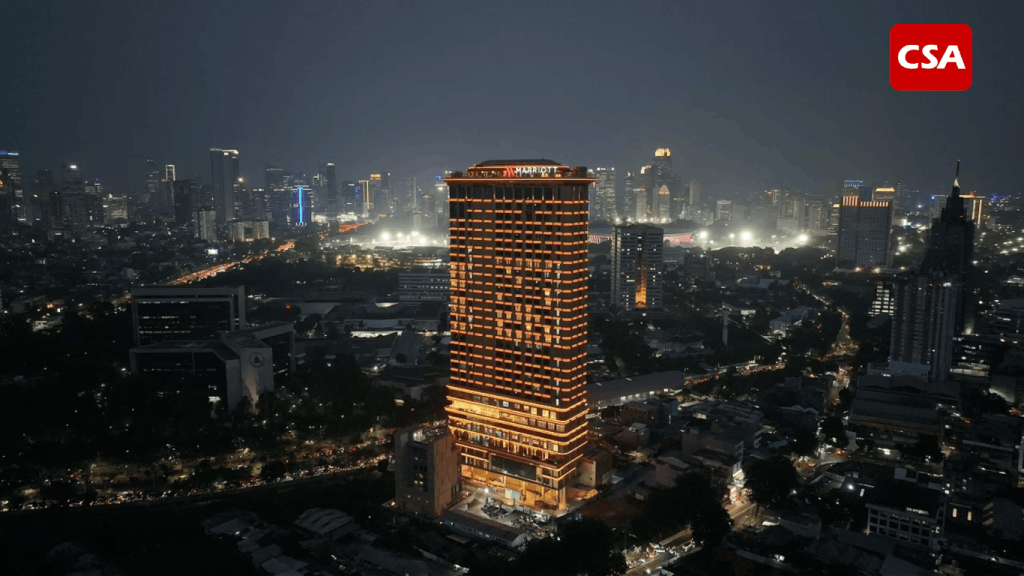
Read Also: Professional Lighting Installation for Hotels, Ballrooms, and Commercial Venues by CSA Indonesia
Types of Audio Visual Equipment Used in Hotels
Different devices perform different functions within a hospitality environment. Some display visual content, while others capture sound, connect remote participants, or manage signal distribution.
1. Hospitality TVs for Guest Room Entertainment
Hospitality TVs are televisions designed specifically for hotels and other accommodation facilities. They offer capabilities beyond those typically found in consumer televisions. Hotels can use them for entertainment, guest information, and selected service-related functions.
Available features depend on the model and platform. Some hospitality TVs support welcome messages, hotel information, service menus, and integration with property management systems. These functions allow guests to access relevant information directly from their rooms.
When selecting hospitality TVs, hotel operators should consider screen size, viewing distance, display resolution, and panel quality. The interface should also be easy for guests to navigate.
Content management is another important consideration. Staff may need to update welcome messages, service information, or other displayed content. Hotels should therefore check the device’s management capabilities and technical support options before purchasing multiple units.
2. Professional Displays for Information and Presentations
Professional displays present visual content in different hotel environments. These commercial screens can serve meeting rooms, reception areas, conference facilities, and internal staff spaces.
Their applications depend on the installation location and intended use. A display in a meeting room may show presentations, while a screen in a reception area may provide useful information to visitors.
Professional displays offer several specifications worth evaluating. These include brightness, operating capabilities, screen orientation, mounting options, and connectivity. Certain models also support extended operating hours.
Brightness is particularly important in areas with strong ambient lighting. A screen with insufficient brightness may make content difficult to read. Screen size also matters, especially when viewers sit at different distances.
Installation position should follow the room layout and viewing angles. A screen mounted too high or too far away may reduce visibility. Proper placement helps create a more comfortable viewing experience.
When displays serve as platforms for announcements, promotions, or wayfinding, content management becomes an additional consideration. Hotels can explore the specific applications of hotel digital signage solutions for a more detailed discussion of visual communication systems.
3. Projectors and Projection Screens for Presentations
Projectors display images from video sources onto a projection surface. Hotels commonly use them in meeting rooms, training facilities, and ballrooms that require large-format visuals.
Selecting a projector involves more than comparing resolution. Operators should evaluate brightness, throw ratio, installation distance, and ambient lighting conditions.
Brightness affects image visibility when a room has significant surrounding light. Throw ratio helps determine the required distance between the projector and the screen. Both factors must match the room dimensions.
The projection screen also influences the final image. Hotels can choose manual, motorized, or other screen types depending on installation requirements. Screen dimensions and surface characteristics should match the projector’s capabilities.
Before purchasing equipment, operators should assess the proposed installation position. This helps ensure that the image reaches the required size without obstruction. It also reduces the risk of costly adjustments after installation.
4. Video Conferencing Cameras for Hybrid Meetings
Video conferencing cameras allow remote participants to see people inside a meeting room. They are important for hotels that provide hybrid meeting and conference facilities.
Different camera types serve different room configurations. Fixed-view cameras may suit smaller meeting rooms. Pan-tilt-zoom cameras provide greater flexibility for larger spaces.
Some models also offer speaker tracking or automatic framing. These features can adjust the camera view based on participant positions. However, hotel operators should check the actual capabilities of each model before selecting one.
Camera placement must follow the room layout and seating arrangement. A camera positioned too low may create an uncomfortable viewing angle. Proper positioning helps remote participants see speakers more clearly.
Compatibility is another important factor. Hotels should check whether the camera works with their conferencing platforms and computing devices. USB, HDMI, and other connection requirements should match the planned system configuration.
5. Wireless Presentation Systems for Content Sharing
Wireless presentation systems allow users to share content from laptops or mobile devices without relying entirely on direct cable connections. This technology can simplify presentations in meeting rooms and conference facilities.
Participants can connect through the wireless options supported by the system. Some devices also allow multiple users to share content. This makes it easier to switch between presenters during discussions.
However, hotels should pay attention to network security. Access controls should prevent unauthorized users from sending content to shared displays. Compatibility with different operating systems and devices also deserves consideration.
Connection quality is equally important. Network interference may cause delays, unstable connections, or interruptions during presentations. The hotel should ensure that its wireless infrastructure can support the expected number of users and devices.
6. Microphones for Conferences and Presentations
Microphones capture speech so that audio signals can be processed and transmitted through an audio system. Hotels may use different microphone types depending on room size, event format, and speaker requirements.
Gooseneck microphones are common in formal meeting spaces. Handheld microphones provide flexibility for presentations and question-and-answer sessions. Lavalier microphones allow speakers to move freely while speaking.
Each type has different characteristics. Wireless microphones offer greater mobility, but operators must manage battery life and radio frequency coordination. Wired microphones provide a physical connection but limit movement.
The number of speakers and room layout should also influence microphone selection. A conference room may require several microphone positions to support group discussions. The arrangement should allow participants to speak without unnecessary movement.
For a more focused explanation of audio applications in hospitality spaces, see CSA Indonesia’s article on hotel sound systems for lobbies, ballrooms, and public areas. It covers the specific requirements of professional hotel audio environments.
7. Audio Processors and Digital Signal Processors
An audio processor or digital signal processor (DSP) manages and modifies audio signals. Depending on the model, it can perform equalization, level adjustment, routing, and other signal processing functions.
In conference facilities, a DSP can manage inputs from multiple microphones. It processes the signals before sending them to the appropriate outputs.
Some devices also provide acoustic echo cancellation for conferencing applications. This feature helps reduce echo when local audio equipment connects with remote meeting participants.
DSP selection should follow the room’s input and output requirements. Operators need to consider channel capacity, connection types, processing features, and configuration options.
The system should also allow technicians to adjust settings when room requirements change. Proper configuration helps maintain consistent audio performance across different activities.
8. AV Matrix Switchers and Video Scalers
An AV matrix switcher distributes signals from multiple sources to multiple displays. It is useful in meeting and conference facilities with several presentation sources and screens.
For example, a conference room may have laptops, desktop computers, and media players. A matrix switcher allows operators to select which source appears on each display.
A video scaler performs a different function. It adjusts video signal formats or resolutions to match the requirements of connected displays. This helps maintain compatibility between source devices and output equipment.
Although both devices manage video signals, their roles are not interchangeable. Matrix switchers focus on signal selection and distribution. Video scalers handle format and resolution conversion.
Hotels should evaluate the number of sources, display outputs, supported resolutions, and connection distances before choosing these devices. These details help determine the appropriate system configuration.
9. Touch Panels and Room Control Devices
Touch panels provide an interface for operating audio visual equipment. Users can control selected functions through a touchscreen instead of adjusting each device individually.
In meeting rooms, a touch panel may allow users to select presentation sources, adjust volume, operate displays, or activate predefined settings. Available functions depend on the control system and connected devices.
The interface should remain simple and intuitive. Clear labels and logical menu structures help users operate the room without extensive technical knowledge.
Hotels should also prepare basic operating instructions for staff and event organizers. This reduces the risk of operating errors and unnecessary support requests.
A well-designed control interface can simplify daily operations. However, staff training and technical support remain important when the system experiences problems.
How to Select Equipment for Different Hotel Requirements
Understanding device categories is only the first step. Hotel operators must determine which equipment is necessary for each facility. Not every property requires the same configuration.
Identify the Activities in Each Room
Start by identifying the activities that take place in each space. Guest rooms need entertainment and information facilities. Meeting rooms require presentation and conferencing equipment. Ballrooms may need large-format displays and more advanced signal distribution.
This assessment helps operators avoid unnecessary purchases. It also allows the hotel to prioritize equipment based on usage frequency and business requirements.
Match Specifications to Room Conditions
Room dimensions and environmental conditions influence equipment performance. Displays must suit viewing distances. Projectors require appropriate installation distances and lighting conditions.
Conference cameras also need suitable mounting positions. Audio equipment must follow the room layout and user requirements. A site survey can help confirm these details before final specifications are approved.
Check Compatibility Between Devices
Individually purchased devices may not work together without additional configuration. Differences in connectors, signal formats, protocols, and resolutions can create technical problems.
Operators should review the specifications of every component. Video sources must connect properly to distribution equipment and displays. Cable requirements, adapters, and supporting devices should also be included in the assessment.
Consider Ease of Operation
Hotels serve guests and event organizers with different levels of technical experience. Systems should therefore provide straightforward operating procedures.
Users should not need extensive training just to start a presentation. Clear interfaces and simple connection methods can reduce requests for technical assistance.
Calculate Long-Term Ownership Costs
Purchase price is only one part of the total investment. Hotels should also consider installation, configuration, maintenance, and component replacement costs.
A device with a lower initial price may not always provide the most efficient long-term operating cost. Spare part availability and after-sales support can also affect the equipment’s service life.
Review Technical Support and Warranty Coverage
Equipment failures can disrupt hotel activities, especially during scheduled meetings and events. Reliable technical support is therefore an important part of the purchasing decision.
Before ordering, operators should review warranty terms and service availability. They should also confirm whether qualified technicians can assist with installation, configuration, and troubleshooting.
The Importance of System Planning Before Equipment Procurement
Equipment procurement should begin with a needs assessment rather than an immediate product selection. Hotels need to identify activities in each room and determine which devices support those requirements.
The next step is technical planning. This process covers equipment placement, cable routes, power requirements, connectivity, and operating procedures. Proper planning reduces the risk of installation changes after the project begins.
Hotel operators should also involve operational staff during the planning stage. Employees who use the facilities every day can identify practical challenges and operational priorities. Their input helps ensure that the selected system is not only technically suitable but also convenient to operate.
For projects involving multiple devices and complex connections, hotels may consider working with an experienced professional. An AV system integrator can support equipment planning, selection, integration, and system testing.
Hotels can also review the scope of AV system integrator services for companies to understand the professional services involved in planning and implementing AV solutions.
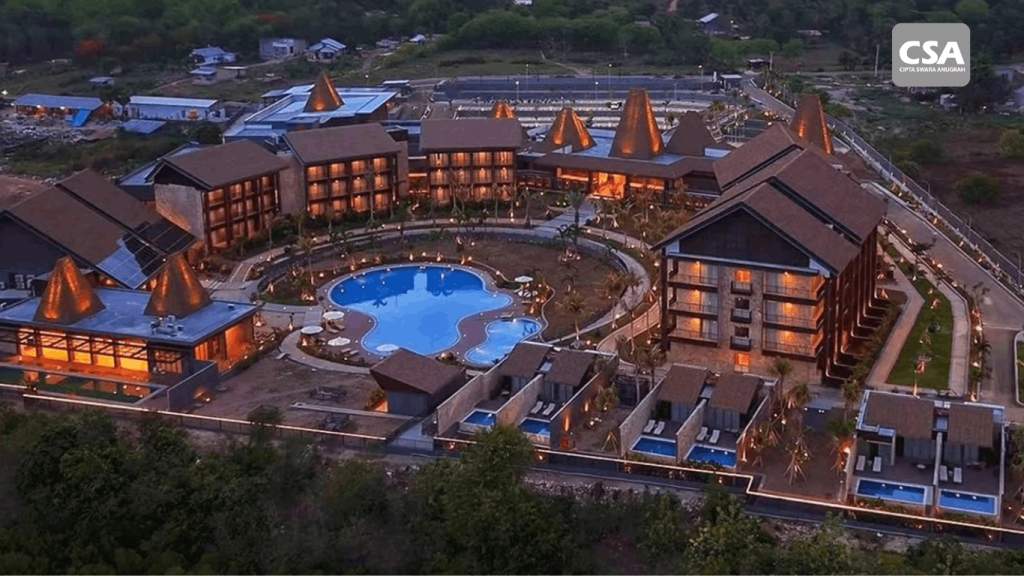
A relevant example is the implementation of integrated audio visual technology in hotel and convention facilities. Such projects demonstrate why equipment selection should consider the complete application rather than individual product specifications alone.
For hotels that regularly host conferences and business events, equipment requirements may also depend on event scale and format. A suitable system should support the presentation, communication, and technical requirements of each activity.
Conclusion
Audio visual devices play different roles in hotel operations. Hospitality TVs, professional displays, projectors, conferencing cameras, microphones, processors, and control devices each support specific applications.
Hotel operators should look beyond brand names, specifications, and purchase prices. Compatibility, ease of operation, maintenance costs, and technical support also influence procurement decisions. Careful planning helps hotels select practical equipment that supports guest experiences and hospitality operations.
FAQ
What audio visual equipment is commonly used in hotels?
Common equipment includes hospitality TVs, professional displays, projectors, video conferencing cameras, microphones, wireless presentation systems, audio processors, and room control devices.
What is the difference between a hospitality TV and a regular television?
A hospitality TV is designed for accommodation facilities. Depending on the model, it may support hotel information, guest services, and centralized content management.
Why do hotels need wireless presentation systems?
Wireless presentation systems allow guests and meeting participants to share content from laptops or mobile devices without relying entirely on direct cable connections.
What is the purpose of a video conferencing camera in a hotel?
It allows remote participants to see people inside a meeting room. This supports hybrid meetings, conferences, and business events.
How should hotels choose the right AV equipment?
Hotels should begin by identifying room functions and user requirements. They should then evaluate specifications, compatibility, ease of operation, maintenance costs, and technical support.
Should hotels work with an AV system integrator?
Hotels with multiple devices and complex system requirements may benefit from an AV system integrator. Professional support can help with planning, equipment selection, installation, configuration, and testing.