
A Sound System Convention Center plays an important role in supporting large-scale events. An audio system does more than amplify sound. It must deliver clear speech, music, announcements, and other audio sources consistently across the venue.
Convention centers have different requirements from standard meeting rooms. They accommodate larger audiences, cover wider areas, and support a broader range of events. For this reason, the audio system needs to consider room dimensions, acoustics, seating layouts, and the specific requirements of each event.
The audio system should also work as part of the venue’s overall event technology. Audio can be integrated with visual systems, video conferencing, lighting, and control systems to create a more flexible operational workflow.
CSA Indonesia has experience delivering integrated audio visual solutions for hospitality and MICE environments. One example is the HARRIS Hotel & Convention Serpong project, which includes a grand ballroom with a capacity of up to 1,500 guests, along with meeting rooms and event spaces.
Why Does a Convention Center Need a Well-Planned Audio System?
Convention centers can host many types of events. These may include conferences, seminars, exhibitions, corporate meetings, weddings, and other social events.
Each event has different audio requirements. Conferences prioritize speech intelligibility, while music events require broader and more dynamic sound reproduction. Hybrid events also require integration with communication and visual systems.
Simply choosing high-powered speakers is therefore not enough. The system needs to distribute sound evenly while maintaining a comfortable listening experience for the audience.
Poor system design can create several problems. Some areas may become excessively loud while others remain difficult to hear. Excessive reverberation can also make speech difficult to understand.
Proper planning helps reduce these issues. The technical team can determine the appropriate configuration based on the characteristics of the room and how the venue will be used.
The broader concept of connecting different technologies into one coordinated environment is also discussed in Audio Visual System Integrator: From Planning to Implementation of Integrated AV Systems for Modern Businesses.
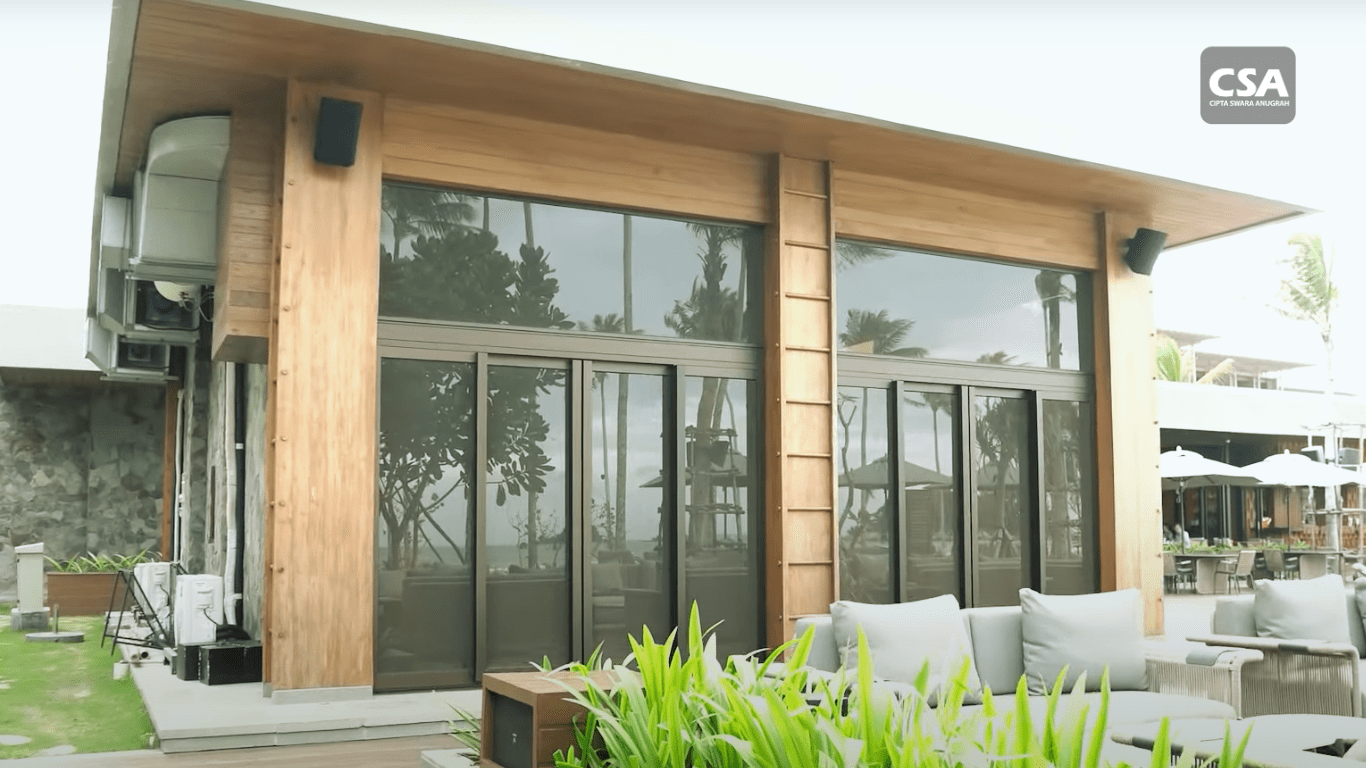
Read Also: Tips for Choosing the Right Hotel Sound System
Audio Challenges in Ballrooms and Convention Centers
Ballrooms and convention centers present several technical challenges that need to be considered before selecting the system.
Large Room Dimensions
The larger the audience area, the more complex the sound distribution becomes. A single speaker source may not provide consistent coverage throughout the venue.
Designers need to consider audience positions, distances between areas, ceiling height, and stage location. These factors help determine the appropriate speaker configuration.
Large venues may use multiple audio zones. Each zone can have its own settings based on the area it serves.
This approach helps maintain consistent sound without relying on excessive volume.
Reflections and Reverberation
Hard surfaces in ballrooms can reflect sound waves. These reflections may create excessive reverberation and make speech less intelligible.
Carpets, walls, ceilings, curtains, and interior elements can all influence room acoustics. The audio system therefore needs to take the overall acoustic environment into account.
Speaker selection and coverage patterns are also important. A properly designed system directs sound toward the audience instead of unnecessarily sending acoustic energy toward reflective surfaces.
Changing Event Layouts
Convention centers often use the same room for different types of events. A seminar seating arrangement can be very different from a wedding, exhibition, or corporate conference setup.
The audio system should provide enough flexibility to accommodate these changes. Operators should be able to adjust configurations without completely reinstalling equipment for every event.
Digital presets and configuration settings can help simplify this process. Operators can prepare different scenarios based on the type of event being hosted.
Key Components of a Large-Scale Audio System
A professional audio system consists of several components that work together as one system.
Main Speakers
Main speakers deliver audio to the audience area. Their selection should consider room size, audience capacity, sound characteristics, and event requirements.
Large venues do not necessarily use only one type of speaker. A combination of speaker types may provide more consistent coverage across different areas.
Speaker placement is just as important as equipment specifications. The technical team needs to determine positioning and coverage based on the room layout.
Subwoofers
Subwoofers handle low-frequency audio. They become particularly useful when a venue hosts live performances, entertainment events, or programs that require stronger low-frequency reproduction.
However, subwoofer deployment should still match the characteristics of the venue. Excessive low-frequency energy can negatively affect the audience experience.
Microphone Systems
Microphones are essential for conferences, seminars, presentations, and formal events.
Different situations may require different microphone types. Stage speakers may use wireless microphones, while discussion sessions may require conference microphone systems.
Microphone quality should also be evaluated together with the speaker system. A high-quality microphone cannot compensate for poor speaker placement or inadequate system configuration.
Digital Mixers
A digital mixer manages multiple audio sources within one system. Operators can control levels, equalization, routing, and other audio parameters.
This flexibility is particularly useful for convention centers that host different types of events. Configurations can be adjusted without physically changing the entire system.
Digital Signal Processors
A Digital Signal Processor, or DSP, processes audio signals before they reach amplifiers and speakers.
DSPs can support equalization, routing, delay, and other signal-processing functions.
In large rooms, delay management can become particularly important. Additional speakers may require timing adjustments so that sound reaches different audience areas in a coordinated manner.
Amplifiers
Amplifiers provide the power required by the speakers. Their selection should match the speaker specifications and overall system design.
Amplifier selection should not rely solely on power ratings. The complete system configuration needs to be considered to ensure stable and appropriate operation.
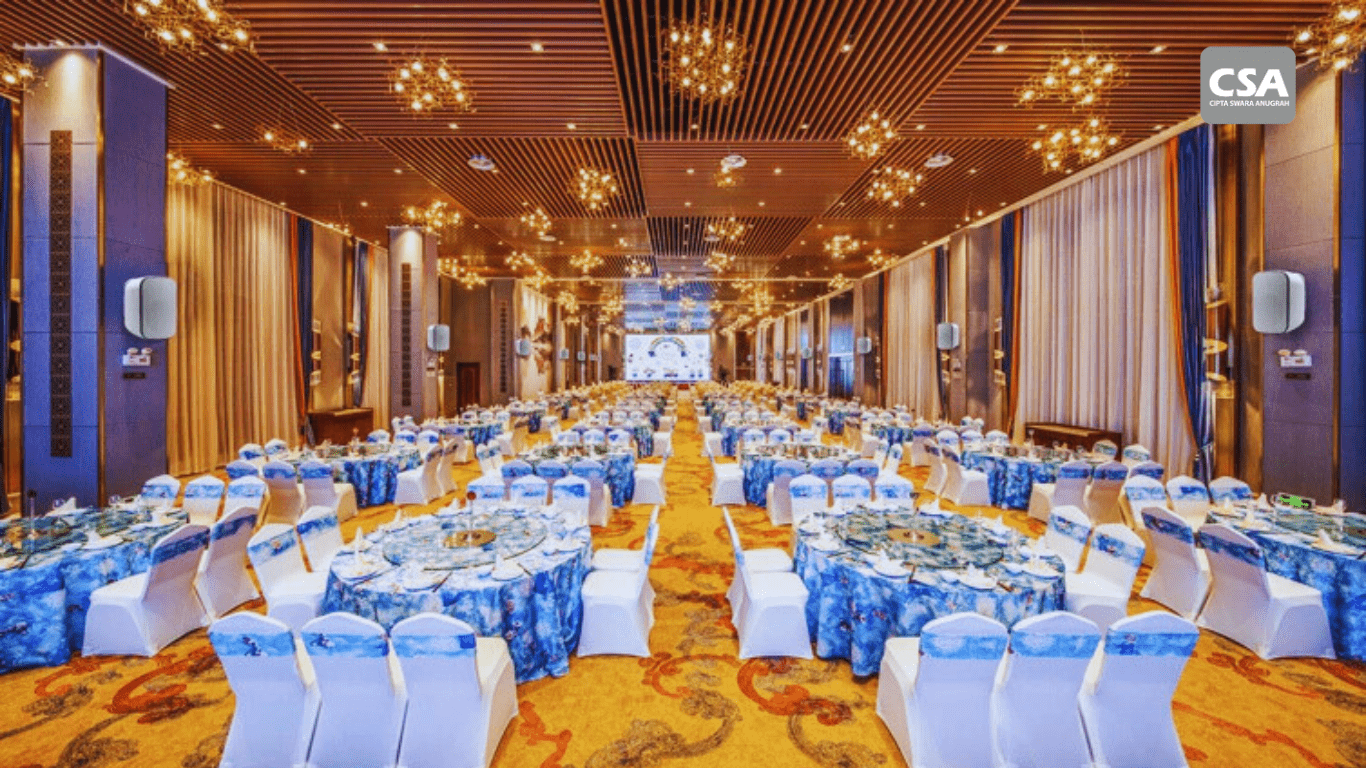
Read Also: Sound System Ballroom with CSA Indonesia: Professional Audio Solution for High-Quality Indoor Events
The Audio System Should Match the Event Type
One of the defining characteristics of a convention center is flexibility.
Conferences and Seminars
Conferences place strong emphasis on speech intelligibility. Participants should be able to understand speakers clearly from different positions within the room.
Microphones, speakers, DSPs, and sound distribution need to work consistently. Visual systems can also be integrated to support presentations.
Exhibitions and MICE Events
MICE events can use several areas simultaneously. Each space may have different audio sources and operational requirements.
A multi-zone system allows operators to manage audio according to each area. Background music can play in one zone while event announcements are delivered in another.
Weddings and Social Events
Social events often require a flexible audio configuration. The system may support speeches, music, entertainment, and stage activities.
Venue operators need a system that can move between different scenarios efficiently.
Hybrid Events
Modern convention centers may also need to support remote participants. Audio from speakers must enter the conferencing system without compromising the experience of the audience attending in person.
The audio system therefore needs to work with video conferencing and visual technologies. This creates a more consistent communication workflow for both onsite and remote participants.
CSA Indonesia discusses the broader requirements of integrated corporate AV environments in Audio Visual for Corporate Offices: What Systems Are Needed?, including audio, microphones, displays, video conferencing, and control systems.
CSA Indonesia’s Experience at HARRIS Hotel & Convention Serpong
One relevant example is CSA Indonesia’s project at HARRIS Hotel & Convention Serpong.
The property was developed as an MICE destination with extensive meeting and event facilities. Its grand ballroom can accommodate up to 1,500 guests, while additional function rooms and breakout areas support different event formats.
CSA Indonesia handled integrated audio visual infrastructure across the venue. The implementation covered the grand ballroom, meeting rooms, breakout areas, and public spaces.
The system was designed to support different event requirements. These include corporate conferences, hybrid meetings, large-scale conventions, and social events.
The project is also discussed in Integrated Audio Visual System for Hotel and Convention Center by CSA Indonesia at HARRIS Hotel & Convention Serpong.
This experience shows that audio requirements in a convention center cannot be viewed separately from the venue itself. The system needs to respond to the physical characteristics of the space and the activities taking place inside it.
This approach becomes especially important when a venue needs to support multiple event formats within the same facility.
What Should You Consider Before Choosing an Audio System?
Convention center owners and operators should consider several factors before selecting an audio system.
Audience Capacity
The number of participants influences speaker coverage and system configuration. A room designed for 300 people will have different requirements from a ballroom designed for more than 1,000 guests.
Audience distribution also matters. A widely distributed audience may require a different approach from a room with a more centralized seating arrangement.
Room Shape and Dimensions
Room length, width, ceiling height, and stage position can all influence sound distribution.
The system should therefore be designed around the actual space. A site survey can help identify physical conditions that may affect system performance.
Acoustic Characteristics
Interior materials can influence sound reflections and reverberation. The audio system needs to account for these acoustic characteristics to maintain clarity and comfort.
Acoustics are particularly important for venues that frequently host conferences, seminars, and presentations.
Event Types
Operators should identify the types of events that the venue will host most frequently.
Conferences, concerts, seminars, weddings, exhibitions, and hybrid events can have different audio requirements.
Understanding these usage patterns helps create a more flexible system and prevents unnecessary equipment choices.
System Flexibility
A flexible system makes it easier to support different event formats. Operators can also save time when switching from one configuration to another.
Presets can help operators prepare specific scenarios. For example, a conference configuration may use different audio settings from an entertainment event.
Integration with Visual and Lighting Systems
Modern convention centers require more than audio. LED displays, projectors, video conferencing, lighting, and control systems can also become part of the event environment.
Integration allows different technologies to operate as one ecosystem. Operators can manage the systems through a more structured workflow.
This approach aligns with CSA Indonesia’s expertise across Audio, Visual, Lighting, and Automation. Instead of viewing each device separately, the technology is considered based on how it supports the overall requirements of the venue.
For a broader overview of implementation, see Audio Visual Installation for Companies: Process, Benefits, and What You Need to Prepare.
Why Is Integration Important for a Convention Center?
A convention center needs to serve different types of users. Hotel operators, event organizers, corporate clients, and event producers may all have different technical requirements.
Standalone systems can make operation more complicated. Operators may need to manage audio, visual, and lighting equipment through several separate systems.
Integration can simplify this workflow. A centralized control system can manage multiple functions according to predefined configurations.
For example, a conference preset could activate the microphone system, displays, audio, and lighting based on the requirements of the event. Operators would not need to configure every device individually.
This approach can also help venues prepare rooms more efficiently. That becomes increasingly important when a convention center handles multiple events in a single day.
The relationship between different AV components is also explained in What Devices Are Included in an Integrated Audio Visual System?.
A Good Audio System Is Not Simply About Loudness
A common mistake when choosing an audio system is assuming that louder sound automatically means better performance.
Audio quality also depends on clarity, consistency, control, and listening comfort. Audiences in both front and rear areas should receive a consistent listening experience.
A convention center needs a system that can deliver this performance under different conditions.
System design is therefore essential. The same equipment can produce different results when installed in different rooms.
Equipment selection should follow the system design rather than the other way around.
This approach also applies when a venue upgrades its existing system. Operators do not necessarily need to replace every component. A technical evaluation can determine which equipment remains suitable and which elements need to be upgraded.
The Role of Integration in Developing MICE Venues
MICE venues need to adapt to changing event requirements. Event formats evolve, conferencing technologies develop, and organizers increasingly expect flexible technical systems.
For this reason, system design should not focus only on current requirements. The infrastructure should also consider potential equipment additions and workflow changes in the future.
An integrated approach provides a clearer framework for this development. Operators can better understand how different technologies relate to each other and how the system can evolve.
CSA Indonesia also explains this concept in What Is an AV System Integrator? Understanding the Role and AV System Integration Process, including how integrated AV systems can support professional environments and large venues.
Conclusion
A Sound System Convention Center requires careful planning around audience capacity, acoustics, room layout, event types, and operational requirements. The right system does more than produce loud sound. It delivers clear, consistent, flexible, and controllable audio throughout the venue.
CSA Indonesia’s experience at HARRIS Hotel & Convention Serpong demonstrates how integrated audio visual technology can support a large-scale MICE venue with diverse event requirements.
For ballroom and convention center operators, the most important step is not simply choosing equipment based on specifications. Start with the requirements of the space and the events it needs to support, then develop a system that can adapt to those needs over time.
FAQ
What is the main purpose of a sound system in a convention center?
Its main purpose is to deliver clear and consistent audio across the audience area. The system should also support different event formats, including conferences, seminars, exhibitions, and social events.
Does a convention center need high-powered speakers?
Not necessarily. Speaker selection should depend on room size, acoustics, audience capacity, and event requirements. Proper sound distribution is more important than simply increasing volume.
What equipment is commonly used in a ballroom audio system?
Common components include main speakers, subwoofers, microphones, digital mixers, DSPs, amplifiers, and supporting equipment. The exact configuration depends on the venue.
Why is DSP important in a large venue?
A DSP processes and manages audio signals. It can support equalization, routing, delay, and other functions that help maintain controlled and consistent sound distribution.
Can audio systems be integrated with lighting and visual systems?
Yes. Audio can be integrated with visual, lighting, and automation technologies through a control system. This can simplify event operation and create a more coordinated workflow.
Does CSA Indonesia have experience with convention center projects?
Yes. CSA Indonesia has handled integrated audio visual infrastructure at HARRIS Hotel & Convention Serpong, including its grand ballroom, meeting rooms, breakout areas, and public spaces.